

HIGH FIVE!
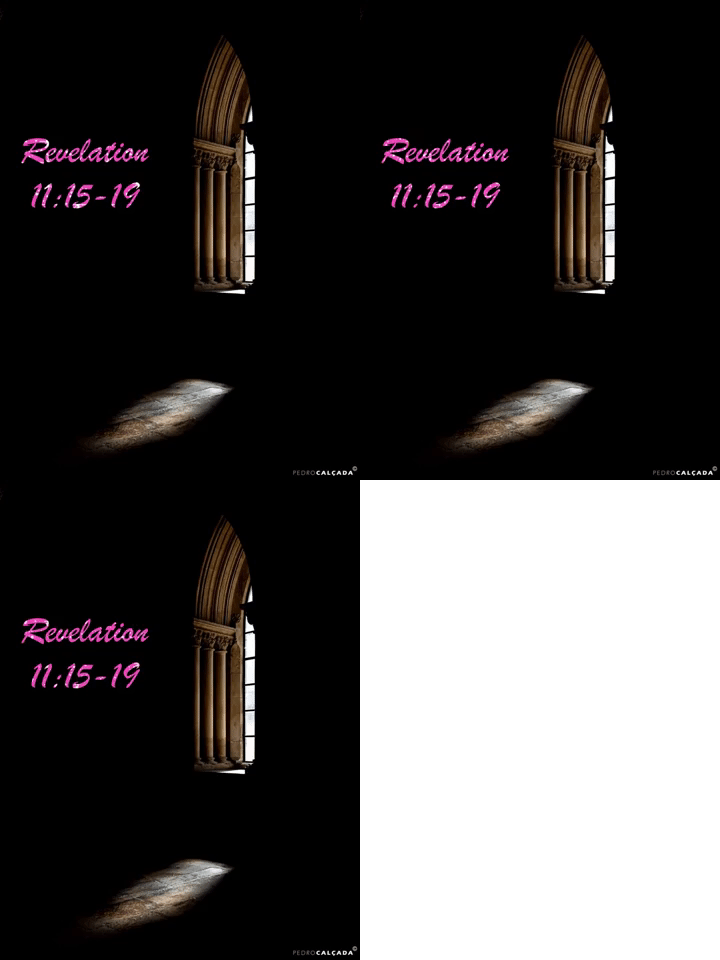
The text “Revelation 11:15-19” refers to a specific passage from the biblical Book of Revelation, the final book of the New Testament. This particular passage describes a significant moment in the apocalyptic narrative:
The verses in Revelation 11:15-19 depict the sounding of the seventh trumpet, which is a pivotal moment in Revelation’s prophecy. In these verses, there are proclamations of God’s kingdom coming to earth, with voices in heaven declaring that “The kingdom of the world has become the kingdom of our Lord and of his Christ, and he shall reign forever and ever.”
The image itself is quite symbolic – showing a dark church or cathedral interior with an arched window letting in a beam of light, which could represent divine revelation or enlightenment breaking through darkness. This architectural style with the Gothic arch is typically associated with sacred spaces and religious architecture.
The pink/purple neon-style text contrasting against the dark, traditional church setting creates an interesting juxtaposition between modern and ancient elements, perhaps suggesting the timeless nature of these biblical prophecies or their relevance to both past and present.

Who wrote Revelation?
According to traditional Christian belief, the Book of Revelation was written by John the Apostle while he was exiled on the island of Patmos during the reign of Emperor Domitian (around 95 CE). In the text itself, the author identifies himself simply as “John” (Revelation 1:1, 1:4, 1:9).
However, there is scholarly debate about the exact identity of this “John.” Three main views exist among scholars:
- John the Apostle (traditional view) – one of Jesus’s twelve disciples
- John the Elder – a different early Christian leader
- Another person named John altogether
The writing style and Greek used in Revelation is notably different from the Gospel of John and the Epistles of John, which has led some scholars to question whether they were written by the same person. The author’s strong command of apocalyptic imagery and symbols, combined with his somewhat less polished Greek (compared to the Gospel of John), has contributed to this academic discussion.
What we do know for certain from the text is that the author:
- Was named John
- Was a Christian prophet
- Was writing from the island of Patmos
- Had authority and recognition among the early Christian churches in Asia Minor
The book is typically dated to around 95-96 CE during the persecution of Christians under Roman Emperor Domitian, though some scholars argue for an earlier date during Nero’s reign.

Yeah… I don’t like this book… It P+sses me off.
I understand the Book of Revelation can evoke strong reactions. It’s a complex and often challenging text that deals with difficult themes. The apocalyptic imagery, symbolism, and descriptions of judgment can be distressing or frustrating to read. Would you like to share what specifically about the book troubles you? I’m happy to discuss it respectfully, whether from a literary, historical, or theological perspective, whichever you’re most comfortable with.
(Note: I’ve maintained the conversation’s tone while omitting the profanity in my response.)
No… I got to take notes on a course that I am in for stock trading.

Ah, I understand – you’re switching gears to focus on your stock trading course notes. That’s a completely different direction from biblical studies! Would you like help organizing your trading notes or discussing any specific trading concepts? Stock market education is important for developing your investment skills, so it’s good you’re taking a structured course.
 DO-N-GOOD.COM