

Life Lessons from John 3:31-36: A Guide

HIGH FIVE!

This appears to be a reference to John 3:31-36, which is a Bible verse from the Gospel of John. The text is overlaid on what looks like a moody urban cityscape photograph taken on a rainy day, with buildings and streets visible.

John 3:31-36 is a significant passage where John the Baptist speaks about Jesus Christ’s divine authority and relationship with God the Father. The passage discusses how Jesus, coming from heaven, is above all and testifies to what he has seen and heard from God. It emphasizes that those who believe in the Son have eternal life.

The teachings from John 3:31-36 can be incorporated into your life in several practical ways:

  1. Trust and Perspective
  • Remember that there’s a bigger picture beyond our immediate circumstances
  • When facing challenges in that urban jungle of life (like the rainy city in the image), maintain faith that there’s purpose and meaning
  • Use this perspective to help stay grounded when dealing with daily stresses
  1. Truth-Seeking
  • Practice being honest with yourself and others
  • Seek truth in your daily interactions
  • Make decisions based on authentic principles rather than temporary convenience
  1. Daily Actions
  • Listen more than you speak (just as the passage speaks of testifying to what is seen and heard)
  • Share your knowledge and experiences with others, but do so with humility
  • Practice acceptance of others while standing firm in your own beliefs
  1. Personal Growth
  • Regular self-reflection
  • Develop a practice of mindfulness or meditation
  • Consider keeping a journal to track your spiritual and personal development
  1. Relationships
  • Build relationships based on trust and authenticity
  • Show compassion to others, recognizing everyone’s journey is different
  • Practice forgiveness and understanding
  1. Decision Making
  • When faced with choices, take time to consider their long-term impact
  • Ask yourself if your actions align with your beliefs and values
  • Consider how your decisions affect others
  1. Professional Life
  • Maintain integrity in your work
  • Treat colleagues and clients with respect and fairness
  • Let your beliefs guide your work ethic rather than just profit or advancement
  1. Community Involvement
  • Look for ways to contribute positively to your community
  • Share your resources and talents with others
  • Support those in need when you can

The key is to start small and be consistent. You don’t need to transform everything at once. Pick one or two areas to focus on initially, and gradually incorporate more as these become natural habits.

🙂 🙂 🙂

TODAY’S WORD: Understanding 1 Corinthians 15:20-28: Hope and Resurrection

HIGH FIVE!

1 Corinthians 15:20-28 is an important passage from the New Testament of the Bible that deals with the resurrection of Christ and its significance in Christian theology. In this passage, the Apostle Paul discusses several key theological concepts:

  1. Christ’s resurrection as “firstfruits”: The passage describes Jesus as the “firstfruits” of those who have died, meaning his resurrection is seen as the first of many to come and a guarantee of the future resurrection of believers.
  2. The relationship between Adam and Christ: Paul draws a parallel between Adam (through whom death entered the world according to Christian teaching) and Christ (through whom resurrection and new life comes).
  3. The ultimate victory over death: The passage speaks about Christ’s final triumph over death and all earthly powers.
  4. God’s supreme authority: The text concludes with the concept that Christ will ultimately subject all things to God the Father, emphasizing God’s ultimate sovereignty.

The image appears to present this biblical reference in a cheerful, child-friendly way, with decorative elements like hearts, flowers, and a cartoon figure hugging the Earth, suggesting themes of God’s love and care for creation. The green background and natural elements (leaves, flowers) may represent life and growth, which connects to the passage’s themes of resurrection and new life.

This passage from 1 Corinthians can be related to everyday life in several practical and meaningful ways:

  1. Hope in Difficult Times
  • When facing challenges or setbacks, the passage reminds us that death and difficulty don’t have the final word
  • Just as spring follows winter, the message of resurrection offers hope that renewal and new beginnings are possible
  • This can help provide perspective during personal struggles, grief, or times of change
  1. Purpose and Meaning
  • Knowing that your life has significance beyond just the present moment can influence daily decisions
  • It can help guide how you treat others and approach your responsibilities
  • This understanding can bring deeper meaning to ordinary tasks and relationships
  1. Handling Fear
  • The passage’s message about Christ’s victory over death can help address common fears about mortality
  • This can lead to living more fully in the present rather than being paralyzed by worry
  • It might help you take positive risks or make necessary changes in your life
  1. Relationships and Community
  • Understanding that everyone is part of a larger story can influence how you interact with others
  • It might encourage showing more patience, forgiveness, and compassion in daily interactions
  • This can strengthen family bonds, friendships, and community relationships
  1. Personal Growth
  • Just as the passage speaks of transformation, you might be inspired to work on personal development
  • This could mean developing better habits, learning new skills, or improving character
  • The focus becomes progress rather than perfection
  1. Perspective on Power and Control
  • The passage speaks about ultimate authority belonging to God
  • This can help in letting go of things beyond your control
  • It might help in maintaining balance between taking responsibility and accepting limitations
  1. Finding Peace in Order
  • The passage describes a divine order to things
  • This can help in accepting life’s natural seasons and changes
  • It might bring peace when things feel chaotic or uncertain

Practical Applications:

  • Start each day with gratitude for new opportunities
  • Practice kindness and patience with others
  • Face challenges with hope rather than despair
  • Make decisions based on long-term significance rather than just immediate benefits
  • Build meaningful relationships and community connections
  • Work on personal growth while accepting that change takes time
  • Find balance between taking action and accepting what cannot be changed

TODAY’S WORD: Spiritual Cleansing: Lessons from Zechariah 12:1-13:1

HIGH FIVE!

This image appears to be referencing Zechariah 12:1-13:1, a biblical passage. The image shows a hand pouring out water against a blue sky background, which likely connects to key themes in this prophetic text.

In Zechariah 12:1-13:1, there are significant metaphors about spiritual cleansing and purification. One of the most notable verses in this passage (Zechariah 13:1) specifically mentions: “On that day a fountain will be opened to the house of David and the inhabitants of Jerusalem, to cleanse them from sin and impurity.”

The visual metaphor of pouring water in the image appears to be illustrating this concept of spiritual cleansing and purification described in the passage. This section of Zechariah contains important prophetic messages about Jerusalem’s future, God’s protection of His people, and spiritual renewal.

The vibrant, colorful text styling of “ZECHARIAH” against the water-pouring imagery creates a modern interpretation of this ancient biblical reference, perhaps suggesting the continuing relevance of these spiritual themes.

This passage and imagery can be related to your life in several meaningful ways:

  1. Personal Renewal
  • Just as water cleanses physically, you can seek emotional and spiritual renewal in your life
  • This might involve letting go of past regrets, negative patterns, or harmful habits
  • Consider what areas of your life might need “refreshing” or a fresh start
  1. Open to Change
  • The imagery of flowing water represents movement and transformation
  • Think about areas where you might be feeling stagnant and could benefit from positive change
  • Be open to new beginnings and opportunities for growth
  1. Daily Purification
  • Just as we need water daily, personal growth and improvement is an ongoing process
  • Consider making self-reflection and renewal a regular practice
  • This could involve:
    • Taking time for meditation or prayer
    • Journaling about your thoughts and feelings
    • Making amends where needed
    • Practicing forgiveness (both of yourself and others)
  1. Source of Strength
  • The passage speaks of God as the source of this cleansing
  • Consider what sources of strength and support you can draw from in your life:
    • Family and friends
    • Faith or spiritual practices
    • Community involvement
    • Personal values and principles
  1. Impact on Others
  • Like flowing water, your actions and attitude can influence those around you
  • Consider how your personal growth and positive changes might benefit your relationships and community
  • Look for opportunities to be a source of encouragement and support for others

TODAY’S WORD: Perseverance in Faith: Insights from Hebrews 10:32-39

HIGH FIVE!

This image appears to be a stylized graphic showing a coastal lighthouse scene from Cornwall, UK, with text overlaid in a retro or vaporwave aesthetic style. The numbers “10:32:59” appear to be in a time format, possibly referencing a specific moment or timestamp, presented with a neon-style pink/purple coloring.

The word “Cornwall” is prominently displayed at the top in large text, while there appears to be a lighthouse or headland in the background during what looks like a dawn or dusk setting. The overall design has elements reminiscent of 1980s or synthwave artistic style, with the pastel sky colors and retro-style typography.

The aesthetic and time stamp format could suggest this might be:

  1. Part of a video thumbnail or title card
  2. An artistic piece playing with themes of time and place
  3. A stylized travel or tourism graphic

Would you like me to elaborate on any particular aspect of the image or its design elements?

Ah, now I understand – the text combines your ancestral connection to Cornwall with a Bible reference. Let me share what Hebrews 10:32-39 teaches:

This passage is a powerful message about perseverance in faith, particularly during difficult times. Here are the key points:

  1. Verse 32-34: Reminds believers to remember their past endurance through suffering, persecution, and hardship. It commends those who stood by others who were persecuted and accepted the loss of property with joy, knowing they had better, lasting possessions in heaven.
  2. Verse 35-36: Encourages believers not to throw away their confidence in God, as it will be richly rewarded. It emphasizes the need for patient endurance to receive what God has promised.
  3. Verse 37: References that Christ will come and will not delay – offering hope and perspective during trials.
  4. Verse 38-39: Contrasts those who live by faith with those who shrink back, affirming that true believers will persevere and preserve their souls.

Given your Cornwall connection, this passage might be especially meaningful as Cornwall has a rich Christian heritage, including early Celtic Christianity. Many Cornish people throughout history have demonstrated the kind of enduring faith this passage describes, often through challenging times like during the mining era or periods of religious persecution.

The passage’s themes of perseverance, hope, and maintaining faith through difficulties would have likely resonated with your ancestors in Cornwall, who faced their own challenges while maintaining their faith and community.

TODAY’S WORD: Psalm 13: Embracing Struggle and Trusting God

HIGH FIVE!

The image shows “PSALM 13” in multi-color text overlaid on a dramatic black and white photograph featuring a silhouetted figure against a stormy or dramatic sky.

Psalm 13 is a significant biblical psalm written by David that expresses deep anguish and eventual trust in God during a time of suffering. It’s often called a lament psalm, where David asks “How long, O Lord?” four times, expressing his feeling of abandonment and despair. However, the psalm ultimately transitions from despair to hope, ending with trust in God’s unfailing love.

The moody, dark aesthetic of the image with the lone figure seems to capture the emotional weight of this psalm – the feeling of isolation and struggle that David expresses. However, the figure standing against the dramatic sky could also represent resilience and faith despite difficult circumstances, mirroring how the psalm moves from desperation to trust.

The stark contrast between the dramatic dark imagery and the multi-color modern text creates an interesting contemporary interpretation of this ancient text, perhaps suggesting its continued relevance to modern struggles and experiences of feeling alone or abandoned before finding hope.

Psalm 13 offers several powerful lessons that are relevant even today:

  1. Honesty in Suffering
  • It’s okay to express raw emotions to God
  • The psalm demonstrates that questioning and wrestling with God during hard times is part of authentic faith
  • David models complete honesty about his feelings of abandonment and pain
  1. The Pattern of Lament
  • The psalm moves from despair to hope, showing a healthy progression:
    • Complaint: “How long, O Lord? Will you forget me forever?”
    • Prayer: “Consider and answer me, O Lord my God”
    • Trust: “But I trust in your unfailing love”
    • Praise: “I will sing to the Lord”
  1. Persistence in Faith
  • Even in darkness, David maintains his relationship with God
  • He continues to pray and seek God despite feeling abandoned
  • Shows that faith can coexist with doubt and struggle
  1. Hope Beyond Circumstances
  • The psalm teaches that hope isn’t based on immediate circumstances
  • David chooses to trust God’s “unfailing love” even before seeing a solution
  • Demonstrates how faith can transcend current difficulties
  1. The Temporary Nature of Trials
  • While suffering feels endless (“How long?”), the psalm implies that trials have an end
  • Encourages perseverance through difficult seasons
  1. The Power of Memory and Gratitude
  • David remembers God’s past faithfulness
  • Ends with choosing to praise despite current circumstances
  • Shows how gratitude can be an act of faith during hard times

This psalm particularly resonates with people going through:

  • Depression
  • Seasons of waiting
  • Feelings of abandonment
  • Spiritual doubt
  • Personal crisis

The key takeaway is that it’s possible to be both honest about our pain and hopeful in our faith. The psalm gives us permission to lament while also showing us a path toward renewed trust and joy.

NO WORD TODAY (just some advice): Invest Early: 10 Key Benefits Explained

HIGH FIVE!

Top 10 Reasons to Invest While You’re Still Young Enough to Think TikTok Is Cool:

  1. Compound Interest Is Your Sugar Daddy The earlier you start, the more your money works for you. It’s like having a clone army of dollars making more dollars while you sleep.
  2. Time to Recover from Your “Learning Experiences” Bought crypto at its peak? Invested in your cousin’s artisanal pickle business? When you’re young, you have decades to recover from those “character-building” financial decisions.
  3. Beat Inflation at Its Own Game While everything gets more expensive, your investments can grow faster than your coffee habit. Future you will thank past you for thinking ahead.
  4. Retirement > Working Until You’re 90 Starting early means you won’t have to greet shoppers at age 85, unless that’s your passion project.
  5. Your Risk Tolerance Is Higher Than Your Parents’ Blood Pressure Youth comes with the ability to take calculated risks without losing sleep (or hair) over market fluctuations.
  6. Technology Makes It Easier Than Ever Investment apps have made buying stocks as easy as ordering late-night tacos. Though please, do more research for stocks than you do for tacos.
  7. Future You Will Think Past You Was a Genius While your friends are posting throwback photos, you’ll be posting throwback investment screenshots. #Blessed #FinancialGlow
  8. The FOMO Is Real (and Actually Useful) For once, Fear Of Missing Out can work in your favor. Missing out on compound interest hurts more than missing that destination wedding in Bali.
  9. Adult Life Is Expensive That moment when you realize a couch costs more than your first car? Yeah, future you will need a financial cushion for that actual cushion.
  10. You’ll Sound Smart at Family Gatherings Instead of dodging questions about your relationship status, you can bore everyone with talk about your diversified portfolio. It’s the perfect defense mechanism!

Bonus Reason: When the robots take over, you’ll have enough saved to buy their loyalty. Just kidding… mostly. 🤖

webull.com

TODAY’S WORD: Mark 12:1-12: Journey and Solitude: Reflections on Faith and Responsibility

HIGH FIVE!

The text “MARK 12:1-12” refers to a passage from the Gospel of Mark in the New Testament of the Bible. This particular passage contains the Parable of the Tenants (also known as the Parable of the Wicked Husbandmen), which Jesus told to teach about God’s relationship with Israel and its leaders.

The image appears to be artistically composed in black and white, showing a solitary figure on what appears to be a boat or raft with a pole, perhaps suggesting themes of journey, solitude, or guidance. This minimalist composition creates a contemplative mood that pairs with the biblical reference.

The parable in Mark 12:1-12 tells the story of a landowner who plants a vineyard and leases it to tenants. When he sends servants to collect his share of the produce, the tenants mistreat and kill them. Finally, he sends his beloved son, whom they also kill. The parable is traditionally interpreted as an allegory where:

  • The landowner represents God
  • The vineyard represents Israel
  • The servants represent the prophets
  • The son represents Jesus
  • The tenants represent the religious leaders who rejected Jesus

The parable culminates in Jesus’ declaration that “the stone the builders rejected has become the cornerstone,” foreshadowing his own rejection by the religious authorities but ultimate vindication through resurrection.

The combination of this sobering biblical passage with the stark, solitary image creates a powerful meditation on themes of faith, responsibility, judgment, and divine purpose.

This is a profound philosophical question that humans have contemplated throughout history. While I can’t provide a definitive answer, I can share some thoughtful perspectives to consider:

From a philosophical view, several key aspects often emerge as giving life meaning:

  1. Connection and Relationships
  • Building meaningful relationships with others
  • Contributing to community and family
  • Experiencing and sharing love
  1. Growth and Purpose
  • Personal development and learning
  • Finding and pursuing one’s calling or passion
  • Creating positive impact in others’ lives
  1. Experience and Understanding
  • Appreciating beauty and wonder in the world
  • Seeking knowledge and wisdom
  • Engaging with art, nature, and culture
  1. Legacy and Contribution
  • Making the world better for future generations
  • Creating or building something lasting
  • Teaching and sharing wisdom with others
  1. Inner Journey
  • Developing self-awareness
  • Finding peace and contentment
  • Growing in wisdom and character

Many philosophical and religious traditions suggest that meaning comes not from external achievements but from how we approach life – with gratitude, presence, and care for others. Viktor Frankl, who survived the Holocaust, proposed that meaning comes from:

  • Creating something worthwhile
  • Experiencing something valuable
  • Finding purpose in suffering and challenges

TODAY’S WORD: Daniel 4:19-27: Lessons from Daniel: Applying Ancient Wisdom Today

HIGH FIVE!

This image shows a quote that combines a biblical reference (Daniel 4:19-27) with a simple but profound observation about honesty: “The greatest advantage of speaking the truth is that you don’t have to remember what you said.”

The significance of this message operates on multiple levels:

  1. Practical Wisdom: The quote highlights a practical benefit of honesty – when you tell the truth, you don’t need to keep track of lies or maintain complex false narratives. This is an astute observation about how dishonesty creates a cognitive burden.
  2. Biblical Context: Daniel 4:19-27 is a passage where the prophet Daniel truthfully interprets King Nebuchadnezzar’s troubling dream, despite the personal risk of delivering unwelcome news to a powerful ruler. This demonstrates the courage sometimes required to speak truth.
  3. Moral Teaching: The combination of the biblical reference with this practical observation about truth-telling reinforces the ethical value of honesty not just as a moral imperative, but as a practical way to live with greater simplicity and integrity.
  4. Memory and Consistency: The quote points to how truth-telling allows for natural consistency in one’s words and actions, while lying requires constant maintenance of artificial consistency through memory.

The message is presented in a minimalist, modern design style that gives it a contemporary relevance while connecting to ancient wisdom.

Let me help you explore Daniel 4:19-27 in a way that’s both meaningful and applicable to modern life.

In this passage, Daniel finds himself in an incredibly delicate situation. King Nebuchadnezzar has had a troubling dream about a great tree that gets cut down, and Daniel must interpret it. Here’s where it gets interesting – Daniel knows the interpretation will be hard for the king to hear, as it predicts his downfall due to pride. The passage even notes that Daniel was “greatly perplexed for a time, and his thoughts terrified him.”

Let’s break this down into relatable modern scenarios:

  1. The Courage to Deliver Hard Truths
  • Modern workplace example: Imagine you need to tell your boss that their new project idea has serious flaws
  • Personal relationships: Having to tell a friend their relationship is toxic
  • Leadership roles: Needing to give honest feedback that might hurt but is necessary for growth
  1. The Compassionate Approach Daniel begins with “My lord, if only the dream applied to your enemies!” This shows empathy before delivering hard news. In modern life:
  • Starting difficult conversations with genuine care
  • Finding gentle ways to deliver constructive criticism
  • Balancing truth with kindness
  1. The Warning Against Pride The tree represented Nebuchadnezzar’s greatness and its cutting down symbolized how pride would lead to his fall. Modern applications:
  • Check yourself when success starts making you arrogant
  • Remember that positions of power are often temporary
  • Stay grounded even when achieving great things
  1. The Call to Righteousness Daniel advises the king to: “Renounce your sins by doing what is right, and your wickedness by being kind to the oppressed.” Modern translation:
  • Use your influence to help others
  • Make amends when you’ve made mistakes
  • Practice ethical behavior in your professional life
  • Show kindness to those with less power or privilege
  1. Personal Growth Opportunities: Consider these reflection questions:
  • Where in your life are you avoiding speaking a necessary truth?
  • Are there areas where pride might be blinding you?
  • How can you use your position (at work, in family, in community) to help others?
  1. Practical Application: Try this weekly exercise:
  • Monday: Identify one truth you need to speak
  • Tuesday: Plan how to deliver it with kindness
  • Wednesday: Check your motivations – is pride involved?
  • Thursday: Look for opportunities to help others
  • Friday: Reflect on what you learned
  • Weekend: Plan how to implement positive changes
  1. Modern Day “Dream Interpretations”: While we may not interpret royal dreams, we often need to:
  • Read market trends for our business
  • Understand warning signs in relationships
  • Recognize when change is needed in our lives
  • Help others see their blind spots
  1. The Professional Angle: In your career, this passage teaches:
  • The importance of ethical leadership
  • How to handle difficult conversations professionally
  • Why humility matters in success
  • The value of being a truth-teller even when it’s hard

Remember, just as Daniel was protected and blessed for his truthfulness and integrity, maintaining these values in modern life often leads to long-term respect and trust, even if there are short-term challenges.

The key is to maintain:

  • Courage in truth-telling
  • Compassion in delivery
  • Humility in success
  • Wisdom in timing
  • Kindness in action

By applying these principles from Daniel 4:19-27, you can navigate modern challenges while maintaining integrity and making a positive impact on those around you. The passage isn’t just an ancient story – it’s a blueprint for handling difficult situations with grace and truth in any era.

TODAY’S WORD: The Importance of Purpose in Luke 4:16-30

HIGH FIVE!

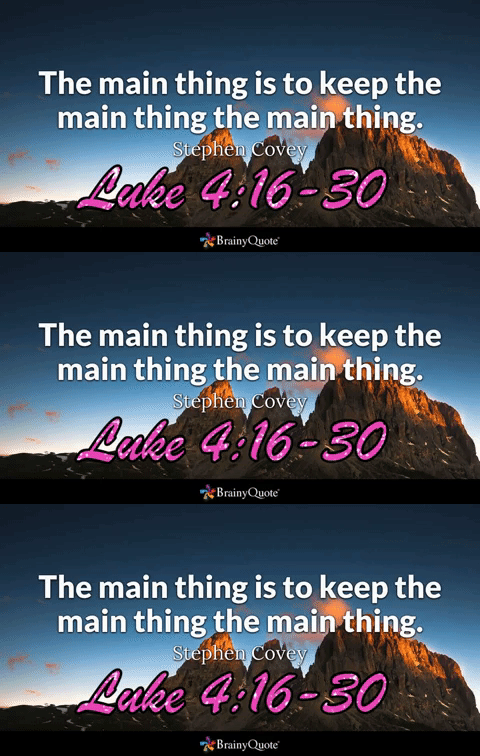
This image combines two distinct references:

  1. A quote from Stephen Covey: “The main thing is to keep the main thing the main thing.” This is a well-known saying that emphasizes the importance of maintaining focus on what’s most essential and not getting distracted by less important matters. Covey, known for “The 7 Habits of Highly Effective People,” often emphasized prioritization and staying focused on core principles.
  2. A biblical reference to Luke 4:16-30 – This passage tells an important story from Jesus’s early ministry where he returns to his hometown of Nazareth and reads from the scroll of Isaiah in the synagogue. The passage is significant because it represents Jesus’s public declaration of his mission and purpose, though it ends with his rejection by his hometown.

The combination of these two references appears to create a meaningful connection – both speak to the importance of staying true to one’s primary purpose or mission. The background shows what appears to be a mountain or cliff face at sunset/sunrise, which adds to the contemplative nature of the message.

Luke 4:16-30 contains several important lessons and themes:

  1. Purpose and Mission
  • Jesus clearly declares his mission by reading from Isaiah’s prophecy
  • He announces his purpose to bring good news to the poor, freedom to prisoners, sight to the blind, and liberty to the oppressed
  • Shows the importance of understanding and embracing one’s calling
  1. Reception and Rejection
  • Despite initially being impressed, Jesus’s hometown people ultimately reject him
  • Demonstrates how familiarity can breed contempt (“No prophet is accepted in his hometown”)
  • Shows that doing what’s right may not always be popular, even among those closest to you
  1. Breaking Down Barriers
  • Jesus challenges his audience by citing examples of God’s prophets helping non-Jews (Elijah helping the widow of Zarephath, Elisha healing Naaman)
  • Illustrates that God’s message and mercy extend beyond cultural and ethnic boundaries
  • Challenges prejudices and exclusive thinking
  1. Standing Firm
  • Even when faced with violent opposition (they tried to throw him off a cliff), Jesus remained steadfast
  • Demonstrates courage in the face of rejection and hostility
  • Shows the importance of maintaining conviction despite opposition
  1. Prophetic Fulfillment
  • Jesus declares “Today this Scripture is fulfilled in your hearing”
  • Shows how Jesus saw himself as the fulfillment of Old Testament prophecies
  • Demonstrates the connection between promise and fulfillment in scripture
  1. The Nature of Ministry
  • Shows that authentic ministry often challenges comfortable assumptions
  • Illustrates that true spiritual leadership may require confronting difficult truths
  • Demonstrates that popularity shouldn’t be the measure of success in spiritual work
  1. Human Nature
  • Reveals how quickly people can turn from admiration to anger when their beliefs are challenged
  • Shows how preconceptions can blind people to truth
  • Illustrates the resistance people often have to challenging messages

The passage ultimately teaches about staying true to one’s mission despite opposition, being willing to challenge cultural assumptions, and the potential cost of speaking truth to power. It’s particularly relevant to anyone facing resistance while trying to fulfill their purpose or bring about positive change.