

HIGH FIVE! (I am an early bird)
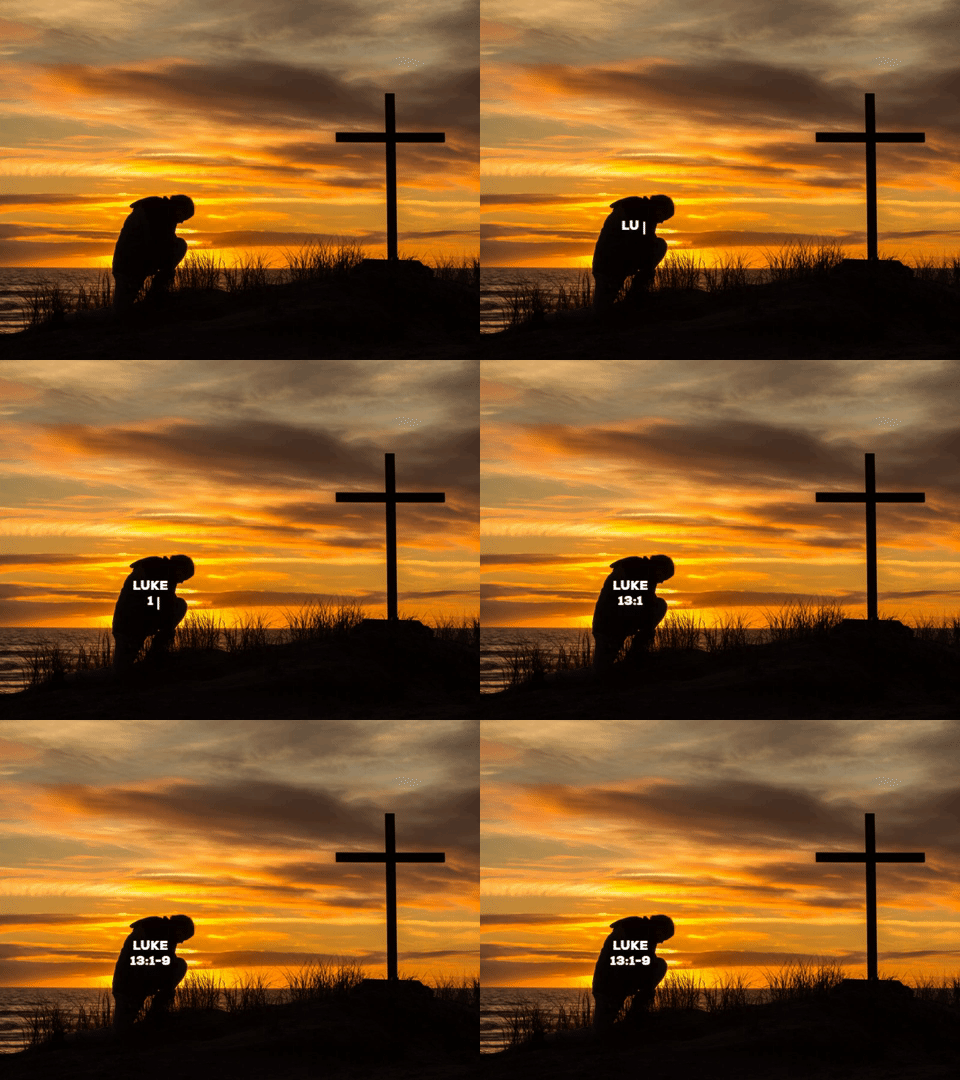
Luke 13:1-9 carries a strong message about repentance and spiritual urgency. In this passage, Jesus responds to people who mention tragic events—the massacre of Galileans by Pilate and the collapse of the tower in Siloam. He challenges the assumption that these victims suffered because they were worse sinners than others. Instead, he warns that everyone must repent, or they too will perish.
Jesus then tells the parable of the barren fig tree, where a man wants to cut down a tree that has failed to bear fruit for three years. The vinedresser pleads for more time, promising to nurture it in hopes that it will finally produce fruit. This parable illustrates God’s patience, but also the reality that time is limited—repentance cannot be delayed forever.
The passage emphasizes that tragedy is not necessarily a sign of divine punishment, but rather a reminder of life’s fragility and the need for spiritual renewal. It urges people to turn toward God and bear fruit in their lives before it is too late.
Does this interpretation align with your understanding? I’d love to hear your thoughts!

I like it here and now… Can we keep growing together??? (LET’S LEARN SOMETHING NEW)

The best time to cut grass is mid-morning (8 AM – 10 AM) or late afternoon (4 PM – 6 PM).
Why?
- Mid-morning: By this time, the morning dew has evaporated, and the grass is dry enough for a clean cut. It also allows the lawn to recover before the heat of the day sets in.
- Late afternoon: The temperature starts to cool, reducing stress on the grass. There’s also enough time for the lawn to heal before nightfall.
When to Avoid Mowing:
- Early morning (6 AM – 8 AM): The grass is still wet from dew, making it harder to cut cleanly and increasing the risk of disease.
- Midday (2 PM – 4 PM): The sun is at its peak, and cutting grass during this time can stress it out.
If you’re looking for optimal lawn health, aim for mid-morning or late afternoon.
LET’S JUST GO MOWING.

 DO-N-GOOD.COM