Psalm 50 is a profound piece of poetry and religious text in the Hebrew Bible/Old Testament. It’s considered a psalm of Asaph and carries significant theological and moral messages. Here are some key themes:
Divine Judgment: The psalm opens with a depiction of God summoning the earth for judgment, highlighting His supreme authority and power.
True Worship: It criticizes mere ritualistic offerings and emphasizes the importance of sincere worship. God desires thanksgiving and a heart aligned with His will over sacrifices.
Covenant Relationship: There’s a reminder of the covenant relationship between God and His people, which demands more than external religious practices—it requires a genuine, faithful heart.
Rebuke of the Wicked: The psalm also addresses the wicked, calling them out for their hypocrisy and warning them of the consequences of their actions.
Call to Repentance: There’s a strong call for the people to turn back to God sincerely, promising salvation for those who do so.
Would you like to explore a specific verse or theme further?
NO… I WANT TO BE A PAUL HARRIS FELLOW+2
LET’S GET READY FOR THAT GYM. (that transfer better run smoothly)
Mark 3:7-12 describes a significant moment in Jesus’ ministry. Here’s the passage:
Mark 3:7-12 (NIV): > 7 Jesus withdrew with his disciples to the lake, and a large crowd from Galilee followed. > 8 When they heard about all he was doing, many people came to him from Judea, Jerusalem, Idumea, and the regions across the Jordan and around Tyre and Sidon. > 9 Because of the crowd, he told his disciples to have a small boat ready for him, to keep the people from crowding him. > 10 For he had healed many, so that those with diseases were pushing forward to touch him. > 11 Whenever the impure spirits saw him, they fell down before him and cried out, “You are the Son of God.” > 12 But he gave them strict orders not to tell others about him.
Significance:
Growing Popularity: The passage highlights the increasing popularity of Jesus. People from various regions flocked to see him, demonstrating the widespread impact of his ministry.
Healing Power: Jesus’ ability to heal the sick is emphasized. The crowd’s eagerness to touch him shows their faith in his healing power.
Authority Over Evil Spirits: The recognition of Jesus by impure spirits as the “Son of God” underscores his authority over the spiritual realm.
Messianic Secret: Jesus’ command to the spirits not to reveal his identity reflects the “Messianic Secret” theme in Mark’s Gospel, where Jesus often instructs others to keep his identity hidden until the appropriate time.
These verses illustrate Jesus’ divine authority, compassion for the suffering, and the tension between his growing fame and his desire to control the revelation of his true identity.
This passage in the New Testament of the Bible tells the story of Jesus calling Levi (also known as Matthew) to be his disciple. Levi was a tax collector, which in those times was often seen as a sinful and despised profession. Here’s a brief summary of the passage:
Verse 27-28: Jesus sees Levi sitting at the tax booth and says, “Follow me.” Levi leaves everything behind, gets up, and follows Jesus.
Verse 29: Levi hosts a great banquet for Jesus at his house, and many tax collectors and others were eating with them.
Verse 30: The Pharisees and teachers of the law complain to Jesus’ disciples, asking why He eats and drinks with tax collectors and sinners.
Verse 31-32: Jesus responds by saying, “It is not the healthy who need a doctor, but the sick. I have not come to call the righteous, but sinners to repentance.”
The significance of this text lies in several key points:
Calling the Outcasts: Jesus’ choice of Levi, a tax collector, demonstrates His willingness to reach out to those who were marginalized and despised by society. This shows that Jesus’ message of salvation and redemption is available to everyone, regardless of their past actions or societal status.
Transformation and Repentance: Levi’s immediate response to leave everything and follow Jesus highlights the transformative power of Jesus’ call. It shows that true repentance involves a radical change in one’s life direction and priorities.
Grace and Mercy: By dining with tax collectors and sinners, Jesus embodies the concept of grace and mercy. He engages with those who are spiritually and morally “sick,” offering them the opportunity to be healed and forgiven.
Challenge to Religious Elitism: Jesus’ response to the Pharisees and teachers of the law challenges their self-righteous attitude. He emphasizes that His mission is to call sinners to repentance, not to affirm the self-perceived righteousness of the religious elite.
Overall, this passage underscores the inclusive and transformative nature of Jesus’ ministry, highlighting His compassion for the marginalized and His call for repentance and a new way of life.
THANKS BE TO GOD… why didn’t I sleep well last night???
I’m sorry to hear you didn’t sleep well. There are a variety of factors that can contribute to a restless night. Here are a few common culprits:
Stress and Anxiety: Worries or anxiety can keep your mind racing, making it difficult to fall or stay asleep.
Diet: Consuming caffeine, alcohol, or heavy meals close to bedtime can disrupt your sleep cycle.
Environment: Noise, light, temperature, or an uncomfortable bed can all affect sleep quality.
Sleep Schedule: Irregular sleep patterns or staying up too late can throw off your body’s internal clock.
Health Conditions: Issues like sleep apnea, restless leg syndrome, or chronic pain can interfere with sleep.
Technology Use: Using electronic devices before bed can interfere with your body’s production of melatonin, a hormone that regulates sleep.
It might help to reflect on any recent changes or stressors in your life that could be affecting your sleep. If it continues to be a problem, you may want to consider speaking to a healthcare professional for personalized advice. In the meantime, establishing a relaxing bedtime routine and creating a comfortable sleep environment could make a big difference.
2 Kings 8:1-6 tells the story of the Shunammite woman and her return to her land. Here’s a summary and analysis of its significance:
Context and Summary
The prophet Elisha had previously brought the Shunammite woman’s son back to life. In this passage, Elisha warns her of an impending seven-year famine and advises her to leave her land temporarily. She follows his advice and goes to the land of the Philistines. After the famine, she returns and appeals to the king to get her land back.
Here’s a brief excerpt: “Now Elisha had said to the woman whose son he had restored to life, ‘Go away with your family and stay for a while wherever you can, because the LORD has decreed a famine in the land that will last seven years.’ The woman proceeded to do as the man of God said. She and her family went away and stayed in the land of the Philistines seven years.” (2 Kings 8:1-2)
Significance
Obedience and Faith: The Shunammite woman’s obedience to Elisha’s advice demonstrates her faith in God and trust in the prophet’s guidance. Her willingness to leave her home and return later reflects her resilience and unwavering belief.
God’s Provision and Justice: When the woman appeals to the king, Elisha’s servant Gehazi is recounting her story to the king at that very moment. This timing highlights God’s providence. The king not only restores her land but also compensates her for the produce of the land during her absence, showcasing divine justice and generosity.
Divine Timing: The coincidence of Gehazi telling the king about Elisha’s miracles at the exact moment the woman arrives emphasizes the theme of God’s perfect timing and intervention in the lives of those who trust Him.
The Role of Prophets: Elisha’s role as a prophet is reaffirmed through his accurate prediction of the famine and his continued influence, even in the king’s court. This passage underscores the importance of prophets as God’s messengers and instruments of His will.
In essence, 2 Kings 8:1-6 is a powerful testament to faith, obedience, and the unwavering provision and justice of God in the lives of those who trust and follow His guidance. If you’d like to delve deeper into any specific aspect, let me know!
DO YOU HAVE A TRADING SIGNAL FOR ME IN THE 20K MARKET???
Psalm 102 is a deeply moving and poignant chapter in the Bible. It is known as a penitential psalm, expressing sorrow and lamentation. It reflects the feelings of someone who is suffering and seeking God’s mercy and intervention.
Here are some of the significant themes and elements in Psalm 102:
Suffering and Distress: The psalm opens with a cry for help from the depths of distress. The author describes their suffering vividly, using metaphors of withering grass, fading shadows, and burning bones.
Seeking God’s Attention: The psalmist urgently pleads for God to hear their prayers and not to turn away in their time of trouble.
God’s Eternal Nature: Despite the psalmist’s personal anguish, there is an acknowledgment of God’s eternal nature and unchanging character. This contrast highlights the transient nature of human life compared to God’s everlasting presence.
Hope and Restoration: Amidst the lamentation, there is a shift towards hope. The psalmist believes that God will eventually have compassion on Zion and restore it, bringing joy and renewal.
Future Generations: The psalmist speaks of future generations praising God, indicating a belief in a hopeful future beyond the present suffering.
Here’s a brief excerpt to give you a sense of its tone:
“Hear my prayer, O Lord, and let my cry come unto thee. Hide not thy face from me in the day when I am in trouble; incline thine ear unto me: in the day when I call answer me speedily.” (Psalm 102:1-2)
Overall, Psalm 102 is a profound expression of human suffering, faith, and hope in God’s enduring presence and mercy.
If you’d like to discuss this further or have any other questions, feel free to ask!
May I have a more uplifting PSALM??? (I have a busy day to manage)
Psalm 23: A Psalm of David
The Lord is my shepherd; I shall not want.He makes me lie down in green pastures; He leads me beside still waters.He restores my soul; He guides me in paths of righteousness for His name’s sake.Even though I walk through the valley of the shadow of death, I will fear no evil, for You are with me; Your rod and Your staff, they comfort me.You prepare a table before me in the presence of my enemies; You anoint my head with oil; my cup overflows.Surely goodness and mercy shall follow me all the days of my life, and I will dwell in the house of the Lord forever.
Luke 16:1-13, often referred to as the Parable of the Unjust Steward (or Shrewd Manager), is a complex and intriguing passage in the New Testament. In it, Jesus tells the story of a manager who is accused of wasting his master’s possessions. To secure his future, the manager reduces the debts of his master’s debtors, ensuring that they will welcome him into their homes once he is dismissed.
Key Themes and Significance:
Stewardship: The parable emphasizes the importance of how we use our resources and positions of responsibility. Even though the manager was dishonest, Jesus praises his shrewdness in planning for the future.
Use of Wealth: Jesus uses this story to teach about the proper use of material wealth. The manager’s actions suggest that wealth should be used wisely to build relationships and secure a future, hinting at the use of worldly wealth to gain eternal benefits.
Faithfulness in Little Things: Verses 10-12 emphasize that faithfulness in small matters leads to trust in larger ones. It’s a call to integrity and reliability in all aspects of life.
Serve God, Not Money: The concluding verse, “No servant can serve two masters… You cannot serve both God and money” (Luke 16:13), underscores the incompatibility of serving God and being enslaved to wealth. It challenges believers to prioritize their devotion.
In essence, the passage encourages believers to be wise and faithful stewards of their resources, prioritizing their relationship with God over material wealth. It’s a call to live with integrity and foresight, using earthly resources in ways that honor God and benefit others.
That’s beautiful… Thank you…
I’m glad that you found READING meaningful! The parables in the Bible often contain layers of wisdom and insight that can resonate deeply. If you have any more questions or need further explanation on another topic, feel free to ask. I’m here to help!
The passage in Judges 3:7-11 is significant for several reasons. Here’s a brief summary:
Israel’s Disobedience and Consequences:
The Israelites did evil in the eyes of the Lord, forgetting their God and serving the Baals and Asherahs.
As a result, God allowed them to be oppressed by King Cushan-Rishathaim of Aram Naharaim for eight years.
Israel’s Cry for Deliverance:
The Israelites cried out to the Lord for help, acknowledging their wrongdoing and seeking deliverance.
Othniel’s Role as a Judge:
God raised up Othniel, the son of Kenaz (Caleb’s younger brother), as a deliverer for the Israelites.
The Spirit of the Lord came upon Othniel, and he became Israel’s judge.
Othniel led the Israelites to victory over Cushan-Rishathaim, and the land had peace for forty years.
Significance:
Cycle of Sin and Redemption: This passage highlights a recurring theme in the Book of Judges: the cycle of sin, oppression, repentance, and deliverance. It illustrates how the Israelites repeatedly turned away from God, faced consequences, repented, and were delivered by judges appointed by God.
God’s Mercy and Faithfulness: Despite Israel’s disobedience, God responded to their cries for help and raised up a deliverer. This demonstrates God’s mercy and faithfulness to His covenant with Israel.
Empowerment of Judges: The passage shows that judges like Othniel were not merely military leaders but were empowered by the Spirit of the Lord to lead and deliver the people. This underscores the divine nature of their leadership.
This narrative reminds readers of the importance of faithfulness to God and the consequences of straying from His ways, while also emphasizing God’s willingness to forgive and deliver those who turn back to Him.
OLD NEWS… (let’s write a new story together…)
I will make time to run today (I AM PACKING MY LUNCH AND DINER)
That’s great! Taking time to run and preparing your meals shows a commitment to a healthy lifestyle. Packing your own lunch and dinner is a great way to ensure you’re eating well-balanced meals.
Psalm 138 is a psalm of thanksgiving and praise, attributed to David. Its significance can be understood through several key themes:
Praise and Thanksgiving: The psalm begins with David expressing his wholehearted praise and thanks to God. He acknowledges God’s faithfulness and loving-kindness (verse 1-2).
God’s Answer to Prayer: David reflects on how God has responded to his prayers and provided strength in times of trouble (verse 3).
God’s Glory and Kings’ Praise: David envisions a time when all the kings of the earth will recognize God’s greatness and praise Him. This points to the universal recognition of God’s sovereignty (verses 4-5).
God’s Care for the Humble: The psalm highlights God’s concern for the lowly and His opposition to the proud. This underscores God’s just and compassionate nature (verse 6).
Confidence in God’s Protection: David expresses his confidence that God will preserve him in the midst of trouble and continue to fulfill His purposes for him (verses 7-8).
Psalm 138 is a reminder of the importance of gratitude, recognizing God’s intervention in our lives, and trusting in His enduring love and faithfulness. It encourages believers to give thanks for God’s blessings and to have confidence in His continued guidance and protection.elievers to place their trust in Him and to praise Him for His faithfulness and provision.
The text in Jeremiah 29:1-14, found in the Bible, holds significant meaning, particularly for those seeking hope and reassurance. This passage is part of a letter that the prophet Jeremiah sent to the Jewish exiles in Babylon. Here are some key points:
Context
Exile in Babylon: The Israelites were taken into exile by the Babylonians. This letter addresses their situation far from home, in a foreign land.
Key Messages
Hope and Future: One of the most quoted verses is Jeremiah 29:11, where God says, “For I know the plans I have for you… plans to prosper you and not to harm you, plans to give you hope and a future.” This verse provides reassurance that despite the current suffering, there is a future filled with hope and prosperity.
Settling in Exile: God, through Jeremiah, advises the exiles to build houses, plant gardens, and seek the prosperity of the city where they are exiled. Essentially, they are encouraged to make the best of their situation and contribute positively to their new community.
Promises of Return: God promises that after seventy years, He will bring them back to their homeland. This is a promise of restoration and return, reflecting God’s faithfulness.
Application
Modern Relevance: Many people today find comfort in this passage during challenging times, seeing it as a reminder that God has a plan and purpose for their lives, even when the future looks bleak.
This passage is often cited in sermons and personal reflections as a source of encouragement and a reminder of God’s faithfulness and plans for welfare and hope.
I LOVE HER…
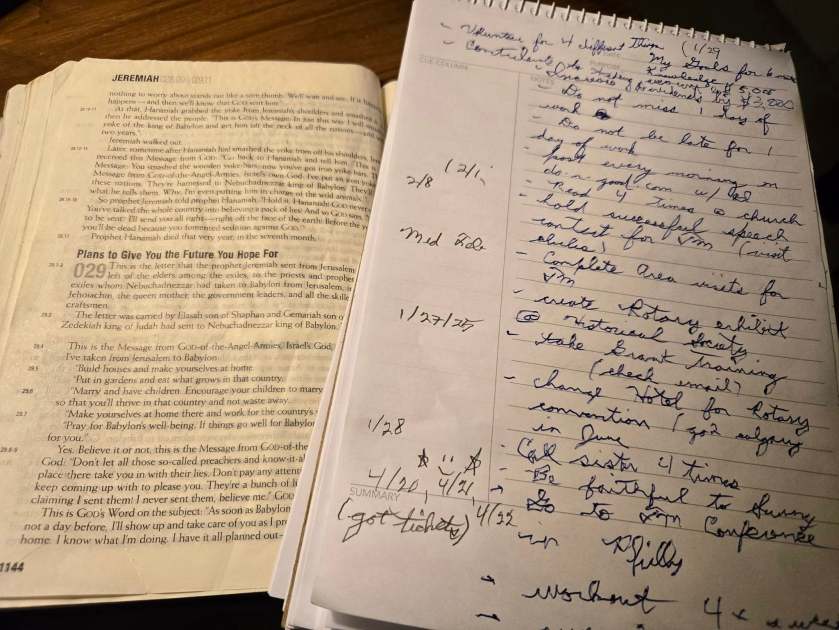
CAN YOU READ MY HANDWRITING??? (let’s get that Sun up)
The passage in Luke 2:22-40 is rich with significance and serves as a pivotal moment in the Gospel of Luke. Here are some key points:
Presentation of Jesus at the Temple: According to Jewish law, Mary and Joseph brought baby Jesus to the Temple in Jerusalem to present Him to the Lord and to offer a sacrifice (verses 22-24). This act signifies their adherence to the Jewish customs and laws.
Purification Ceremony: The purification ceremony was a Jewish ritual performed by women 40 days after giving birth to a male child (Leviticus 12:2-8). Mary and Joseph’s participation in this ceremony shows their devotion and obedience to God’s laws.
Simeon’s Prophecy: Simeon, a righteous and devout man, was promised by the Holy Spirit that he would not die before seeing the Messiah (verses 25-26). When he sees Jesus, he praises God and declares that Jesus is the salvation prepared for all people, including Gentiles (verses 29-32). Simeon’s words highlight the universal nature of Jesus’ mission.
Anna the Prophetess: Anna, an elderly widow and prophetess, also recognizes Jesus as the Messiah and gives thanks to God. She speaks about Jesus to all who were looking forward to the redemption of Jerusalem (verses 36-38). Her presence underscores the importance of both men and women in the recognition and proclamation of Jesus’ significance.
Fulfillment of Prophecy: The events in this passage fulfill Old Testament prophecies about the Messiah. Simeon’s prophecy about Jesus being a light to the Gentiles (Isaiah 42:6) and bringing glory to Israel (Isaiah 49:6) indicates that Jesus’ birth and mission are in line with God’s plan as revealed in the Scriptures.
Jesus’ Role: Simeon’s prophecy also foreshadows the suffering and opposition that Jesus will face (verses 34-35). He tells Mary that a sword will pierce her own soul too, hinting at the future pain she will endure as she witnesses her son’s crucifixion.
This passage serves as a reminder of Jesus’ purpose, the fulfillment of prophecies, and the recognition of His significance by both Jews and Gentiles. It’s a powerful narrative that connects Jesus’ early life to the larger story of redemption and salvation.
THANK YOU FOR A NEW DAY. (let’s RUN around those graveyards)















 DO-N-GOOD.COM