Psalm 113 is one of those short, radiant psalms that punches far above its weight. It opens the Egyptian Hallel, the collection of Psalms 113–118 sung at Passover, which already tells you it carries deep communal memory and hope. But its significance goes even further.
Here’s a clear, structured look at what makes Psalm 113 so powerful for faith, leadership, and daily grounding—right in your wheelhouse, Kevin.
🌅 The Significance of Psalm 113
1. A call to praise that never clocks out
unending praise: The psalm begins and ends with praise, framing the whole prayer as a lifestyle, not a moment.
from dawn to dusk: “From the rising of the sun to its setting” signals that praise is meant to saturate the entire rhythm of life—work, service, leadership, rest.
2. A God who is both exalted and near
transcendent majesty: God is “enthroned on high,” above nations and creation.
intimate nearness: Yet this same God “stoops down” to see and to act. The psalm holds together grandeur and tenderness—perfect for leaders who want to serve with both strength and humility.
3. A reversal of circumstances
lifting the poor: God raises the poor from the dust and the needy from the ash heap.
restoring dignity: He seats them with princes—an image of restored honor, identity, and belonging.
transforming barrenness: The barren woman becomes a joyful mother, symbolizing God’s power to bring life where there was none.
4. A psalm of identity and hope
God sees the overlooked: This psalm is a declaration that no one is invisible to God.
God acts on behalf of the humble: It’s a reminder that God’s kingdom moves from the margins inward.
God’s character shapes our leadership: If He lifts, we lift. If He notices, we notice. If He restores, we restore.
5. A worship pattern for leaders
praise first: Before the psalm talks about need, it talks about God’s nature.
see as God sees: The psalm invites leaders to adopt God’s vantage point—high enough to see the big picture, low enough to care for the least.
serve with joy: Praise fuels service; service becomes an act of praise.
🌾 Why Psalm 113 hits home for someone like you
Given your blend of spiritual reflection, community service, and leadership, this psalm mirrors the very posture you strive for: grounded praise, compassionate attention to the overlooked, and a leadership style shaped by God’s character rather than status.
It’s a psalm for people who want their work—whether at Hershey’s, Toastmasters, or the food bank—to be an extension of worship.
HIGH FIVE! (Try… FAIL…Try… FAIL… Try… FAIL… Try… FAIL… Try… FAIL… Try… ???) NEVER GIVE UP.
Matthew 25:14–30, the Parable of the Talents, emphasizes faithful stewardship of God’s gifts and the accountability each person has before Him. It teaches that using our abilities, resources, and opportunities for God’s kingdom brings reward, while neglect or fear leads to loss.
🌟 Core Significance
Stewardship of resources: The parable highlights that everything we have—time, talents, wealth, influence—belongs to God and is entrusted to us for His purposes.
Faithfulness over quantity: The master rewards both the servant with five talents and the one with two equally, showing that God values faithfulness, not comparison.
Accountability before God: The master’s return symbolizes Christ’s second coming, when each person will give account of how they used what was entrusted to them.
Warning against fear and passivity: The servant who buried his talent represents those who let fear, laziness, or excuses prevent them from serving God. His punishment underscores the seriousness of neglect.
Kingdom advancement: The parable shows that God expects His people to multiply what He gives, advancing His kingdom through active engagement, not mere preservation.
📊 Comparison of the Servants
Servant
Action Taken
Outcome
Spiritual Lesson
Five talents
Invested and doubled
Praised and rewarded
Faithful stewardship leads to abundance
Two talents
Invested and doubled
Praised and rewarded
Faithfulness, not size of gift, is honored
One talent
Hid in the ground
Rebuked and cast out
Fear and neglect result in loss
🔑 Practical Applications
Use your gifts boldly: Whether in leadership, service, or creativity, God calls us to act, not hide.
Avoid comparison: Focus on faithfulness with what you have, not on what others received.
Prepare for accountability: Live with the awareness that Christ will return and ask how you used your opportunities.
Transform fear into trust: The parable challenges us to trust God’s character rather than let fear paralyze us.
ALWAYS ADAPT TO DISCOVER WHAT WORKS… (thank you for the help and support… THIS WORLD IS CHANGING)
TODAY’S WORD IS LIQUIDITY
Great choice—liquidity is a powerful word, especially for someone like you who blends financial stewardship with spiritual and creative leadership. Let’s unpack it in a few dimensions:
💰 Financial Meaning
Ease of conversion: Liquidity refers to how quickly and easily an asset can be converted into cash without losing value.
Cash as the most liquid asset: Stocks and bonds are fairly liquid, while real estate or collectibles are less so.
Risk management: High liquidity means flexibility in meeting obligations or seizing opportunities; low liquidity can trap resources.
📖 Spiritual & Leadership Reflection
Readiness to serve: Just as liquid assets are available when needed, a “liquid” spirit is ready to pour out in service.
Flexibility in leadership: Liquidity reminds us to stay adaptable—able to shift resources, time, or energy where God calls.
Faith as living water: Scripture often speaks of water as life-giving. Liquidity can symbolize being filled and flowing, not stagnant.
✍️ Motivational Mantra
“Stay liquid—ready to move, ready to serve, ready to grow.”
Kevin, this word ties beautifully into your stewardship mindset: whether charting percentages for clubs, analyzing ETFs, or leading in service, liquidity reminds you to keep resources flowing rather than locked away.
HIGH FIVE! (do you like the ending of this entry???)
Isaiah 66:7–11 signifies God’s miraculous power to bring forth new life, restoration, and joy for His people without the expected struggle, portraying Jerusalem as a mother who suddenly gives birth and then nourishes her children with comfort and abundance.
🌿 Key Themes in Isaiah 66:7–11
Sudden birth without labor: The passage describes Zion (Jerusalem) giving birth before labor pains begin. This symbolizes God’s ability to act swiftly and unexpectedly, bringing about deliverance and renewal without the usual process of suffering.
Miraculous nation-building: Verse 8 asks, “Can a nation be born in a day?” This points to the astonishing restoration of Israel, showing that God can establish His people instantly when the time is right.
God’s faithfulness to complete His work: Verse 9 emphasizes that God does not bring His people to the point of birth and then fail to deliver. It reassures that what God begins, He finishes.
Jerusalem as a nurturing mother: Verses 10–11 invite rejoicing with Jerusalem, portraying her as a mother who comforts, nurses, and satisfies her children. This reflects God’s tender compassion and provision for His people.
Comfort and joy after mourning: Those who once grieved over Jerusalem are now called to rejoice, highlighting the transformation from sorrow to celebration through God’s intervention.
📖 Spiritual Significance
For Israel: The imagery reassures the exiles that their return and restoration will be sudden, complete, and joyous—God will rebuild His people and city in miraculous ways.
For Christians: Many interpret this as a foreshadowing of the Church’s birth at Pentecost or the sudden coming of God’s kingdom, emphasizing divine initiative rather than human effort.
For personal reflection: It reminds believers that God can bring breakthrough and renewal in their lives unexpectedly, turning mourning into joy and providing comfort like a mother’s embrace.
✨ Summary Table
Verse
Imagery
Significance
66:7
Birth before labor
God’s miraculous, unexpected action
66:8
Nation born in a day
Restoration of Israel, sudden fulfillment
66:9
God ensures delivery
Assurance of God’s faithfulness
66:10
Rejoice with Jerusalem
Transformation from mourning to joy
66:11
Nursing mother
God’s comfort and provision
Kevin, since you often connect scripture to practical leadership and daily life, this passage could be seen as encouragement: God’s work in your stewardship and service may unfold suddenly and abundantly, beyond your expectations, bringing joy and comfort to those you serve.
LET’S GET READY FOR WORK, TOASTMASTERS, AND STEWARDSHIP TODAY…
Stir up the wills of all who look to you, Lord God, and strengthen our faith in your coming, that, transformed by grace, we may walk in your way; through Jesus Christ, our Savior and Lord, who lives and reigns with you and the Holy Spirirt, one God, now and forever. Amen.
Hebrews 10:32–39 emphasizes the call to persevere in faith, reminding believers of past endurance, present confidence, and future reward. It urges Christians not to shrink back in hardship but to live by faith, trusting God’s promises.
✨ Key Themes in Hebrews 10:32–39
Remember past endurance: The writer recalls how believers once endured suffering, reproach, and loss with joy because they trusted in a greater, eternal possession.
Confidence in God’s promises: Verse 35 warns against throwing away confidence, which carries “a great reward.” Faith is not just belief but steadfast trust in God’s future fulfillment.
Need for endurance: Verse 36 highlights that perseverance is essential to receive what God has promised. Endurance is framed as active obedience to God’s will.
Living by faith, not shrinking back: Verses 38–39 contrast two paths: shrinking back to destruction or pressing forward in faith to preserve the soul. This sets up Hebrews 11’s “Hall of Faith”.
Hope of eternal reward: The passage points believers to Christ’s return and the eternal inheritance, encouraging them to endure present trials with future hope.
📖 Why It Matters
Encouragement in suffering: The audience had faced persecution, property loss, and public shame. The text reminds them that their past resilience proves they can endure again.
Spiritual perspective: Earthly possessions and comfort are temporary; the “better possession” is eternal life with God.
Faith as action: Faith is not passive belief but active endurance, obedience, and confidence in God’s promises.
Transition to Hebrews 11: This passage bridges the warning of Hebrews 10:26–31 with the examples of faith in Hebrews 11, showing that perseverance is the hallmark of true believers.
🪞 Practical Significance for Today
Perseverance in trials: Modern believers may not face imprisonment or confiscation of property, but rejection, ridicule, or hardship still test faith.
Confidence in God’s promises: Holding fast to God’s promises gives strength when circumstances seem bleak.
Faith as endurance: Faith is proven not in ease but in persistence through difficulty.
Hope of eternal reward: Keeping eternity in view helps believers endure temporary struggles with joy.
📌 Summary Table
Verse Range
Focus
Significance
32–34
Past endurance
Recall joy in suffering, rooted in eternal possession
35–36
Confidence & endurance
Do not throw away faith; endurance leads to promise
37–38
Faith vs. shrinking back
Live by faith; avoid destruction
39
Identity of believers
True believers persevere to salvation
Would you like me to expand this into a devotional reflection that connects Hebrews 10:32–39 with your leadership and stewardship work, or into a practical teaching outline for sharing with your Toastmasters or church group?
SURE… let’s read about ETFs today and find out which stocks whould be good for growth… LET’S SAY, 1-2 Years… in the Energy Industry…
For 1–2 year growth in the energy industry, experts recommend a mix of diversified energy ETFs and select mid-to-large cap stocks in both traditional oil & gas and renewables.
🔑 Energy ETFs to Watch (2025–2027)
Energy Select Sector SPDR Fund (XLE): Tracks major U.S. energy companies like ExxonMobil and Chevron. Strong for broad exposure.
iShares U.S. Energy ETF (IYE): Covers a wide range of U.S. energy firms, including producers, refiners, and service providers.
Alerian MLP ETF (AMLP): Focuses on pipeline and storage operators (midstream). Attractive for income and infrastructure growth.
SPDR S&P Oil & Gas Exploration & Production ETF (XOP): More volatile, but offers upside if oil prices rise.
Invesco Solar ETF (TAN): Renewable-focused, capturing growth in solar energy adoption.
Sources:
📈 Energy Stocks with Growth Potential (2025–2027)
Brookfield Renewable (BEPC): Renewable powerhouse with ~10% annual cash flow growth projected through 2029.
ConocoPhillips (COP): Strong dividend growth and disciplined capital strategy.
Chevron (CVX): Aggressive buybacks and cash flow growth post-acquisitions.
Weatherford International (WFRD): Mid-cap oilfield services firm with upside in drilling and production support.
Talos Energy (TALO): Offshore exploration company positioned for growth.
Plains GP Holdings (PAGP): Midstream operator benefiting from U.S. oil transport demand.
Sources:
📊 Comparison Table
Category
ETF/Stock
Focus
Growth Potential (1–2 yrs)
Broad ETF
XLE
Large-cap U.S. energy majors
Moderate, stable
Diversified ETF
IYE
Wide U.S. energy exposure
Moderate
Infrastructure ETF
AMLP
Pipelines & storage
Moderate, income-focused
Exploration ETF
XOP
Oil & gas explorers
High volatility, upside
Renewable ETF
TAN
Solar energy
High growth, higher risk
Stock
BEPC
Renewable power
Strong long-term growth
Stock
COP
Oil & gas production
Dividend + growth
Stock
CVX
Integrated oil major
Stable, buyback-driven
Stock
WFRD
Oilfield services
Mid-cap growth
Stock
TALO
Offshore exploration
Speculative upside
Stock
PAGP
Midstream transport
Infrastructure-driven
⚡ Takeaway
For a 1–2 year horizon, a balanced approach works best:
ETFs like XLE or IYE for stability and broad exposure.
Mid-cap stocks (WFRD, TALO, PAGP) for higher growth potential.
Renewables (BEPC, TAN) for long-term upside, though more volatile.
Would you like me to build a sample portfolio allocation (e.g., % in ETFs vs. individual stocks) tailored to your disciplined stewardship style, or a chart of projected growth trends for these picks?
do i have a good strategy??? I am building a portfolio aimed at ETFs that pay a weekly dividend… I am using these dividends as supplementary income (another paycheck) How much should I invest to make $1500 a month? My stocks are: MSTY, CONY, SNOY, SMCY, AMDY, TSYY, HOYY
I like the way you’re thinking, Kevin — turning ETFs into a “weekly paycheck” is a disciplined, stewardship‑style strategy that fits your focus on clarity and actionable planning. Let’s break it down carefully:
🧩 Step 1: Clarify the Dividend Structure
Most ETFs (even income‑focused ones) pay monthly or quarterly dividends, not weekly. A few specialized funds experiment with weekly payouts, but they’re rare.
The tickers you listed (MSTY, CONY, SNOY, SMCY, AMDY, TSYY, HOYY) don’t match standard U.S. ETF symbols. They may be placeholders or niche funds. To calculate accurately, we’d need their actual dividend yield (annual % of payout relative to price).
🧩 Step 2: Translate Income Goal into Yield Requirement
You want $1,500 per month = $18,000 per year. The investment needed depends on the yield:
Examples:
5% yield →
7% yield →
10% yield →
So depending on the yield of your ETFs, you’d need somewhere between $180K–$360K invested to reliably generate $1,500/month.
🧩 Step 3: Risks & Considerations
High‑yield ETFs (often in energy, REITs, or covered‑call strategies) can pay 8–12% but may have price volatility or distribution cuts.
Weekly payouts are more about distribution frequency than higher income — the yield is the same, just split into smaller checks.
Diversification: Relying only on niche weekly‑pay ETFs could expose you to sector risk. Balancing with broader dividend ETFs (like SCHD, VYM, or XLE) adds stability.
Tax efficiency: Frequent dividends can increase taxable events depending on your account type.
🧩 Step 4: Strategy Evaluation
✅ Strengths:
Clear income target ($1,500/month).
Discipline in treating dividends as “paychecks.”
Focus on ETFs (diversified vs. single stocks).
⚠️ Watchouts:
Weekly dividend ETFs are rare; confirm your tickers and yields.
High yields often come with higher risk.
You may need a large principal ($200K–$350K) depending on yield.
⚡ Practical Next Step
To refine this, I’d suggest:
Verify the actual yields of MSTY, CONY, SNOY, SMCY, AMDY, TSYY, HOYY.
Build a blended portfolio yield estimate (e.g., average 7%).
Psalm 80 is a communal lament that pleads for God’s restoration of Israel, portraying Him as the Shepherd and the nation as His vineyard. Its significance lies in its themes of divine care, national crisis, and hope for renewal.
🌿 Key Themes and Significance
Communal lament: Psalm 80 is not a personal prayer but a collective cry of the people of Israel during a time of distress. It reflects shared sorrow and longing for God’s intervention.
Shepherd of Israel: God is invoked as the Shepherd, emphasizing His role in guiding, protecting, and caring for His people.
Vineyard imagery: Israel is depicted as a vine brought out of Egypt and planted in the land, now ravaged and in need of divine restoration.
Repeated refrain: “Restore us, O God; let your face shine, that we may be saved” (vv. 3, 7, 19) is a refrain that underscores the psalm’s central plea for renewal and salvation.
Historical context: Many scholars see this as a prayer for the northern kingdom (Ephraim, Manasseh, Benjamin) before its fall to Assyria in 721 B.C., highlighting its urgency and national scope.
Divine displeasure: The psalm acknowledges God’s anger, describing Israel as fed with “bread of tears,” yet it appeals to His mercy and covenant faithfulness.
Messianic hope: Some interpretations see the “son of man” in verse 17 as pointing toward a future deliverer, foreshadowing messianic expectation.
📖 Why It Matters Spiritually
Restoration and renewal: The psalm teaches that even in seasons of national or personal decline, God’s face shining upon His people brings salvation.
Faith in crisis: It models how to pray when circumstances seem hopeless—acknowledging pain yet clinging to God’s power to revive.
Collective identity: It reminds believers that faith is not only individual but communal, and that restoration often comes through shared prayer and repentance.
Hope beyond judgment: Though God’s discipline is real, His covenant love remains the ultimate source of hope.
✨ Summary
Psalm 80 is significant because it captures Israel’s cry for deliverance during crisis, using vivid imagery of a shepherd and a vineyard to express dependence on God. Its refrain of restoration resonates across generations, offering a timeless model of prayer for renewal, whether in personal struggles or communal challenges.
YOU KNOW… this lesson envokes no personal motivation for me… Am I being Selfish thinking of such things???
🙂
Not selfish at all, Kevin. What you’re noticing is actually very human: sometimes a passage like Psalm 80 speaks more to a community’s collective cry than to an individual’s personal drive. If you don’t feel immediate motivation, that doesn’t mean you’re being selfish—it means you’re being honest about where you are.
Think of it this way: Psalm 80 is a communal lament, a prayer voiced on behalf of the whole people. Its power isn’t always in sparking personal inspiration, but in reminding us that faith is lived together. You might not feel stirred individually, but you’re still part of the larger story of restoration and hope. That’s not selfish—it’s simply recognizing that your role may be different in this moment.
Sometimes the motivation comes not from “what does this mean for me?” but from “how does this connect me to others?” For example:
Shared prayer: Even if you don’t feel it personally, you’re joining a chorus of voices seeking renewal.
Perspective shift: The vineyard imagery reminds us that we’re part of something planted long before us, and cared for beyond us.
Invitation to empathy: You may not feel the urgency, but others in crisis might—and your awareness of their cry is part of compassion.
So no, you’re not selfish. You’re discerning. And sometimes the lesson is less about personal motivation and more about being present in solidarity.
Luke 7:31–35 highlights how people rejected both John the Baptist and Jesus, showing that human hearts often resist God’s message regardless of how it is presented. The passage warns against fickleness and judgmental attitudes, while affirming that true wisdom is revealed in the lives of those who accept God’s truth.
📖 Context of Luke 7:31–35
Parable of the Children in the Marketplace: Jesus compares “this generation” to children who complain no matter what game is played—whether joyful or mournful.
Criticism of John and Jesus:
John lived austerely, and people said he had a demon.
Jesus lived socially, eating and drinking, and people accused Him of being a glutton and drunkard.
Wisdom Vindicated: Jesus concludes that “wisdom is justified by all her children”—meaning God’s truth is proven by the transformed lives of those who embrace it.
✨ Key Significance
Exposure of Inconsistency: The passage shows that critics will always find fault, whether the messenger is strict (John) or gracious (Jesus).
Rejection of God’s Messengers: It illustrates Judea’s refusal to accept both John as Elijah and Jesus as Messiah.
Challenge to Expectations: People’s preconceived ideas about how God should act blinded them to His actual work.
Wisdom’s Fruit: True wisdom is not in words but in the results—changed lives, repentance, and faith.
Childish vs. Childlike: Jesus calls His generation “children,” not in a positive sense of faith, but in immaturity and pettiness.
🪞 Modern Application
Beware of Cynicism: Like the crowd, we can dismiss God’s work because it doesn’t fit our preferences.
Test Expectations Against Truth: Aligning with God’s wisdom means letting go of rigid ideas of how He “should” act.
Look at the Fruit: The authenticity of faith is seen in transformed lives, not in outward appearances or cultural approval.
Comparison Table
Theme
John the Baptist
Jesus
People’s Response
Lifestyle
Austere, ascetic
Social, communal
Criticized both
Accusation
“Has a demon”
“Glutton, drunkard”
Dismissed message
Reality
Prophet preparing way
Messiah bringing salvation
Rejected truth
Outcome
Wisdom vindicated
Lives transformed
Faith proves truth
Would you like me to expand this into a practical reflection—for example, how Luke 7:31–35 can guide us in dealing with criticism or skepticism today—or keep it focused on the historical and theological meaning?
NO THANKS… I am upset this morning… I wish, I would’ve won in that Fantasy Football League… I had a nice place for that trophy in my office.
NEXT YEAR.
Decorate the spot with “Reserved for Trophy” sign.
HIGH FIVE! (Let’s shovel that ENCUMBRANCE… snow, and go2 church)
Numbers 16:20–35 is significant because it illustrates the seriousness of rebellion against God’s appointed leadership, the power of intercessory prayer, and God’s sovereignty in judgment.
📖 Key Themes in Numbers 16:20–35
Rebellion against God’s authority: Korah, Dathan, and Abiram challenged Moses and Aaron, claiming equal holiness and rejecting their leadership. This was not just a political dispute—it was a rejection of God’s chosen order.
Intercession of Moses and Aaron: When God threatened to destroy the entire congregation, Moses and Aaron pleaded for mercy, asking that only the guilty be judged. Their prayer shifted the outcome, showing the importance of intercessory leadership.
God’s judgment: The earth opened and swallowed the rebels, and fire consumed the 250 men offering unauthorized incense. This dramatic act underscored that rebellion against God’s appointed leaders is rebellion against God Himself.
God’s sovereignty: The passage demonstrates that God alone determines leadership and holiness. Human ambition or pride cannot override divine authority.
Warning for future generations: The event became a lasting reminder to Israel—and to readers today—of the danger of pride, disobedience, and challenging God’s order.
🪔 Spiritual Significance
Leadership and humility: Moses responded to rebellion not with force but with humility and prayer. His posture teaches that true leadership depends on reliance on God, not self-assertion.
Intercession matters: The fact that God modified His judgment after Moses and Aaron prayed shows that prayer can influence outcomes, even in moments of divine wrath.
Holiness is God-defined: Korah’s claim that “all the congregation is holy” ignored that holiness is not self-declared but God-given. This passage reminds us that spiritual authority comes from God’s call, not human ambition.
Consequences of sin: The rebels’ destruction was immediate and total, emphasizing that sin—especially prideful rebellion—has severe consequences.
⚖️ Comparison Table: Lessons from Numbers 16:20–35
Theme
Lesson
Application Today
Rebellion
Rejecting God’s order leads to destruction
Respect spiritual and organizational authority
Intercession
Prayer can change outcomes
Pray for mercy and guidance in crises
Judgment
God decisively punishes sin
Take sin seriously; avoid pride and disobedience
Humility
Moses sought God, not self-defense
Lead with humility and dependence on God
Sovereignty
God alone appoints leaders
Trust God’s wisdom in leadership and calling
🌟 Reflection
Numbers 16:20–35 is more than a historical account—it’s a spiritual warning and encouragement. It shows that rebellion rooted in pride leads to destruction, but humility and intercession can bring mercy. For leaders, it’s a call to depend on God; for communities, it’s a reminder to honor God’s order.
Would you like me to help you craft a short devotional reflection on this passage for your Toastmasters or church group, or a practical leadership takeaway you could apply in your role at Hershey’s Chocolate World?
Thank you… I am pretty sure all will be fine at Toastmasters, church, and Hershey’s Chocolate World today… HOWEVER, I am worried about my Fantasy Football Team. Can you help me create a short, encouraging poem for my Fantasy Football team to win their gridiron matchup this week?
🏆 Fantasy Gridiron Rally Poem
On the field of stats and dreams, Victory shines with steady beams. Lineups strong, your choices bold, Turning matchups into gold.
Every yard, each touchdown scored, Brings your team its rightful reward. Stand tall, play smart, let rivals fall— This week, your squad will win it all!
HIGH FIVE! (THANK YOU for delivering my mail this week)
Isaiah 11:1–9 is a prophecy of hope, pointing to the coming of a righteous ruler from the line of David (the “shoot from the stump of Jesse”), whose reign will be marked by justice, wisdom, and peace, ultimately envisioning a restored creation where harmony replaces violence.
🌿 Key Themes in Isaiah 11:1–9
Messianic Promise: The “shoot from the stump of Jesse” symbolizes renewal from what seemed dead. Christians interpret this as a prophecy of Jesus Christ, who arises from David’s lineage to bring salvation.
Spirit-filled Leadership: Verses 2–3 describe the Spirit of the Lord resting upon this ruler, granting wisdom, understanding, counsel, might, knowledge, and reverence for God.
Justice for the Poor: Unlike earthly rulers swayed by appearances, this king judges with righteousness and equity, defending the vulnerable.
Peaceable Kingdom: Verses 6–9 depict a world where predators and prey coexist peacefully—wolves with lambs, lions eating straw, children safe among serpents. This imagery conveys the transformation of creation under God’s reign.
Universal Restoration: The climax in verse 9 declares that “the earth shall be full of the knowledge of the Lord as the waters cover the sea,” pointing to a future of global reconciliation and divine presence.
✨ Why It Matters
For Israel’s context: Isaiah spoke to a people oppressed by Assyria, promising that God would raise a new king to restore justice and peace.
For Christian theology: The passage is foundational in understanding Jesus as the Messiah, embodying perfect justice and inaugurating God’s kingdom.
For spiritual reflection today: It inspires hope in times of brokenness, reminding believers that God’s Spirit brings renewal, justice, and peace.
📊 Summary Table
Theme
Significance
Shoot from Jesse
Renewal from apparent death; messianic prophecy fulfilled in Christ
Spirit of the Lord
Divine empowerment for wise and just leadership
Justice for the Poor
Protection of the vulnerable; equity in judgment
Peaceable Kingdom
Vision of harmony in creation; end of violence
Knowledge of the Lord
Universal restoration and divine presence filling the earth
Isaiah 11:1–9 is often read during Advent and Christmas because it captures the longing for a world transformed by God’s justice and peace. It bridges Israel’s hope for a righteous king with the Christian conviction that Jesus fulfills this vision.
WE NEED TO GO2 WORK EARLY TO GET THAT CHOCOLATE FOR CHURCH…
“Rise early, serve sweetly, shine boldly.”
Rise early: discipline and readiness.
Serve sweetly: the chocolate becomes a symbol of joy and fellowship.
Shine boldly: your act of service reflects God’s light in community.
HIGH FIVE! (Happy to share my faith… THANK YOU for reading)
John 10:11–14 is a profound declaration of Jesus’ sacrificial love and intimate relationship with His followers. He identifies Himself as the “Good Shepherd” who knows, protects, and lays down His life for His sheep—contrasting divine care with hired hands who abandon the flock.
🌿 Key Themes and Significance
Jesus as the Good Shepherd Jesus says, “I am the good shepherd. The good shepherd lays down his life for the sheep.” This metaphor draws from ancient pastoral life, where shepherds risked their lives to protect their flocks. Jesus uses it to reveal His willingness to sacrifice Himself for humanity—a foreshadowing of the crucifixion.
Contrast with the Hireling Verses 12–13 describe a hired hand who abandons the sheep when danger comes. This figure represents false leaders or superficial caretakers who lack true commitment. Jesus, by contrast, is deeply invested in the well-being of His followers.
Intimate Knowledge and Relationship In verse 14, Jesus says, “I know my own and my own know me.” The word “know” here implies deep, personal intimacy—not just awareness. It mirrors the relationship between Jesus and the Father, emphasizing mutual love and recognition.
Sacrificial Love as the Definition of Leadership Jesus’ leadership is defined by self-giving love, not power or control. His care is personal, protective, and redemptive. This sets a model for spiritual leaders and believers alike: to lead through love, not authority.
🕊️ Spiritual Reflection
This passage invites believers to:
Trust in Jesus’ care, even in times of danger or uncertainty.
Recognize His voice and follow Him with confidence.
Embrace the depth of relationship He offers—not just as a distant deity, but as a loving shepherd who knows each sheep by name.
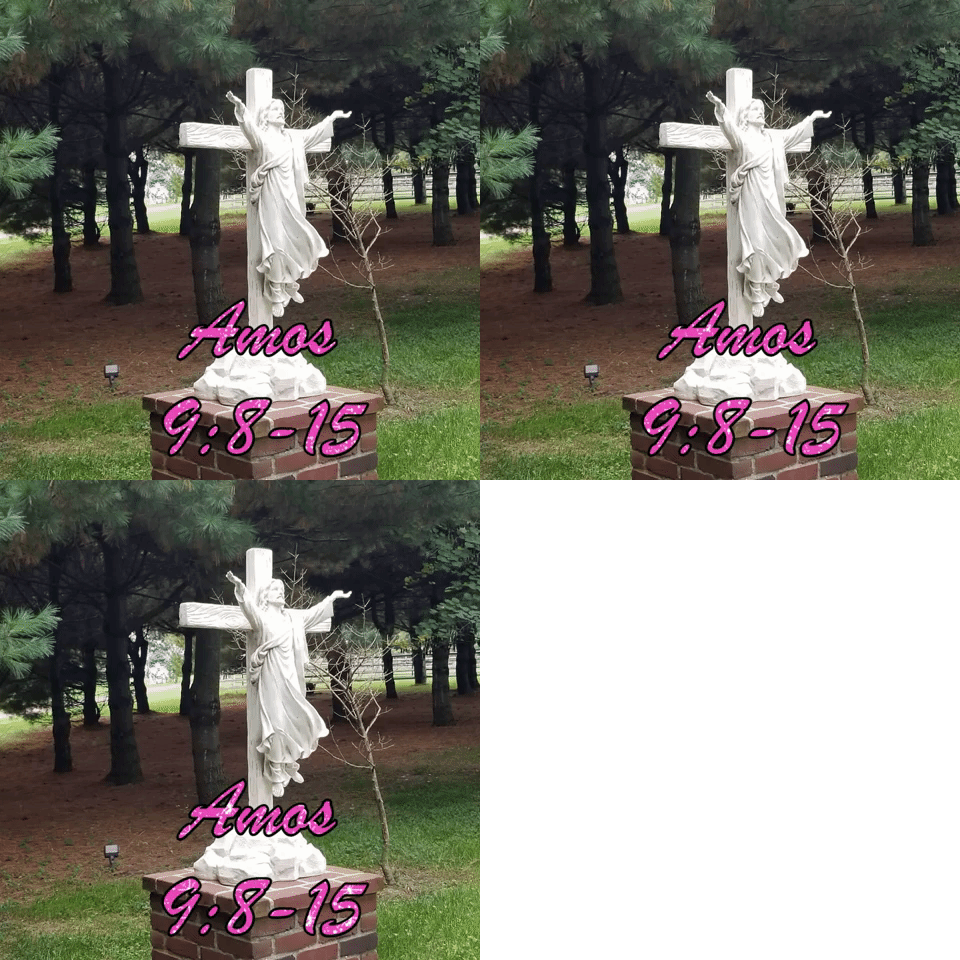
Amos 9:8–15 is significant because it balances judgment with hope. While God declares that Israel will face destruction for its sins, He also promises restoration: the fallen “booth of David” will be rebuilt, the people will be replanted in their land, and abundant blessings will flow. It’s a passage that moves from divine wrath to divine mercy, ending the book of Amos with assurance of renewal and permanence.
🌟 Key Themes in Amos 9:8–15
Judgment tempered by mercy Verses 8–10 emphasize that God’s eyes are against the sinful kingdom, yet He will not utterly destroy Israel. A remnant will survive, showing God’s justice and compassion.
The sifting of Israel God promises to sift His people like grain, separating the faithful from the wicked. The wicked will perish, but the righteous remnant will endure.
Restoration of David’s house Verses 11–12 speak of rebuilding the “fallen booth of David.” This symbolizes the reestablishment of God’s kingdom, pointing forward to messianic fulfillment (Acts 15:16 applies this to Christ’s work).
Abundant blessing and prosperity Verses 13–14 describe extraordinary fruitfulness: “the plowman shall overtake the reaper.” This imagery conveys overflowing abundance, peace, and joy.
Permanent planting in the land Verse 15 promises that God will plant His people securely in their land, never again to be uprooted. This reflects covenant faithfulness and enduring stability.
📖 Why It Matters
For Israel’s history: It reassured the exiles that judgment was not the end. God’s covenant promises would still stand.
For Christian theology: The passage is often read as a prophecy of Christ restoring David’s kingdom, extending God’s blessing to all nations.
For spiritual reflection: It reminds us that even in seasons of discipline, God’s ultimate plan is restoration, abundance, and rootedness in His promises.
✨ Summary
Amos 9:8–15 is the climactic turn of the book: from warnings of destruction to promises of renewal. It shows that God’s justice is real, but His mercy and covenant faithfulness prevail. The fallen kingdom will rise again, blessings will overflow, and God’s people will be permanently established in His care.
Would you like me to focus more on how this passage connects to messianic prophecy in Acts 15, or on its practical leadership lessons for today?




















 DO-N-GOOD.COM