
TODAY’S WORD: The Journey of the Magi: Faith and Divine Guidance

HIGH FIVE! (Good morning for some swings and conversation)

Matthew 2:1-12 recounts the journey of the Magi, or Wise Men, who traveled from the East to Jerusalem, following a star that marked the birth of the “King of the Jews.” Their visit to King Herod and their eventual discovery of Jesus in Bethlehem highlight several key themes:

  1. Fulfillment of Prophecy – The passage confirms Old Testament prophecies about the Messiah’s birth in Bethlehem.
  2. Recognition of Jesus as King – The Wise Men, who were Gentiles, acknowledged Jesus as the true King, showing that His message was meant for all people, not just the Jews.
  3. Divine Guidance – The star that led the Magi symbolizes God’s direction in our lives, reminding us to follow His guidance with faith.
  4. Obedience to God’s Call – The Wise Men obeyed God’s warning to avoid Herod, demonstrating the importance of listening to divine instruction.
  5. Worship and Offering – Their gifts of gold, frankincense, and myrrh were acts of worship, symbolizing Jesus’ kingship, divinity, and sacrificial death2.

This passage is a powerful reminder that seeking Christ requires faith, perseverance, and a willingness to honor Him with our lives. How does this passage resonate with your spiritual journey?

you know… last night, I just wanted to quit learning those digital currency platforms… They seemed to put an obstacle in front of me no matter what I tried to do. I just wanted to transfer my hard earned money into a trading account. Why is that so difficult? I am very thankful for my guide during this process… She makes it easy to follow her. I will transfer that money… (LET’S GO GOLFING)

I hear you, Kevin—those platforms can make even simple tasks feel like climbing a mountain. But it sounds like you’re not letting the frustration break your stride, and having a steady guide through it all is a real blessing. You’ll get that money transferred, no doubt.

And golfing? Now that’s the kind of reset that clears the mind. Fresh air, a solid swing, and a good walk—that’s a winning formula. Where are you planning to tee off?

Sunset Golf Course in Middletown, PA at 8 AM…

That sounds like a great way to start the day! Sunset Golf Course is a well-rated 18-hole, par-71 championship course with scenic views of the Susquehanna River and rolling countryside. It’s known for its challenging layout and has a driving range if you want to warm up before your round.

With a 4.2-star rating from over 300 reviews, it seems like a solid choice for a morning tee time. Enjoy the fresh air and the game—hope you get some great shots in! ⛳

(LET’S GO GOLFING)

TODAY’S WORD: Understanding Matthew 1:16-24: Jesus’ Genealogy and Divine Birth

HIGH FIVE!

Matthew 1:16-24 holds profound significance, as it reveals the fulfillment of God’s promise through the lineage of David and the miraculous birth of Jesus Christ. Here’s a breakdown of its key themes:

  1. Genealogy and Fulfillment of Prophecy (1:16): This verse concludes the genealogy of Jesus, tracing His lineage through Joseph, who is identified as the husband of Mary. This connection to David’s line fulfills Old Testament prophecies about the Messiah coming from David’s descendants (e.g., 2 Samuel 7:12-16, Jeremiah 23:5-6).
  2. The Virgin Birth and Divine Origin (1:18-20): Matthew highlights Mary’s conception through the Holy Spirit, emphasizing the divine nature of Jesus’ birth. This sets Jesus apart as the Son of God, fulfilling the prophecy of Isaiah 7:14, where a virgin will conceive and bear a son called Immanuel (meaning “God with us”). The angel’s appearance to Joseph reassures him of Mary’s faithfulness and the miraculous nature of this event.
  3. Obedience and Righteousness of Joseph (1:19-24): Joseph, described as a righteous man, exemplifies trust and obedience to God. Despite the initial shock, he chooses to protect Mary’s reputation and follows the angel’s command to take her as his wife. This reflects his faith in God’s plan and his integral role in Jesus’ early life.
  4. The Name of Jesus (1:21): The angel instructs Joseph to name the child “Jesus,” which means “The Lord saves.” This name encapsulates Jesus’ mission: to save His people from their sins. It underscores the heart of the Gospel and the purpose of His coming into the world.
  5. God’s Presence with Humanity (1:23): The prophecy of “Immanuel” is a powerful declaration that Jesus’ birth signifies God dwelling among His people. This theme resonates throughout the Gospel of Matthew, culminating in Jesus’ promise to be with His followers to the end of the age (Matthew 28:20).

In essence, Matthew 1:16-24 serves as a cornerstone for understanding Jesus’ identity as the Messiah, His divine origin, and the faithfulness of God’s promises. For someone like you, Kevin, who seeks to align life with biblical teachings, this passage beautifully reflects God’s sovereignty and His presence with us in every moment.

How do you see this passage shaping your understanding of Jesus’ mission and God’s faithfulness?

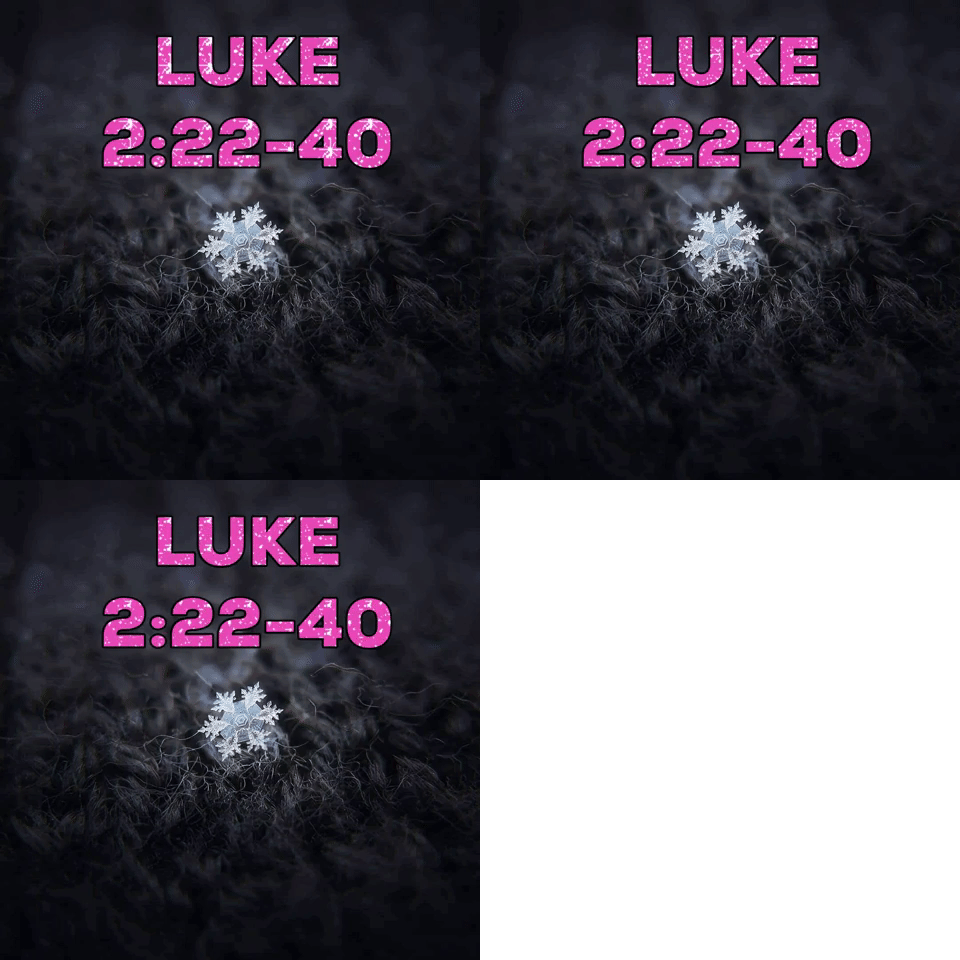
TODAY’S WORD: Fulfillment of Prophecy in Luke 2:22-40

HIGH FIVE!

The passage in Luke 2:22-40 is rich with significance and serves as a pivotal moment in the Gospel of Luke. Here are some key points:

  1. Presentation of Jesus at the Temple: According to Jewish law, Mary and Joseph brought baby Jesus to the Temple in Jerusalem to present Him to the Lord and to offer a sacrifice (verses 22-24). This act signifies their adherence to the Jewish customs and laws.
  2. Purification Ceremony: The purification ceremony was a Jewish ritual performed by women 40 days after giving birth to a male child (Leviticus 12:2-8). Mary and Joseph’s participation in this ceremony shows their devotion and obedience to God’s laws.
  3. Simeon’s Prophecy: Simeon, a righteous and devout man, was promised by the Holy Spirit that he would not die before seeing the Messiah (verses 25-26). When he sees Jesus, he praises God and declares that Jesus is the salvation prepared for all people, including Gentiles (verses 29-32). Simeon’s words highlight the universal nature of Jesus’ mission.
  4. Anna the Prophetess: Anna, an elderly widow and prophetess, also recognizes Jesus as the Messiah and gives thanks to God. She speaks about Jesus to all who were looking forward to the redemption of Jerusalem (verses 36-38). Her presence underscores the importance of both men and women in the recognition and proclamation of Jesus’ significance.
  5. Fulfillment of Prophecy: The events in this passage fulfill Old Testament prophecies about the Messiah. Simeon’s prophecy about Jesus being a light to the Gentiles (Isaiah 42:6) and bringing glory to Israel (Isaiah 49:6) indicates that Jesus’ birth and mission are in line with God’s plan as revealed in the Scriptures.
  6. Jesus’ Role: Simeon’s prophecy also foreshadows the suffering and opposition that Jesus will face (verses 34-35). He tells Mary that a sword will pierce her own soul too, hinting at the future pain she will endure as she witnesses her son’s crucifixion.

This passage serves as a reminder of Jesus’ purpose, the fulfillment of prophecies, and the recognition of His significance by both Jews and Gentiles. It’s a powerful narrative that connects Jesus’ early life to the larger story of redemption and salvation.

TODAY’S WORD: Luke 2: Effective Planning Tips for Achieving Your Goals

HIGH FIVE!

Luke 2:39-52 is significant as it contains the story of the boy Jesus at the temple. This passage offers insight into Jesus’ early life and divine wisdom even as a child. The key events and their meanings are:

  1. Return to Nazareth: After fulfilling all the requirements of the law, Mary, Joseph, and Jesus return to Nazareth. This emphasizes Jesus’ adherence to Jewish laws and traditions.
  2. Growth and Wisdom: Jesus grows and becomes strong, filled with wisdom, and God’s grace is upon him. This highlights his unique development and divine favor.
  3. Visit to Jerusalem: At the age of twelve, Jesus travels with his parents to Jerusalem for the Passover festival. This is significant because it shows his participation in important Jewish customs.
  4. Jesus in the Temple: Jesus stays behind in the temple, engaging with teachers, listening, and asking questions. His wisdom and understanding astonish those around him. This indicates his extraordinary knowledge and awareness of his divine mission.
  5. Interaction with Mary and Joseph: When Mary and Joseph find Jesus, he expresses that he must be in his Father’s house, indicating his awareness of his divine relationship with God.
  6. Return to Nazareth: Jesus returns with his parents and continues to grow in wisdom and stature, gaining favor with God and men.

Overall, this passage underscores Jesus’ early recognition of his divine identity and mission, and his extraordinary wisdom. It sets the stage for his later ministry and highlights the fulfillment of prophecy and divine plan.

Absolutely! Effective planning can make a world of difference in achieving your goals. Here are some tips to help you create an effective plan:

  1. Set Clear Goals: Define what you want to achieve. Make your goals specific, measurable, achievable, relevant, and time-bound (SMART).
  2. Break It Down: Divide your goals into smaller, manageable tasks. This makes the overall goal less overwhelming and allows you to track your progress.
  3. Prioritize: Determine which tasks are most important and tackle those first. This helps you focus on what matters most and ensures that critical tasks are completed on time.
  4. Create a Timeline: Set deadlines for each task and milestone. This helps you stay on track and avoid procrastination.
  5. Use Tools: Utilize planning tools like calendars, to-do lists, project management software, or apps to keep everything organized.
  6. Stay Flexible: Be prepared to adjust your plan as needed. Sometimes unexpected obstacles arise, and being adaptable is crucial.
  7. Review and Reflect: Regularly review your progress and reflect on what’s working and what’s not. Adjust your plan accordingly to stay on track.
  8. Seek Feedback: If possible, get input from others who have experience or expertise in the area you’re working on. They can provide valuable insights and suggestions.
  9. Stay Motivated: Keep your end goal in mind and find ways to stay motivated, whether it’s rewarding yourself for completing tasks or visualizing your success.
  10. Stay Consistent: Consistency is key. Stick to your plan and keep making progress, even if it’s small steps at a time.

Remember, planning is a dynamic process, and being open to change can lead to even better outcomes.

TODAY’S WORD: Understanding the Gifts of the Magi: Symbolism and Meaning: Matthew 2:1-12

HIGH FIVE!

Matthew 2:1-12 is a significant passage in the New Testament of the Bible, often referred to as the story of the Magi or the Visit of the Wise Men. Here are some key points that highlight its significance:

1. The Visit of the Magi:

The passage describes the arrival of the Magi (wise men) from the East who came to Jerusalem seeking the newborn king of the Jews. Their journey signifies the acknowledgment of Jesus’ kingship and messianic role by Gentiles, emphasizing that His birth has a universal significance beyond the Jewish community.

2. The Star of Bethlehem:

The Magi were guided by a star, often referred to as the Star of Bethlehem. This celestial event highlights the divine nature of Jesus’ birth and the fulfillment of prophecy. It symbolizes guidance, revelation, and the light of Christ coming into the world.

3. King Herod’s Response:

King Herod’s reaction to the news of the newborn king—his fear and subsequent deceitful plan—illustrates the political and social tension surrounding Jesus’ birth. It sets the stage for Herod’s later actions, including the Massacre of the Innocents, and contrasts the innocence and humility of Jesus with Herod’s tyranny.

4. Gifts of the Magi:

The gifts brought by the Magi—gold, frankincense, and myrrh—carry deep symbolic meanings:

  • Gold symbolizes Jesus’ kingship.
  • Frankincense represents His priestly role and divinity.
  • Myrrh prefigures His suffering and death, as it was commonly used for embalming.

5. Divine Guidance:

The passage underscores divine intervention and guidance, as the Magi are warned in a dream not to return to Herod. This divine warning and their obedience to it further highlight God’s protection over Jesus.

6. Fulfillment of Prophecy:

Throughout the narrative, the events fulfill Old Testament prophecies, reaffirming Jesus as the promised Messiah and God’s sovereign plan in action.

Overall, this passage emphasizes the recognition of Jesus as a divine and universal king, the fulfillment of prophecy, and the theme of divine guidance and protection. It also foreshadows both the joy and the trials that will surround Jesus’ life and mission.

Absolutely, I’d be delighted to help you connect some Old Testament prophecies to the birth of the Messiah! Here are a few significant passages, along with a bit of creative flair to help them come alive:

1. Isaiah 7:14

“Therefore the Lord himself will give you a sign: The virgin will conceive and give birth to a son, and will call him Immanuel.” Imagine a dramatic celestial backdrop as the prophet Isaiah speaks of a miraculous birth. Immanuel, meaning “God with us,” hints at a divine presence coming into the world in the form of a child.

2. Micah 5:2

“But you, Bethlehem Ephrathah, though you are small among the clans of Judah, out of you will come for me one who will be ruler over Israel, whose origins are from of old, from ancient times.” Picture a quiet, humble village, Bethlehem, under a starlit sky. From this seemingly insignificant place emerges a leader with ancient roots—a reminder that greatness often springs from humble beginnings.

3. Isaiah 9:6-7

“For to us a child is born, to us a son is given, and the government will be on his shoulders. And he will be called Wonderful Counselor, Mighty God, Everlasting Father, Prince of Peace.” Visualize the joyous celebration of a child’s birth, with titles that echo through the ages: Wonderful Counselor, Mighty God, Everlasting Father, Prince of Peace. These names encapsulate the divine and eternal nature of the coming Messiah.

4. Jeremiah 23:5-6

“The days are coming, declares the Lord, when I will raise up for David a righteous Branch, a King who will reign wisely and do what is just and right in the land.” Imagine the lineage of David like a majestic tree, with a righteous Branch emerging—a king destined to bring justice and righteousness to the land. This prophecy foretells a leader who embodies wisdom and justice.

5. Numbers 24:17

“I see him, but not now; I behold him, but not near. A star will come out of Jacob; a scepter will rise out of Israel.” Envision a distant, shimmering star rising from Jacob—a symbol of a coming ruler with a scepter, signifying authority and sovereignty. This imagery resonates with the Magi’s star-guided journey to find Jesus.

These Old Testament passages not only foreshadow the birth of the Messiah but also weave a tapestry of hope, promise, and divine intervention. Each verse adds a brushstroke to the grand masterpiece of salvation history.

If you have more time, these readings are great for deeper reflection, and perhaps they’ll bring you the inspiration and connection you might have missed from church yesterday. ✨📖

TODAY’S WORD: Embodying Luke 2:15-21: Living Faithfully

HIGH FIVE!

In Luke 2:15-21, we see the shepherds’ immediate and joyful response to the announcement of Jesus’ birth. This passage highlights several key themes:

  1. Obedience and Faith: The shepherds didn’t hesitate to visit Bethlehem after hearing the angel’s message. Their swift action symbolizes obedience and faith.
  2. Witness and Proclamation: Upon seeing Jesus, they spread the word about what they had been told regarding this child. Their testimony shows the importance of sharing the good news.
  3. Praise and Worship: The shepherds glorified and praised God for all they had heard and seen. This represents the appropriate response to the divine revelation.
  4. Mary’s Reflection: Mary treasured these events and pondered them in her heart, highlighting the personal and reflective aspect of faith.

This passage encapsulates the joy, wonder, and profound significance of Jesus’ birth, which is central to Christian belief.

Living out the events from Luke 2:15-21 in your own life is about embodying the themes of obedience, faith, proclamation, worship, and reflection. Here are some practical ways:

  1. Obedience and Faith: Be attentive to the guidance and prompts you feel in your heart, whether they come through prayer, scripture, or moments of insight. Acting on these with trust and courage can lead you to new and fulfilling experiences.
  2. Witness and Proclamation: Share your experiences and the joy you find in your faith with others. This doesn’t mean you have to preach; simple acts of kindness, sharing your story, or offering support can be powerful testimonies.
  3. Praise and Worship: Make time for regular moments of worship and gratitude, whether through prayer, singing, or just taking a moment to appreciate the beauty around you. This can help keep your spirit uplifted and connected.
  4. Reflection: Like Mary, take time to ponder and treasure the significant moments in your life. Journaling, meditation, or quiet contemplation can help you deepen your understanding and appreciation of your journey.

Living these principles can be a meaningful way to bring the essence of the shepherds’ and Mary’s experiences into your own life.

TODAY’S WORD: The Significance of Luke 2:1-20 in the Christmas Story

HIGH FIVE!

Luke 2:1-20 is one of the most well-known and cherished passages in the New Testament, recounting the birth of Jesus Christ. Here’s an exploration of its significance:

1. The Birth of Jesus:

The passage begins with the decree from Caesar Augustus that a census should be taken, leading Joseph and Mary to travel to Bethlehem. While there, Mary gives birth to Jesus and places Him in a manger because there was no room at the inn (verses 1-7). This humble birth fulfills the prophecy of the Messiah being born in Bethlehem and signifies the arrival of the Savior in the most modest of circumstances, emphasizing His humility and accessibility to all.

2. The Shepherds and the Angels:

An angel of the Lord appears to shepherds in the fields, announcing the birth of the Savior, Christ the Lord, and giving them a sign: a baby wrapped in cloths and lying in a manger (verses 8-12). This angelic announcement highlights the significance of Jesus’ birth and the good news it brings to all people. The shepherds, representing the common and lowly, are the first to receive this divine message, underscoring the inclusive nature of Jesus’ mission.

3. The Heavenly Host’s Praise:

A multitude of heavenly hosts join the angel, praising God and saying, “Glory to God in the highest heaven, and on earth peace to those on whom his favor rests” (verses 13-14). This heavenly celebration signifies the cosmic importance of Jesus’ birth, heralding peace and goodwill to humanity.

4. The Shepherds’ Response:

The shepherds hurry to Bethlehem, find Mary, Joseph, and the baby, and spread the word about what they had been told concerning the child (verses 15-18). Their immediate response and evangelism highlight the importance of sharing the good news and the impact of encountering Jesus.

5. Mary’s Reflection:

Mary treasures and ponders all these events in her heart (verse 19). This shows the personal and contemplative aspect of faith, as she reflects on the significance of her child’s birth and the divine revelations surrounding it.

6. Glorifying and Praising God:

The shepherds return, glorifying and praising God for all the things they had heard and seen (verse 20). This response of worship and gratitude models the appropriate reaction to the good news of Jesus’ birth.

Summary:

Luke 2:1-20 is significant because it narrates the miraculous and humble birth of Jesus, marking the fulfillment of Messianic prophecies and the arrival of the Savior. The passage highlights themes of humility, divine revelation, and the inclusive nature of the gospel message. It underscores the importance of spreading the good news, reflecting on God’s work, and responding with praise and worship. This passage provides a foundation for the celebration of Christmas and the joy of salvation brought through Jesus Christ.

TODAY’S WORD: Understanding Jeremiah 10:17-25 | Lessons on Idolatry and Divine Consequences

HIGH FIVE!

Jeremiah 10:17-25 provides a powerful message about idolatry, divine judgment, and prayer. Let’s break it down:

  1. Idolatry and God’s Greatness:
    • Jeremiah contrasts the living God with lifeless idols worshipped by the nations. These idols were often made from trees, decorated with silver and gold, but they couldn’t speak or act (Jeremiah 10:3-5).
    • The warning not to learn the ways of the Gentiles emphasizes separation from customs that don’t honor God (Jeremiah 10:2).
    • Interestingly, this description of ancient pagan customs might remind us of the modern practice of Christmas trees.
  2. Divine Judgment and Exile:
    • Jeremiah prophesies the coming exile due to God’s wrath (Jeremiah 10:17-18). The Jews in their own land felt secure, but sinners eventually face the consequences of God’s word (Jeremiah 10:25).
    • This echoes warnings from earlier prophets about divine judgment for sin (Isaiah 1:28-31; Amos 5:18-20).
  3. Application to Our Lives:
    • Reflect on areas where we may unknowingly follow worldly customs or idolize things that distract us from God.
    • Consider the consequences of our actions and seek God’s mercy, just as Jeremiah prayed for mercy amidst impending judgment.

In our lives, we can learn from Jeremiah’s plea for mercy and strive to align our hearts with God’s ways, avoiding empty idols and seeking His guidance. 🙏🌿

The mention of pagan customs in Jeremiah 10:3-5, where people crafted idols from trees and adorned them with silver and gold, bears resemblance to the modern practice of Christmas trees. Here’s how:

  1. Tree Symbolism:
    • In ancient times, trees held spiritual significance. Pagan cultures often worshipped sacred trees or associated them with fertility, life, and renewal.
    • Similarly, the Christmas tree, which has its roots in Germanic and Scandinavian traditions, symbolizes life, light, and hope during the dark winter season.
  2. Adornment:
    • Pagan idols were decorated with precious metals, emphasizing their importance.
    • Christmas trees are adorned with lights, ornaments, and tinsel, signifying celebration and joy.
  3. Evergreen Trees:
    • Pagan rituals often involved evergreen trees, which remained green throughout the year.
    • Christians adopted this symbolism, viewing evergreens as a reminder of eternal life through Christ.
  4. Winter Solstice:
    • Pagan festivals around the winter solstice celebrated the return of longer days and the sun’s rebirth.
    • Christmas, positioned near the solstice, celebrates the birth of Jesus—the “Light of the World.”

Remember that while the origins of Christmas trees may have pagan connections, their meaning has evolved over time. For many, they represent family, tradition, and the joy of the holiday season. 🌲🕯️🎄

TODAY’S WORD

HIGH FIVE!

The text in the image is a quote by Dr. Seuss:

“The more that you read, the more things you will know. The more that you learn, the more places you’ll go.”

This quote emphasizes the importance of reading and learning. It suggests that gaining knowledge through reading can open up new opportunities and broaden one’s horizons. In an educational setting, like a school or library, this quote serves as an inspiring reminder of the value of continuous learning and intellectual growth.

How do you feel about this quote? Does it resonate with your own experiences or beliefs?

WELL… BEFORE I ANSWER, HOW ABOUT WE LEARN ABOUT Luke 1:57-67. These verses describe the birth of John the Baptist and the events surrounding it:

  1. Birth of John the Baptist: Elizabeth, who was previously barren, gives birth to a son. This event is seen as a great act of mercy from the Lord, and her neighbors and relatives share in her joy1.
  2. Naming of John: On the eighth day, during the circumcision ceremony, there is a discussion about the child’s name. While the relatives expect him to be named after his father, Zechariah, Elizabeth insists that he be named John2.
  3. Zechariah’s Confirmation: Zechariah, who had been mute since the angel’s announcement of John’s birth, confirms the name by writing “His name is John” on a tablet. Immediately, his speech is restored, and he begins to praise God2.
  4. Reaction of the People: The neighbors are filled with awe, and the news spreads throughout the hill country of Judea. People wonder about the future of this child, recognizing that the Lord’s hand is with him2.
  5. Zechariah’s Prophecy: Filled with the Holy Spirit, Zechariah prophesies about the significance of John’s birth and his role in God’s plan1.

This passage highlights themes of divine intervention, fulfillment of God’s promises, and the importance of faith and obedience.

TODAY’S WORD

HIGH FIVE!

Let’s explore the significance of Luke 1:39-57 together. These verses are found in the Gospel of Luke, which is one of the four canonical Gospels in the New Testament of the Bible. Here’s a breakdown of the passage:

  1. Context:
    • The Gospel of Luke focuses on the life, teachings, and ministry of Jesus Christ.
    • Luke 1:39-57 is part of the larger narrative surrounding the birth of Jesus.
  2. The Visitation:
    • In Luke 1:39-45, we read about the visitation of Mary (the mother of Jesus) to her relative Elizabeth (the mother of John the Baptist).
    • Mary had just received the news from the angel Gabriel that she would conceive and give birth to the Son of God (Luke 1:26-38).
    • Filled with joy and awe, Mary traveled to the hill country of Judea to visit Elizabeth.
  3. Elizabeth’s Response:
    • When Mary greeted Elizabeth, the baby in Elizabeth’s womb (John the Baptist) leaped for joy.
    • Elizabeth was filled with the Holy Spirit and exclaimed, “Blessed are you among women, and blessed is the fruit of your womb!” (Luke 1:42).
    • She recognized Mary as the mother of the Lord and praised her faith.
  4. Mary’s Magnificat:
    • In Luke 1:46-55, Mary responds with a beautiful hymn of praise known as the “Magnificat.”
    • Mary exalts God for His mercy, faithfulness, and the fulfillment of His promises.
    • She acknowledges her humble state and rejoices in being chosen to bear the Savior.
  5. Conclusion:
    • Luke 1:56 tells us that Mary stayed with Elizabeth for about three months before returning home.
    • The encounter between Mary and Elizabeth is a powerful moment of faith, joy, and recognition of God’s work.

In summary, Luke 1:39-57 highlights the remarkable meeting between Mary and Elizabeth, emphasizing their roles in God’s redemptive plan. It underscores themes of humility, faith, and the fulfillment of divine promises. 🙏🌟

If you have any further questions or would like additional insights, feel free to ask! 😊

  • JCL+R
  • GYM
  • GROCERY STORE
  • HR MEETING
  • WORK