The text “DEUTERONOMY 5:22-33” refers to a specific passage from the Bible, specifically from the book of Deuteronomy in the Old Testament.
Deuteronomy is the fifth book of the Hebrew Bible and of the Old Testament. It primarily consists of three sermons or speeches delivered to the Israelites by Moses on the plains of Moab, shortly before they enter the Promised Land.
The passage 5:22-33 is part of Moses’ retelling of the Ten Commandments and the events at Mount Sinai. This section specifically deals with:
The reaction of the Israelites to hearing God’s voice and seeing the fire on the mountain.
The people’s request for Moses to be an intermediary between them and God.
God’s approval of this request and His desire for the people to fear Him and keep His commandments.
The image shows a golden microphone trophy with a ribbon that says “IS HOPE”, placed on what appears to be an open book, likely a Bible. This visual representation, combined with the Biblical reference, suggests a theme of speaking God’s word or sharing a message of hope based on Biblical teachings.
The juxtaposition of the modern microphone with the ancient text emphasizes the enduring relevance of these scriptures and their continued proclamation in contemporary settings.
I NOTICE… YOU USE THE WORD “juxtaposition” CONSISTANTLY…
The text “PSALM 90” in the image refers to a specific chapter in the Book of Psalms, which is part of the Bible. Psalm 90 is significant in several ways:
Authorship: It’s traditionally attributed to Moses, making it one of the oldest psalms.
Theme: The psalm reflects on the eternal nature of God compared to the brevity of human life.
Content: It contains well-known verses about the fleeting nature of human existence and seeking wisdom.
Perspective: It offers a cosmic view of time, contrasting God’s eternity with human temporality.
The placement of “PSALM 90” over an image of the Earth held in hands suggests a connection between the psalm’s themes and a global or universal perspective. This juxtaposition implies:
God’s sovereignty over the world
The fragility of Earth and humanity in contrast to the eternal
A call for global wisdom or perspective in light of life’s brevity
The vivid pink color of the text makes it stand out, emphasizing its importance against the backdrop of the Earth.
This image appears to be using Psalm 90 as a lens through which to view our planet and existence, combining religious text with a modern, global visual to create a thought-provoking message.
I AM APPLYING TODAY. (let’s run, workout, go2 grocery store, do laundry, READ, get Driver’s License renewed, go2 ROTARY, go2 TMDIV A meeting)
The text visible in the image is “HOLY BIBLE” on the cover of a red book. This indicates that the book is a Bible, which is the central religious text of Christianity.
The Bible holds great religious and spiritual significance for Christians. It contains sacred scriptures, including religious teachings, historical accounts, prophecies, and guidance that form the foundation of the Christian faith.
The presence of the Bible in this image, along with the gloved hand touching it, could suggest several things:
Someone may be handling the Bible carefully, possibly for preservation or archival purposes.
It might represent a juxtaposition of technology (as evidenced by the keyboard in the background) and traditional religious texts.
The gloved hand touching the Bible could symbolize a reverent or careful approach to religious texts.
However, without more context, it’s difficult to determine the specific intent or significance beyond identifying the object as a Bible and noting its general importance in Christianity.
Try again… please explain Matthew 5:27-36
I apologize for the confusion in my previous response. You’re asking about a specific Bible passage, which isn’t directly shown in the image but is relevant to the Bible we see. Let me explain Matthew 5:27-36 for you:
This passage is part of Jesus’ Sermon on the Mount, where He elaborates on and reinterprets several Old Testament laws. Here’s a breakdown:
Adultery (verses 27-30): Jesus expands the definition of adultery beyond the physical act to include lustful thoughts. He uses hyperbole about plucking out one’s eye to emphasize the seriousness of avoiding temptation.
Divorce (verses 31-32): Jesus addresses the ease of divorce at that time, stating that divorce, except in cases of sexual immorality, can lead to adultery.
Oaths (verses 33-36): Jesus advises against swearing oaths, encouraging simple truthfulness in all speech instead.
The overarching theme is that righteousness is not just about outward actions, but also about the intentions of the heart and the purity of one’s thoughts. Jesus is calling His followers to a higher standard of moral and ethical behavior that goes beyond mere literal interpretation of the law.
This passage is known for its challenging teachings, particularly on lust and divorce, and has been subject to much theological discussion and interpretation throughout Christian history.
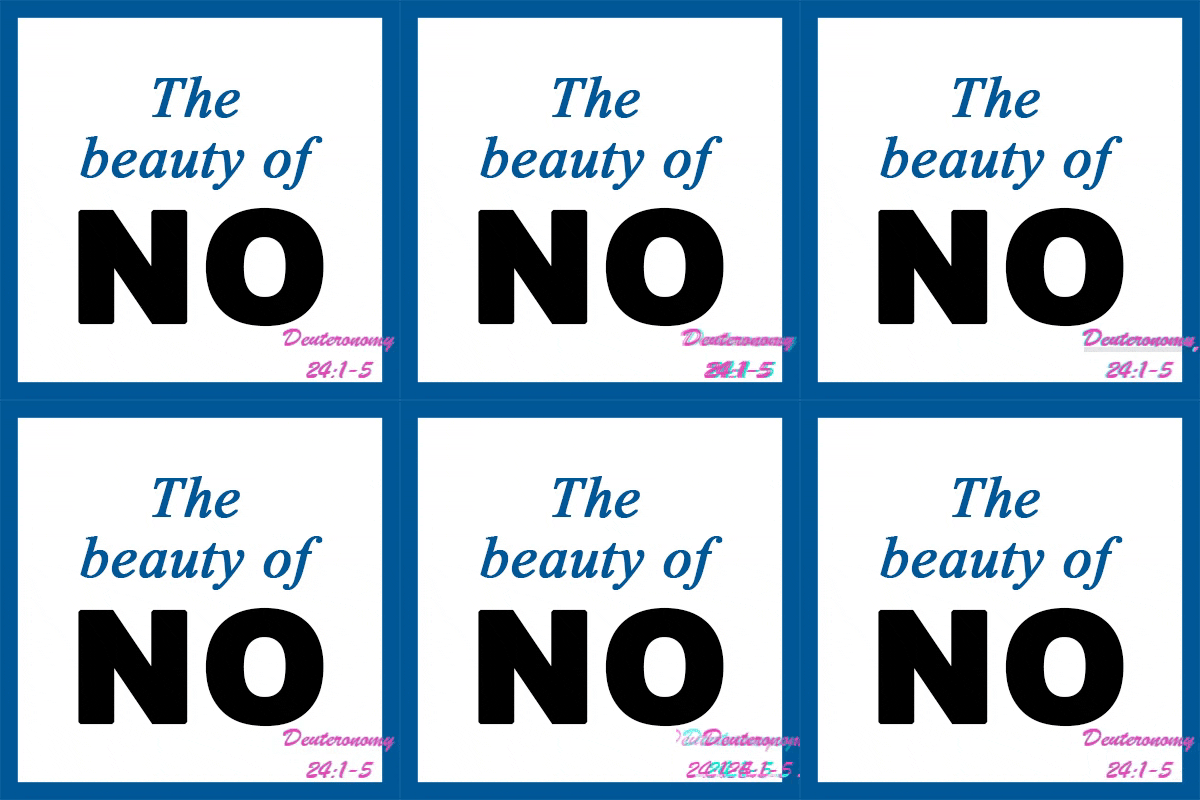
The image contains text that appears to be making a statement about the value or importance of saying “NO”.
The main text reads: “The beauty of NO”
Below that, in smaller text, there’s a biblical reference: “Deuteronomy 24:1-5”
This juxtaposition suggests that the concept of saying “no” or refusing something is being framed as beautiful or positive, and potentially supported by the referenced biblical passage.
The phrase “The beauty of NO” implies that there can be something attractive, beneficial, or freeing about declining, refusing, or setting boundaries. This goes against the common notion that saying “yes” is always preferable or more positive.
The biblical reference to Deuteronomy 24:1-5 adds a religious context, though without looking up the specific verses, it’s not immediately clear how they relate to the concept of “no”. This reference invites the viewer to consider how religious teachings might support or relate to the idea of refusal or boundary-setting.
Overall, the image seems to be promoting a positive view of saying “no”, framing it as something beautiful and potentially supported by religious text, rather than as something negative or undesirable.
How can I relate Deuteronomy 24:1-5 to my life?
To relate Deuteronomy 24:1-5 to your life, it’s important to first understand the context and content of these verses, then consider how their principles might apply in a modern context. Here’s an approach:
Understand the passage: Deuteronomy 24:1-5 primarily deals with regulations about marriage, divorce, and military service in ancient Israelite society. The key points are:
Guidelines for divorce procedures
Protections for newly married men from military service
Extract general principles:
Protection of vulnerable parties in relationships
Importance of establishing new marriages
Balancing societal duties with personal/family life
Modern application: While the specific laws aren’t directly applicable today, you can consider the underlying principles:
Relationships: Reflect on the importance of commitment in relationships and treating partners with respect and fairness.
Work-life balance: Consider how you balance work obligations with personal and family time, especially during significant life changes.
Legal and ethical considerations: Think about how laws and ethical guidelines in your society protect individuals in various situations.
Compassion and fairness: Reflect on how you can show compassion and fairness in your interactions with others, especially in challenging situations.
Setting boundaries: The passage implicitly supports the idea of setting boundaries (like the exemption from military service for newlyweds). Consider areas in your life where setting healthy boundaries might be beneficial.
Cultural context: Reflect on how cultural and societal norms influence your personal decisions and relationships, and how these norms have changed over time.
Remember, applying ancient texts to modern life requires careful interpretation and consideration of current ethical and legal standards. The goal is to extract wisdom and principles that can guide ethical decision-making and personal growth in your current context.
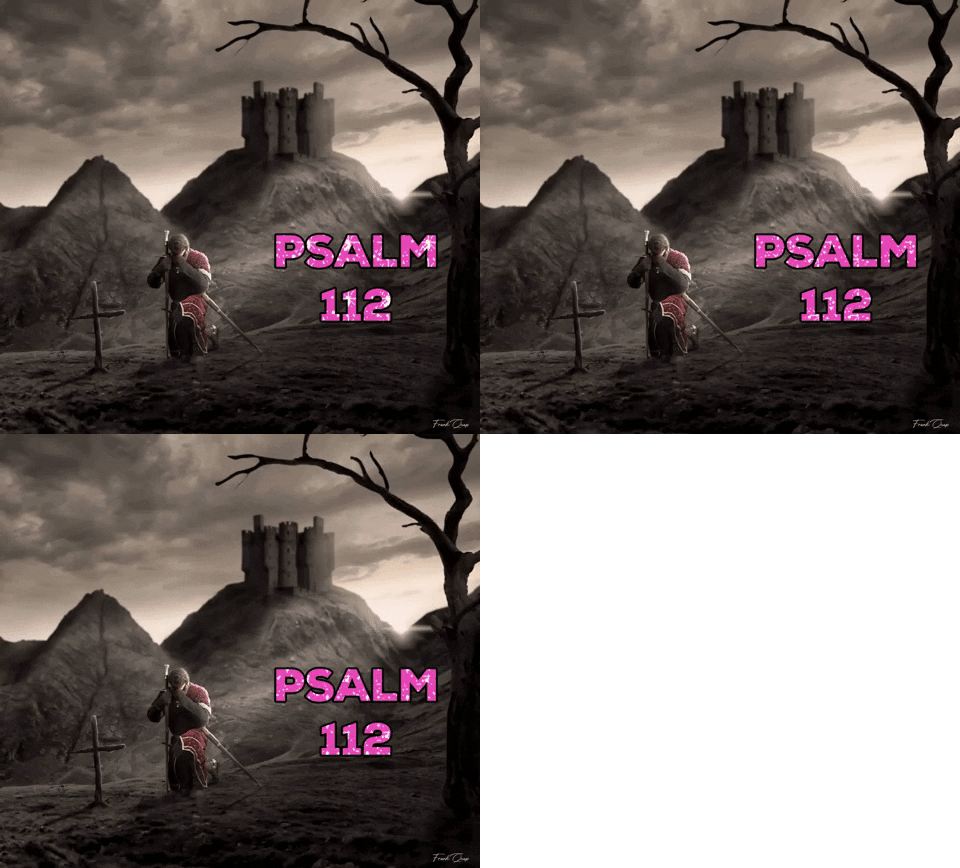
The text “PSALM 112” appears to be superimposed on the image in bright pink lettering. This refers to the 112th chapter or psalm in the Book of Psalms, which is part of the Hebrew Bible and Christian Old Testament.
The juxtaposition of this biblical reference with the dark, moody medieval-style scene creates an intriguing contrast. Psalm 112 is generally known as a psalm of praise that speaks about the blessings and character of the righteous person who fears the Lord. Its themes include generosity, justice, and steadfastness in faith.
The imagery in the photo, with its ominous castle on a hill, barren landscape, and lone knight figure, seems to evoke a sense of struggle or a difficult journey. This could be interpreted as a visual metaphor for the spiritual journey or trials described in many psalms, including themes of perseverance through hardship that are common in biblical literature.
The stark contrast between the ancient, somber scene and the modern, bright pink text also creates a thought-provoking juxtaposition of old and new, perhaps suggesting the enduring relevance of these ancient scriptures to modern life or interpretation.
Psalm 112 offers several principles that can be applied to modern life, regardless of one’s religious beliefs. Here’s how you might relate its themes to your personal journey:
Integrity and ethics: The psalm emphasizes the importance of being upright and just in one’s dealings. This can translate to maintaining strong ethical standards in your personal and professional life.
Generosity: It speaks of being generous and lending freely. This could inspire you to be more charitable, whether through donations, volunteering, or simply being kind to others.
Financial wisdom: There are references to managing wealth wisely. This can be interpreted as encouragement to be financially responsible and to use your resources to benefit others as well as yourself.
Resilience: The psalm mentions not being shaken by bad news. This can be seen as a call to develop emotional resilience and maintain a positive outlook even in challenging times.
Legacy: It talks about descendants being mighty in the land. This could motivate you to consider the long-term impact of your actions and the legacy you want to leave.
Compassion: The righteous person is described as being gracious and compassionate. This can inspire you to cultivate empathy and kindness in your interactions with others.
Steadfastness: There’s an emphasis on having a steadfast heart and not being afraid. This can encourage you to stay true to your principles and face life’s challenges with courage.
Light in darkness: The psalm mentions light dawning in the darkness for the upright. This could be interpreted as finding hope and guidance during difficult times through adhering to positive principles.
To apply these ideas practically, you might:
Reflect on your personal values and how you can better embody them
Look for opportunities to be generous or volunteer in your community
Work on building your resilience through mindfulness or stress management techniques
Consider how your current actions might impact your long-term legacy
Practice compassion and kindness in your daily interactions
Remember, the interpretation and application of religious texts can be deeply personal. You’re encouraged to reflect on how these themes resonate with your own life experiences and values.
When we think of humanity’s greatest inventions, few have changed the world as profoundly as the automobile. Its history is a tapestry of innovation, ambition, and transformative social change.
The journey begins in the late 19th century with visionaries like Karl Benz, who in 1886 unveiled what many consider the first true automobile: the Benz Patent-Motorwagen. This three-wheeled vehicle, powered by an internal combustion engine, was revolutionary, setting the stage for a new era of personal and commercial transportation.
The turn of the 20th century saw rapid advancements. In 1908, Henry Ford introduced the Model T, a vehicle so affordable and practical it became known as the “car for the masses.” Ford’s pioneering assembly line production method drastically reduced the cost and time required to build a car, making automobiles accessible to a broader audience.
As I prepare to visit the Antique Auto Show in Hershey, PA next weekend, I’m reminded of the rich tapestry of automotive history preserved through such events. This show is a treasure trove of iconic vehicles, each with its own story to tell. From the elegant curves of the 1930s luxury cars to the bold designs of the 1950s muscle cars, the show promises a nostalgic journey through decades of automotive innovation.
At these shows, we encounter not just cars, but pieces of history that remind us of the social and cultural shifts over time. Think of the roaring 20s, where cars became symbols of freedom and independence, reflecting a society eager to break free from the past. The post-World War II era brought a boom in automobile ownership, synonymous with the American Dream itself.
But the story doesn’t stop at nostalgia. Today, we stand at the brink of yet another revolution in automotive technology. Electric vehicles and autonomous driving promise to reshape our world once more, addressing environmental concerns and changing the very nature of how we understand transportation.
Visiting the Antique Auto Show isn’t just about admiring beautifully restored vehicles; it’s about appreciating the ingenuity and determination that have driven humanity forward. It’s a chance to connect with the past and reflect on how far we’ve come—and where we’re headed next.
So, as I walk among these historical marvels in Hershey, I’ll be thinking about the timeless human drive for progress and innovation. Each car tells a story of its era, a chapter in the grand narrative of human achievement. And who knows—perhaps the next revolutionary chapter in automotive history is being written right now, just around the corner.
It looks like the image you uploaded is a solid blue square without any text or distinguishable features. However, I can certainly help you understand how to relate Bible passages to your life, especially considering your strong faith and dedication to helping others.
Here are some ways you can apply scripture to your everyday life:
Believe in the Word: Trust that the Bible is God’s truth. For example, Hebrews 11:6 emphasizes the importance of faith in pleasing God.
Remember Key Truths: Memorize and meditate on key verses that resonate with you. This can help you recall God’s promises and guidance in daily situations.
Allow Scripture to Expose Sin: Reflect on passages that challenge you to grow and change. This can lead to personal transformation and a closer walk with God.
Pray About What You’ve Read: Turn your Bible reading into a conversation with God. Ask Him to help you understand and apply His Word to your life.
For example, passages from Psalms can provide comfort and encouragement during challenging times, while Romans can offer deep theological insights that strengthen your faith. John’s Gospel can inspire you with the life and teachings of Jesus, and Genesis can remind you of God’s creation and His plans for humanity.
How do you currently incorporate scripture into your daily routine?
TELL ME ABOUT LUKE 16:14-18
Luke 16:14-18 is a passage where Jesus addresses the Pharisees, who were known for their love of money and self-righteousness. Here’s a brief overview of these verses:
Verse 14: The Pharisees, who loved money, were sneering at Jesus.
Verse 15: Jesus responds by saying that they justify themselves before men, but God knows their hearts. What is highly valued among men is detestable in God’s sight.
Verse 16: Jesus mentions that the Law and the Prophets were proclaimed until John the Baptist; since then, the good news of the kingdom of God is being preached, and everyone is forcing their way into it.
Verse 17: He emphasizes the permanence of God’s law, stating that it is easier for heaven and earth to disappear than for the least stroke of a pen to drop out of the Law.
Verse 18: Jesus concludes with a teaching on divorce, stating that anyone who divorces his wife and marries another woman commits adultery, and the man who marries a divorced woman commits adultery.
Significance and Application
Hypocrisy and True Righteousness: Jesus criticizes the Pharisees for their hypocrisy. They appeared righteous outwardly but were corrupt inwardly. This teaches us to seek genuine righteousness and integrity, not just outward appearances.
God’s Knowledge of Our Hearts: God sees beyond our actions to our true intentions and desires. This encourages us to cultivate a sincere and honest heart.
Value of God’s Kingdom: The passage highlights the importance of prioritizing God’s kingdom over worldly wealth and status.
Permanence of God’s Law: Jesus affirms the enduring nature of God’s commandments, reminding us to respect and follow His teachings.
Marriage and Fidelity: The teaching on divorce underscores the sanctity of marriage and the importance of faithfulness.
In your life, you can reflect on these teachings by examining your own motivations and ensuring they align with God’s will. Your involvement in community projects and public speaking can be avenues to demonstrate genuine faith and integrity, just as Jesus encourages.
The text in the image, “FOCUS!!!”, is a powerful reminder to concentrate on what truly matters and avoid distractions. The smaller text, “RUMORS 8-18”, might be a reference to a specific passage or context that emphasizes the importance of staying focused and not getting sidetracked by rumors or unimportant chatter.
To relate this to your life, consider how staying focused can help you achieve your goals, whether in your personal, professional, or spiritual endeavors. For example, in your public speaking engagements with Toastmasters, maintaining focus can help you deliver your message more effectively. Similarly, in your community projects with the Rotary Club, staying focused on the mission can lead to more impactful outcomes.
Reflecting on your favorite Bible passages, such as those from Psalms, Romans, John, and Genesis, you might find additional inspiration. For instance, Psalm 119:15 says, “I will meditate on your precepts and fix my eyes on your ways.” This can be a reminder to focus on your faith and values as guiding principles in your life.
TRY ROMANS 8:1-31… (not rumors)
Romans 8:1-31 is a powerful passage that speaks about life through the Spirit and the assurance of God’s love. Here are some key themes and verses from this passage:
No Condemnation: “Therefore, there is now no condemnation for those who are in Christ Jesus” (Romans 8:1). This verse reassures believers that they are free from the guilt and penalty of sin because of Jesus’ sacrifice.
Life Through the Spirit: Verses 5-11 discuss living according to the Spirit rather than the flesh. “The mind governed by the Spirit is life and peace” (Romans 8:6). This emphasizes the importance of spiritual focus and living in alignment with God’s will.
Adoption to Sonship: “The Spirit you received brought about your adoption to sonship. And by him we cry, ‘Abba, Father’” (Romans 8:15). This highlights the intimate relationship believers have with God, being His children.
Future Glory: Verses 18-25 talk about the future glory that awaits believers, encouraging them to endure present sufferings with hope. “I consider that our present sufferings are not worth comparing with the glory that will be revealed in us” (Romans 8:18).
God’s Love and Assurance: The passage concludes with a powerful assurance of God’s love. “If God is for us, who can be against us?” (Romans 8:31). This reminds believers of God’s unwavering support and love.
To relate this to your life, consider how these themes can provide comfort and guidance in your daily activities. For example, the assurance of no condemnation can give you confidence in your public speaking and community work, knowing that you are supported by God’s grace. Living through the Spirit can help you stay focused on your goals and maintain peace amidst challenges. The concept of adoption to sonship can deepen your sense of belonging and purpose in your faith journey.
The text “PSALM 8” refers to a chapter from the Book of Psalms in the Bible. This particular psalm is a beautiful reflection on the majesty of God and the special place humans hold in creation. It speaks about the wonders of the universe and how, despite its vastness, God is mindful of humanity.
Here are a few key themes from Psalm 8 and how you might relate them to your life:
Human Dignity and Worth: The psalm highlights that humans are made “a little lower than the angels” and are crowned with glory and honor. This can remind you of your inherent worth and dignity, encouraging you to see yourself and others as valuable and cherished.
Responsibility and Stewardship: It mentions that humans are given dominion over the works of God’s hands. This can inspire you to take responsibility for your actions and care for the world around you, whether it’s through community service, environmental stewardship, or helping others.
Wonder and Gratitude: The psalmist marvels at the heavens, the moon, and the stars. This sense of wonder can encourage you to appreciate the beauty in the world and cultivate a heart of gratitude for the blessings in your life.
Given your active involvement in community projects and your passion for helping others, you might find inspiration in Psalm 8 to continue your efforts with a renewed sense of purpose and gratitude. How do these themes resonate with you?
The passage from Luke 10:17-20 is quite powerful and can be deeply meaningful in various aspects of life. Here are a few ways to understand its significance and relate it to your own experiences:
Spiritual Empowerment: The disciples were given authority over evil, symbolizing the power and strength that faith can provide. This can remind you of the inner strength and resilience you possess through your faith.
Humility and Perspective: Jesus advises the disciples to rejoice not because of their power over spirits, but because their names are written in heaven. This teaches the importance of humility and focusing on eternal values rather than temporary successes.
Joy in Service: The disciples returned with joy from their mission. This can inspire you to find joy and fulfillment in your acts of service and contributions to your community, much like your involvement in Rotary and Toastmasters.
Overcoming Challenges: Jesus mentions that nothing will harm the disciples. This can be a source of comfort and encouragement, reminding you that with faith, you can overcome obstacles and challenges in your life.
Reflecting on this passage, you might find parallels in your own journey of helping others, staying humble, and focusing on the bigger picture. How do you see these themes playing out in your life and activities?















 DO-N-GOOD.COM