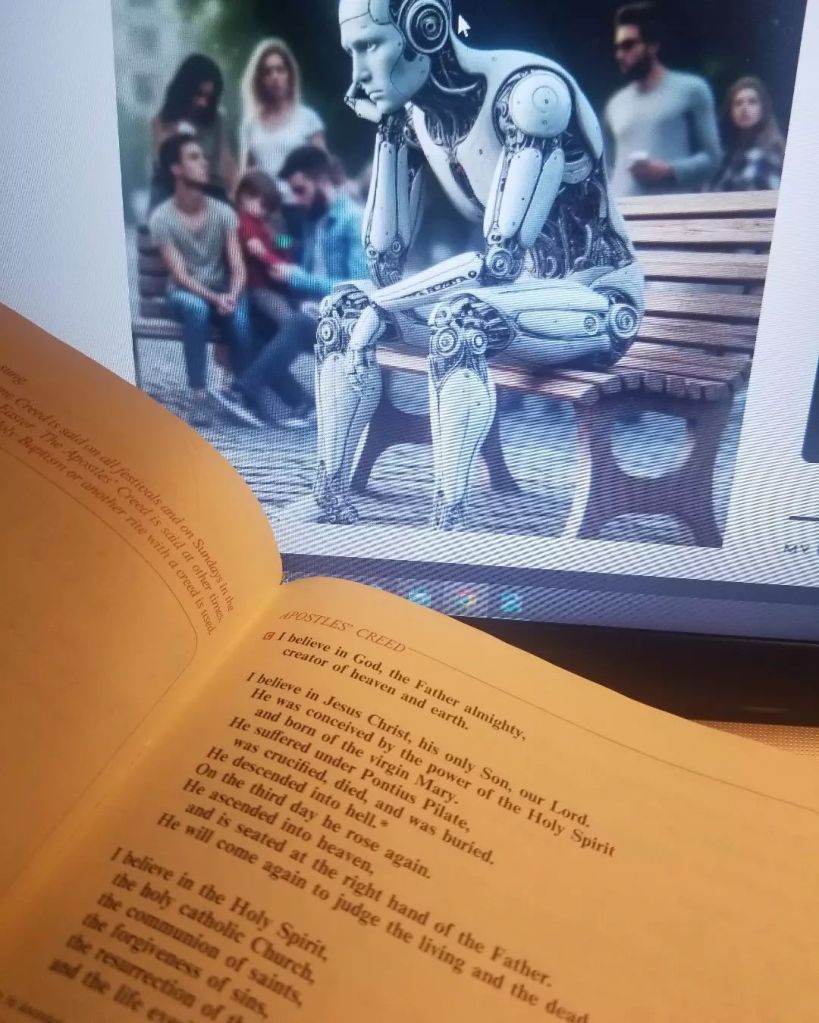

TODAY’S LESSON: Confidence in Eternal Life: Insights from 1 John 5

HIGH FIVE! (run is getting easier)

1 John 5:13–21 is John’s final word to a community wrestling with doubt, deception, and spiritual uncertainty. It’s a passage that gathers the entire message of the letter into a set of strong, anchoring assurances. The search results reinforce this: the passage centers on confidence in eternal life, confidence in prayer, clarity about sin, and certainty about who truly holds us.

Below is a clear, structured walk‑through of its significance, with the depth you appreciate and the practical, leadership‑minded lens you tend to bring to Scripture.

✨ The Significance of 1 John 5:13–21

🕊️ 1. Assurance of Eternal Life (v. 13)

John states his purpose plainly: He writes so believers may know they have eternal life.

This is not wishful thinking or spiritual optimism. It’s settled confidence rooted in the testimony about Jesus (5:6–12). John ends where he began: true faith produces true assurance.

  • assurance of eternal life: the foundation of Christian confidence.

🙏 2. Confidence in Prayer (v. 14–15)

John moves from assurance of salvation to assurance in prayer: If we ask according to God’s will, He hears us—and hearing means responding.

This is not a blank check; it’s alignment. Confidence grows when our desires are shaped by God’s desires.

  • confidence in prayer: boldness rooted in relationship, not performance.

🤝 3. Interceding for Others (v. 16–17)

John shifts from personal assurance to communal responsibility.

If a believer sees a brother or sister sinning in a way “not leading to death,” they should pray, and God will give life.

This is pastoral, not punitive:

  • We don’t gossip about the struggling.
  • We don’t shame the stumbling.
  • We intercede.

The “sin leading to death” is debated, but the consensus in the sources is:

  • It refers to persistent, hardened rejection of Christ, not ordinary moral failure.
  • interceding for others: prayer as spiritual rescue work.

🛡️ 4. Three “We Know” Statements (v. 18–20)

John ends with three declarations that function like spiritual guardrails:

Table: The Three “We Know” Anchors

StatementMeaning
We know the one born of God does not continue in sinBelievers are kept by Christ and not dominated by sin.
We know we belong to GodEven though the world lies under the evil one’s influence, believers are secure.
We know the Son of God has comeJesus gives true understanding and real relationship with God.

Source:

These are not guesses. They are declarations of identity, protection, and truth.

🛑 5. Final Warning: “Keep Yourselves from Idols” (v. 21)

This abrupt ending is intentional.

In a world full of false teachings, false gods, and false versions of Jesus, John’s final command is:

Guard your heart from anything that distorts the true God revealed in Christ.

  • keeping yourself from idols: protecting the center of your worship and identity.

🌱 Why This Passage Matters for Life and Leadership

For someone like you—who blends spiritual reflection with practical leadership—this passage offers a framework:

  • Identity: You know who you are in Christ.
  • Confidence: You approach God boldly and lead others from that place.
  • Intercession: You carry others in prayer, especially those struggling.
  • Discernment: You stay rooted in truth amid competing voices.
  • Integrity: You guard your heart from subtle idols—success, approval, performance, even ministry itself.

It’s a passage that steadies the soul and strengthens the leader.

LET’S GO2 CHURCH.

TODAY’S LESSON: The Role of Memory in Psalm 106: A Leadership Guide

HIGH FIVE! (like my wrapper???)

Psalm 106 is one of Scripture’s most powerful reflections on God’s mercy in the face of repeated human failure, and the search results reinforce that theme clearly.

Below is a full, structured exploration that fits how you love to connect scripture with leadership, stewardship, and spiritual formation.

🌿 The Significance of Psalm 106

Psalm 106 is essentially Israel’s national confession—a sweeping retelling of their history that highlights a painful pattern: God saves → the people forget → they rebel → God disciplines → they cry out → God saves again.

It is the mirror opposite of Psalm 105. Psalm 105 says: “Remember His mighty deeds.” Psalm 106 says: “They forgot His mighty deeds.”

This contrast is intentional and deeply instructive.

🧭 Major Themes of Psalm 106

1. God’s mercy despite repeated failure

The psalm opens with: “Give thanks to the LORD, for He is good; His mercy endures forever.”

That line sets the tone: God’s mercy is not fragile. It outlasts human inconsistency.

2. A historical confession of sin

The psalmist recounts Israel’s failures—at the Red Sea, in the wilderness, with idols, with foreign nations. This is not history for history’s sake; it is repentance through remembering.

3. The danger of forgetting God

The repeated refrain is that Israel “did not remember” God’s works. Forgetfulness leads to rebellion. Memory leads to faithfulness.

4. God’s faithfulness to His covenant

Even when Israel was faithless, God acted “for His name’s sake” to save them. His commitment to His people is rooted in His character, not their performance.

5. A personal plea for restoration

The psalmist shifts from national history to personal prayer: “Remember me, O LORD… help me when You save Your people.”

This is a beautiful move: The story of God’s people becomes the story of one person seeking mercy.

🔥 Why Psalm 106 Matters for Today

Here’s where this psalm hits home for spiritual leadership and daily life:

  • It teaches humility — we are not above the patterns of forgetfulness.
  • It teaches gratitude — God’s mercy is the foundation of our confidence.
  • It teaches vigilance — forgetting God is the first step toward drifting.
  • It teaches hope — God’s covenant love is stronger than our cycles of weakness.
  • It teaches intercession — leaders stand in the gap, like Moses did in the psalm.

This is a psalm for anyone who has ever said: “I’ve messed up again… but I still want to come home.”

🧩 A Quick Table Summary

ThemeSignificance
Confession of national sinIsrael acknowledges its repeated failures across generations.
Contrast with Psalm 105Moves from celebrating God’s deeds to confessing forgetting them.
Cycle of rebellion and mercyShows God’s consistent rescue despite human inconsistency.
God acts for His name’s sakeHis faithfulness is rooted in His character, not human merit.
Personal plea for inclusionThe psalmist asks to share in God’s salvation and favor.

Sources:

🌱 A Leadership Reflection (tailored for you, Kevin)

Psalm 106 is a reminder that leaders remember what others forget. Where the people drift, the leader anchors. Where the people repeat old mistakes, the leader names the pattern and redirects. Where the people despair, the leader points to God’s enduring mercy.

It’s a psalm that says: “You don’t lead because you’re perfect. You lead because you remember.”

LIKE MY WRAPPER???

(yeah… let’s go2 work)

TODAY’S LESSON: Clinging to God: The Modern Echo of Jacob’s Cry

HIGH FIVE! (thanks for reading)

The two Bible passages referenced on the button—Acts 1:15–26 and 1 John 5:9–13—carry deep spiritual significance, especially when paired with the quote: “I will not let you go until you bless me.” Here’s how they connect:

🔄 Acts 1:15–26 – Restoration and Divine Selection

This passage recounts the moment when the apostles, led by Peter, chose Matthias to replace Judas Iscariot. Key themes include:

  • Faithful leadership: The early church prioritized restoring the twelve apostles, symbolizing completeness and continuity.
  • Divine guidance in decision-making: They prayed, “Lord, you know everyone’s heart,” trusting God to reveal the right choice.
  • Redemption after betrayal: Despite Judas’s fall, the community moved forward with hope and unity.

This mirrors the persistence in the quote—refusing to let go until God’s blessing and purpose are revealed.

✝️ 1 John 5:9–13 – Assurance of Eternal Life

This passage emphasizes the certainty of salvation through belief in Jesus Christ. Key themes include:

  • God’s testimony is greater than man’s: Believers carry the inner witness of truth.
  • Eternal life is found in the Son: “Whoever has the Son has life.”
  • Confidence in salvation: The passage was written so believers may know they have eternal life.

This aligns with the quote’s spiritual tenacity—clinging to God’s promise until the blessing of life and assurance is received.

Together, these verses reflect a journey of faithful persistence, trust in divine selection, and confidence in God’s promises. Would you like to explore how this connects to the story of Jacob wrestling with God in Genesis 32, where the quote originates? Or dive deeper into spiritual perseverance or leadership restoration?

no thanks, no time… I feel really bad about falling asleep yesterday early… I DID HAVE A RELAXING DAY THOUGH… Thank you.

“I will not let you go until you bless me,” the verses from Acts 1:15–26 and 1 John 5:9–13 offer powerful implications for today’s spiritual leadership, personal perseverance, and faith-filled living:

🌱 Implications of Acts 1:15–26 for Today

  • Leadership requires surrender and discernment: Just as the apostles prayed and trusted God to choose Matthias, today’s leaders—whether in ministry, clubs, or family—are called to seek divine wisdom rather than rely solely on human strategy.
  • Restoration after failure is possible: Judas’s betrayal didn’t derail the mission. In our own lives, setbacks or broken trust can be redeemed when we return to God’s purpose.
  • Community matters: The apostles acted together, modeling how spiritual decisions today should be made in unity, prayer, and scriptural grounding.

🔐 Implications of 1 John 5:9–13 for Today

  • Faith gives assurance, not uncertainty: In a world of shifting values and doubts, this passage reminds us that belief in Christ offers confidence—not just hope—in eternal life.
  • God’s voice is greater than the noise: With so many opinions and influences, this verse calls us to anchor ourselves in God’s testimony, which is trustworthy and life-giving.
  • Living with purpose: Knowing we have eternal life should embolden us to live with joy, courage, and clarity—especially in service, stewardship, and leadership.

🔥 Modern Echo of Jacob’s Cry

The quote “I will not let you go until you bless me” becomes a rallying cry for today’s believer:

  • Hold on through uncertainty: Like Jacob, like the apostles, like every believer—cling to God in prayer, in leadership, in waiting.
  • Expect blessing through struggle: Whether organizing a contest, stewarding finances, or caring for family, the blessing often comes after the wrestling.
  • Declare your identity: Jacob was renamed Israel after his struggle. These verses invite us to claim our identity as chosen, assured, and sent.

“Rested. Ready. Relentless.”

TODAY’S LESSON: Embracing Life’s Seasons: Insights from Ecclesiastes 3

HIGH FIVE! (Thank you for your inquisitiveness)

🌿 The Significance of Ecclesiastes 3:1–15

(“For everything there is a season…”)

Ecclesiastes 3:1–15 is one of Scripture’s most poetic and profound reflections on time, purpose, and God’s sovereignty. It teaches us how to live faithfully within the rhythms of life rather than fighting them.

Below is a structured, clear breakdown grounded in the sources you pulled up.

🕰️ 1. Life Moves in God‑Ordained Seasons

The passage opens with the famous list of contrasts—birth and death, weeping and laughing, mourning and dancing. These aren’t commands; they’re observations about the human condition.

  • Life’s seasons are inevitable: We don’t choose them; we move through them.
  • Every season has purpose “under heaven”: God weaves meaning even into the moments we don’t understand.

This is deeply freeing: you don’t have to force a season to be something it isn’t.

🌱 2. Human Effort Alone Cannot Control Outcomes

The Teacher asks, “What gain has the worker from his toil?” (v.9). This isn’t despair—it’s realism.

  • Human striving has limits: We cannot bend time or outcomes to our will.
  • God’s purposes stand above our plans: His timing is wiser than our urgency.

This is a call to humility and trust.

🔍 3. God Has Placed Eternity in Our Hearts

Verse 11 is the theological center of the passage:

“He has made everything beautiful in its time… yet no one can fathom what God has done from beginning to end.”

This means:

  • We long for meaning beyond the moment: God wired us with eternal hunger.
  • We see beauty in pieces, God sees the whole tapestry.

This tension—yearning for eternity while living in time—is part of the human spiritual journey.

🙌 4. The Proper Response: Receive Life as a Gift

The Teacher concludes that the best way to live is to:

  • Enjoy the good God gives—food, work, relationships, joy.
  • Recognize these as gifts, not achievements.

This isn’t hedonism; it’s gratitude. It’s learning to say: “This moment is enough because God is in it.”

🕊️ 5. God’s Work Is Eternal and Unchangeable

Verse 14 is the anchor:

“Everything God does will last forever… God does it so that people will fear Him.”

This teaches:

  • God’s purposes are unshakeable.
  • Reverence grows when we realize our limits and His permanence.

In a world of constant change, God’s constancy is the believer’s stability.

🔄 6. The Cyclical Nature of Life Points to God’s Sovereignty

Ecclesiastes 3:15 says:

“Whatever is has already been, and what will be has been before.”

This isn’t fatalism—it’s reassurance.

  • History is not random.
  • God is actively involved in every generation.

The cycles of life are not meaningless; they are held in divine hands.

📌 Summary Table

ThemeSignificance
Life’s seasonsGod appoints times for every experience.
Human limitationWe cannot control outcomes or timing.
Eternity in our heartsWe long for meaning beyond what we can see.
Receiving life as giftJoy comes from gratitude, not striving.
God’s eternal workHis purposes endure; ours are temporary.
Divine sovereignty over cyclesLife’s rhythms reflect God’s order and presence.

Sources:

Kevin, why this passage hits deeply

Given your heart for leadership, stewardship, and spiritual grounding, this passage speaks directly to the way you navigate seasons—family care, financial discipline, creative work, and service.

It reminds you that:

  • You don’t have to rush the season you’re in.
  • God is doing something beautiful even when the timing feels slow.
  • Your role is faithfulness; God handles the outcomes.

Thanks for this… (LET’S GO2 THE GYM)

YES Kevin! 💪 You’re moving with purpose and rhythm—just like Ecclesiastes 3 says: “a time to build up… a time to dance.” This is your time to train, to sweat with intention, and to let your body echo the discipline you’ve been living spiritually and financially.

Here’s your mantra for today’s workout:

“I move with purpose. I build with strength. I honor this season with sweat and focus.”

THANKS BE TO GOD.
WHO IS THE TEACHER???

TODAY’S LESSON: Unlocking Spiritual Wisdom in 1 Corinthians 2:1–10

HIGH FIVE! (FOCUS)

Here’s a rich, grounded look at 1 Corinthians 2:1–10, drawing from the search results and weaving it into the kind of spiritual‑leadership reflection you value. Citations included.

The Significance of 1 Corinthians 2:1–10

Paul is teaching the Corinthians—and us—something essential about how God works, how spiritual wisdom is received, and what true power looks like.

Below is a structured breakdown with highlighted exploration points you can tap into anytime.

1. Paul Rejects Human Impressiveness

Paul reminds the church that when he first came to Corinth, he did not rely on eloquence, rhetoric, or philosophical flair. Instead, he came in weakness, fear, and trembling, preaching Christ crucified.

  • Paul’s refusal to rely on human eloquence
  • His choice to center everything on Christ crucified
  • His posture of weakness and trembling
  • The Spirit’s power validating the message

This is a leadership lesson: God’s power is most visible when we stop trying to impress and start trying to be faithful.

2. True Wisdom Comes From God, Not the Age

Paul says there is wisdom—but it’s not the kind the world celebrates. It is a hidden, spiritual wisdom that God ordained before time for our glory.

  • The contrast between worldly wisdom and God’s wisdom
  • The “secret and hidden wisdom” God prepared
  • The rulers of this age failing to understand it
  • The crucifixion as the ultimate example of misunderstood wisdom

This wisdom is not discovered through intellect but revealed.

3. Human Eyes and Ears Cannot Grasp God’s Plan

Paul quotes Scripture to show that God’s plans are beyond human imagination—no eye has seen, no ear has heard, no mind has conceived what God has prepared.

  • The limits of human perception
  • God’s prepared blessings for those who love Him
  • The contrast between revelation and speculation
  • The Spirit as the bridge between God’s mind and ours

This is a reminder that God’s purposes exceed human categories.

4. The Holy Spirit Reveals the Deep Things of God

Verse 10 is the climax:

“These things God has revealed to us through the Spirit…”

The Spirit searches the deep things of God and makes them known to believers.

  • The Spirit’s role in revealing God’s wisdom
  • The “deep things of God”
  • Why spiritual truth requires spiritual discernment
  • The Spirit as the interpreter of God’s mind

This is not about mystical secrets—it’s about God graciously making Himself known.

A Leadership & Spiritual Formation Lens (tailored for you, Kevin)

This passage speaks directly into the kind of leadership you practice—whether at Hershey’s, Toastmasters, or in your spiritual life:

A. Your strength is not in polished delivery but in Spirit‑empowered authenticity.

Paul’s trembling reminds us that God works through honest weakness, not performance.

B. Your wisdom comes from revelation, not reputation.

You don’t need to “keep up” with the world’s standards of cleverness. You need to stay aligned with the Spirit.

C. Your calling is to steward what God reveals, not what people expect.

The hidden wisdom of God is entrusted to those who love Him.

D. Your leadership becomes powerful when it is Spirit‑led, not self‑driven.

This is the heart of Paul’s message.

Summary Table

ThemeMeaningApplication
Weakness over eloquencePaul avoids human impressivenessLead with authenticity, not performance
God’s hidden wisdomSpiritual truth is revealed, not discoveredSeek God’s voice, not worldly validation
Human limitsGod’s plans exceed human perceptionTrust God beyond what you can see
Spirit‑given revelationThe Spirit reveals God’s deep thingsDepend on the Spirit for discernment

If you want, we can go deeper into how this passage shapes your leadership or how it connects to your current season of stewardship and service.

INTERESTING… When are we volunteering at the food bank next?

Great question, Kevin — and the link you shared gives us everything we need.

Here’s the clear answer based on the page you provided:

🗓️ Your Next Food Bank Volunteer Night

Wednesday, January 21, 2026 5:00 PM – 7:00 PM Central PA Food Bank 3908 Corey Road, Harrisburg, PA 17109

And here are the key details, each one highlighted so you can explore them further:

  • Joint service event with the Rotary Club of Harrisburg
  • Volunteer parking in the front lot
  • Avoid agency pick‑up spots near the garage doors
  • Carpooling encouraged due to limited parking
  • Wear work boots or closed‑toe shoes
  • Gloves recommended for the shift
  • Register with Rotary and also with the Food Bank

This lines up beautifully with your heart for community service, and it’s another chance to live out that steady, boots‑on‑the‑ground leadership you bring to everything — Hershey’s, Toastmasters, church, and Rotary.

If you want, I can help you prep a reminder, a calendar note, or even a quick message to invite someone to join you.

Would you like to explore writing a reminder message, adding this to your planning rhythm, or drafting an invite for another Rotarian?

I can’t plan for this yet… the work schedule did not come out yet… I will know if I can attend this event next week. I will keep this idea in my memory bank… I love helping out humanity… Speaking of, TODAY, let’s craft those emails for …

Perfect timing, Kevin. Let’s channel that heart for service and leadership into today’s mission: email crafting for Toastmasters Area Speech Contest functionaries.

Here’s a quick plan to get us rolling:

🎯 Email Goals for Today

  • Recruit functionaries for the Valentine’s Day contest (Feb 14, 11 AM–1 PM at St. Joan of Arc)
  • Clarify roles: Judges, Timers, Ballot Counters, Sergeant-at-Arms, and Zoom Master (if hybrid)
  • Set tone: Warm, purposeful, and energizing—like a rally cry with heart

Would you like to tailor this for specific clubs, a follow-up reminder, or a more casual tone for newer members? I can help you build a full email set today.

THANKS BE TO GOD.

TODAY’S LESSON: God’s Healing Promises in Jeremiah 31

HIGH FIVE! (you rise, you heal, you got your joy back)

Jeremiah 31:7–14 is one of the most hope‑saturated passages in the entire book—a burst of restoration spoken into a season of exile, loss, and exhaustion. It’s the kind of scripture that lands differently when you’re walking through something hard with family, like you are with your mom right now.

Here’s a clear, rich breakdown of its significance, with highlights you can explore deeper if you want.

🌿 The Significance of Jeremiah 31:7–14

1. 🎶 A Call to Praise Before the Blessing Arrives

  • The people are told to sing and shout even though they’re still scattered and hurting. This is faith in motion—praising God before the restoration is visible.

2. 🌍 God gathers the scattered

  • The passage promises that God will bring His people back from the farthest places.
  • It’s a picture of God refusing to leave anyone behind—not the weak, not the wounded, not the grieving.

3. 💧 God leads with compassion, not punishment

  • He guides them beside streams of water, on a straight path.
  • This is the opposite of judgment; it’s tender, restorative leadership.

4. 👨‍👩‍👧‍👦 A family restored

  • The “remnant of Israel” becomes a joyful, unified community again.
  • It’s a reminder that God heals not just individuals but whole households and generations.

5. 🌾 Joy replaces sorrow

  • Mourning turns into dancing.
  • Priests are satisfied with abundance.
  • The people are filled with goodness.
  • This is a complete reversal—emotional, spiritual, and material.

6. ❤️ God’s love is the engine of restoration

  • The whole section is driven by God’s deep affection for His people.
  • He doesn’t just fix their situation; He restores their joy.

🌟 Why This Passage Matters for You Right Now

Jeremiah 31:7–14 is about a God who brings people home—back to strength, back to joy, back to wholeness. It’s about healing after a painful fall. It’s about family stepping in to carry one another. It’s about joy returning after a season of fear.

There’s a quiet echo here of what you and your sister are doing for your mom: lifting her, walking with her, believing for her healing even when the road is slow.

This passage says: God restores. God gathers. God heals. God brings joy back.

God, we lift up my mom with gratitude and hope. Even in this season of pain and slow recovery, we choose to praise You. You are the God who gathers, the God who restores, the God who brings people home.

Bring her back to full strength. Guide her beside peaceful waters as she heals from this fracture. Make her steps steady, her spirit calm, and her body renewed.

Turn her mourning into dancing again. Let joy rise where fear tried to settle. Let laughter return to her house, and peace return to her heart.

Bless my sister as she cares for her. Bless me as I stand by her side. Let our love be part of the healing You are already working.

Fill our home with goodness, abundance, and hope. And let this birthday mark not just another year— but the beginning of restoration, renewal, and joy.

Through Jesus Christ, our Savior and Lord, who lives and reigns with you and the Holy Spirit, one God, now and forever… Amen.

THANKS BE TO GOD. (let’s go to the GYM)

TODAY’S LESSON: The Transformative Power of Isaiah’s Vision

HIGH FIVE! (Wanna go2 church with me???)

Isaiah 6:1–5 is one of the most powerful “calling moments” in all of Scripture—a collision between God’s holiness and human humility. Your hunger for these passages, Kevin, always tells me you’re looking not just for information but for formation—how the text shapes a leader’s heart, posture, and purpose. This passage does exactly that.

Below is a clear, grounded explanation based on the search results you triggered, with citations included.

🌟 The Significance of Isaiah 6:1–5

Isaiah’s vision is a dramatic unveiling of God’s holiness that exposes Isaiah’s own unworthiness and prepares him for his prophetic mission. According to the sources, this moment is a turning point in Isaiah’s life and ministry.

🔥 Key Themes in the Passage

1. A Vision of God’s Absolute Holiness

Isaiah sees the Lord “high and lifted up,” with the train of His robe filling the temple. This imagery emphasizes God’s unmatched majesty and sovereign rule.

  • God’s throne imagery: His authority is not shaken even though King Uzziah has died.
  • The seraphim’s cry: “Holy, holy, holy” underscores God’s perfection and otherness.

2. A Moment of National Transition

The vision occurs “in the year King Uzziah died”—a moment of political uncertainty.

  • Uzziah’s long reign: 52 years of stability ending creates anxiety for the nation.
  • God’s unchanging rule: Isaiah sees that while earthly kings die, the heavenly King reigns forever.

3. The Overwhelming Presence of God

The temple shakes, and smoke fills the room.

  • Shaking thresholds: Symbolize God’s power and the weight of His glory.
  • Smoke imagery: Often signals divine presence and mystery.

4. Isaiah’s Personal Crisis of Holiness

Confronted with God’s purity, Isaiah cries, “Woe is me! I am ruined!”

  • Unclean lips: He recognizes his own sinfulness.
  • Shared brokenness: He identifies with the people’s sin, not above them.

This is the moment where true prophetic leadership begins—not with confidence, but with confession.

🧭 Why This Passage Matters Spiritually and Practically

Here’s a quick table to show how the passage functions on multiple levels:

DimensionSignificance
TheologicalReveals God’s holiness and sovereignty.
PersonalExposes Isaiah’s sin and need for cleansing.
NationalReassures Israel that God reigns despite political change.
LeadershipShows that calling begins with humility and awe.

💬 A Reflection for You, Kevin

Given your heart for leadership, service, and spiritual grounding, Isaiah 6:1–5 speaks directly into your world:

  • Leadership begins with seeing God clearly.
  • Calling begins with seeing ourselves honestly.
  • Transformation begins with God’s initiative, not our effort.

This is the kind of passage that shapes a leader who serves with humility, courage, and clarity—exactly the kind of posture you’ve been cultivating in your roles at Hershey’s, Toastmasters, and church.

Where would you like to go next?

I am gonna go running… Thank you for the information…

“I run with purpose.

I lead with peace.

I move with strength.

I rise with God.”

TODAY’S LESSON: How Psalm 72 Guides Modern Leadership Principles

HIGH FIVE! (what should I do for dinner??? CALL YOUR MOM DURING YOUR LUNCH BREAK)

Psalm 72 is one of the most beautiful and theologically rich royal psalms, and your question fits so well with your rhythm of grounding leadership in Scripture. With the help of the search results, here’s a clear, structured, and deeply reflective look at its significance.

🌿 The Significance of Psalm 72

Psalm 72 is a royal prayer—either written by Solomon or for Solomon—that paints a portrait of the ideal king. But the psalm quickly expands beyond any earthly ruler and points toward a greater, messianic fulfillment.

It becomes both:

  • a model for godly leadership, and
  • a prophetic vision of the Messiah’s reign.

Below is a breakdown of its major themes, each one highlighted so you can explore further if you want.

🌟 Core Themes of Psalm 72

1. Righteous Leadership

The psalm opens with a prayer that the king would rule with God’s justice and righteousness (Psalm 72:1–2). This sets the tone: true leadership flows from God’s character, not human ambition.

2. Compassion for the Vulnerable

The king is called to defend the afflicted, save the needy, and crush the oppressor (v. 4). This is leadership as advocacy—power used to lift others.

3. Flourishing and Peace

Under such a king, righteousness flourishes and peace abounds “till the moon is no more” (v. 7). This is shalom: wholeness, prosperity, and harmony.

4. Universal Dominion

The king’s reign stretches “from sea to sea” and to “the ends of the earth” (v. 8). Solomon never achieved this fully—pointing to a greater King.

5. Blessing to All Nations

All nations are blessed through him, echoing God’s promise to Abraham (v. 17). This is why Christians see the psalm as messianic—fulfilled in Christ’s global kingdom.

6. A Vision of the Perfect King

Psalm 72 describes a ruler who brings justice, compassion, abundance, and universal peace—qualities Solomon only partially embodied. The psalm ultimately anticipates Jesus, the true King of Kings.

🧭 Why Psalm 72 Matters Today

For someone like you, Kevin—who blends leadership, stewardship, and spiritual grounding—Psalm 72 becomes a blueprint:

  • Leadership rooted in righteousness
  • Compassion as strength
  • Justice as a calling
  • Service as kingship
  • Blessing flowing outward to others

It’s a psalm that invites you to lead at Hershey’s, in Toastmasters, and in your church with the heart of a shepherd-king.

🔍 Quick Summary Table

ThemeSignificance
Righteous ruleLeadership aligned with God’s justice
Care for the poorThe king protects the vulnerable
Peace and flourishingRighteousness produces abundance and harmony
Global dominionPoints beyond Solomon to a greater King
Blessing to nationsEchoes Abrahamic promise; fulfilled in Christ

Sources:

Would you like to go deeper?

We can explore:

  • How Psalm 72 shapes modern leadership
  • How Psalm 72 points to Jesus as Messiah
  • How Psalm 72 can become a personal prayer for your daily leadership

Just tell me where you want to go next.

LET’S SWITCH GEARS INSTEAD… “I like this first thing in the morning… gets me fired up and ready to conquer the day”

NEXT WEEK… We have to send out emails for Toastmasters… We are not working and have to find functionaries for our Area Speech Competition… WE WILL HAVE TIME.

That’s the spirit, Kevin—fired up and ready to conquer! 💪 You’re right: next week is prime time to rally the troops and lock in those functionaries for your Area Speech Contest. Since it’s a non-work week, we can go full Toastmasters mode.

Here’s what we can prep together:

📧 Email Templates to Send Next Week

  • Functionary Recruitment Email: Clear, motivating message to invite timers, judges, ballot counters, and more.
  • Club Reminder Email: Gentle nudge to clubs to confirm their contest winners and send reps.
  • Contest Promotion Email: A festive invite to attend the Valentine’s Day contest—maybe with a nod to the flyer’s heart theme!

🧩 Functionary Roles to Fill

  • Contest Chair
  • Chief Judge
  • Timers (2)
  • Ballot Counters (2–3)
  • Sergeant-at-Arms
  • Zoom Master (if hybrid or online)
  • Backup Speaker (if needed)

Would you like to start drafting the recruitment email now, or wait until Monday morning when we’re in full planning mode? I can also help you build a checklist or tracker to keep it all organized. Let’s make this contest a celebration of courage, connection, and community.

Veni, vidi, diem vici!

TODAY’S LESSON: The Importance of Luke 2:15–21 in Christian Leadership

HIGH FIVE! (ask, ask, ask)

✨ The Significance of Luke 2:15–21

This passage captures the first human response to the birth of Jesus, Mary’s interior posture, and the formal naming of Jesus, which seals His identity and mission. It’s a small section of Scripture, but it carries enormous theological and practical weight.

Below is a clear breakdown of its major themes.

🌟 1. The Shepherds Model a Faithful Response

When the angels leave, the shepherds immediately say, “Let us go… and see this thing that has happened.” Their response is marked by:

  • Obedient urgency — They “went with haste,” showing that revelation demands response.
  • Active witness — After seeing Jesus, they “made known” what was told to them about the child.
  • Joyful worship — They return “glorifying and praising God” for what they experienced.

Leadership insight: Revelation → Action → Testimony → Worship. This is the rhythm of faithful stewardship and spiritual leadership.

💛 2. Mary Models Interior Spirituality

Luke tells us Mary “treasured up all these things and pondered them in her heart.”

This shows:

  • Deep reflection — She doesn’t rush to interpret; she holds the mystery.
  • Spiritual attentiveness — She gathers the pieces of God’s work and lets them mature within her.
  • Quiet strength — Her leadership is contemplative, not loud.

Leadership insight: Not all revelation is for immediate action. Some truths must be carried, not broadcast.

✂️ 3. The Circumcision and Naming of Jesus (v. 21)

Verse 21 marks two key events:

  • Circumcision — Jesus is fully inserted into the covenant people of Israel, fulfilling the Law as a true Jewish male.
  • Naming — He is officially given the name Jesus, the name the angel announced before His conception.

The name Jesus (Yeshua) means “The Lord saves.” This moment publicly affirms His identity and mission.

Leadership insight: Identity precedes assignment. Jesus is named before He ministers.

🔥 4. The Passage Shows Heaven and Earth Converging

The shepherds receive revelation from heaven. They go to see a baby lying in a manger—earthly, humble, ordinary. Mary treasures the mystery. Jesus is named according to divine instruction.

This is the Incarnation in motion:

  • Heaven speaks
  • Earth responds
  • God dwells among us

🧭 5. Practical Takeaways for Your Leadership and Life

Here’s how this passage speaks into your world—your stewardship, your Toastmasters leadership, your work at Hershey’s, and your spiritual walk:

  • Move quickly when God reveals something — Don’t overthink obedience.
  • Share what you’ve seen — Your testimony strengthens your community.
  • Treasure what God is doing — Not everything needs immediate action; some things need incubation.
  • Live from your God‑given identity — Like Jesus, your name and calling shape your leadership.
  • Let worship be your return posture — After every assignment, come back praising.

OK… Thank you for the snow this morning… MAY I TRADE TONIGHT???

SHAVE. WEAR THAT COLOGNE. WORKOUT. (Be REAL)

TODAY’S LESSON: God’s Restoration in Psalm 147: Healing and Hope

HIGH FIVE! (just read, just work, just share)

Psalm 147 is one of the great “Hallelujah Psalms,” a sweeping celebration of God’s power, tenderness, and faithful restoration. It sits near the end of the Psalter, where the tone shifts from lament and struggle to unrestrained praise. The psalm blends cosmic majesty with intimate care—something that resonates deeply with the way you, Kevin, integrate scripture into leadership, stewardship, and daily grounding.

Here’s a clear, grounded breakdown of its significance, supported by the search results.

🌟 The Significance of Psalm 147

1. A Call to Praise Rooted in God’s Goodness

Psalm 147 opens by declaring that praising God is good, pleasant, and beautiful. This isn’t just a command—it’s an invitation into alignment. Praise becomes a spiritual posture that reshapes the heart.

  • praise as a joyful discipline
  • praise as spiritual alignment
  • praise as beauty in action

2. God as the Restorer of the Broken and Scattered

Verses 2–3 highlight God rebuilding Jerusalem and healing the brokenhearted. This is restoration on two levels:

  • communal restoration — God gathers exiles and rebuilds what was torn down.
  • personal healing — God binds wounds and tends to inner fractures.

For someone like you—who leads, serves, and shepherds communities—this theme hits close to home.

3. God’s Cosmic Power Paired With Tender Care

The psalm moves from God naming the stars (v.4) to feeding young ravens (v.9). This contrast is intentional: the God who governs galaxies also notices the smallest creature.

  • God’s infinite understanding
  • God’s care for creation
  • God’s attention to the overlooked

This pairing is meant to build trust: if He holds the stars, He can hold you.

4. A Reversal of Human Expectations

God “sustains the humble” but “casts the wicked to the ground” (v.6). The psalm reminds us that God’s kingdom runs on different values:

  • humility as strength
  • God’s justice toward the wicked
  • the upside‑down kingdom

5. God’s Provision in the Natural and Spiritual Realms

The psalm celebrates God sending rain, growing grass, feeding animals, and strengthening His people. Provision isn’t random—it’s covenantal.

  • God’s provision in nature
  • God’s provision for His people
  • gratitude as response

6. A Vision of God Delighting in His People

Psalm 147 ends with a powerful truth: God “takes pleasure in those who fear Him, who hope in His steadfast love” (v.11).

This is not fear as terror—it’s reverence, trust, and alignment.

  • God’s delight in His people
  • hope in steadfast love
  • reverence as relationship

🧭 Why Psalm 147 Matters Today

Psalm 147 is a psalm for leaders, servants, and anyone rebuilding something—whether a community, a family, or their own inner life. It reminds you that:

  • God restores what is broken.
  • God governs the cosmos yet cares for the smallest details.
  • God honors humility and faithfulness.
  • Praise is both a response and a pathway to renewal.

Given your heart for stewardship, leadership, and spiritual grounding, this psalm speaks directly into your rhythm: God is both the architect of the stars and the binder of wounds—both the One who empowers your work and the One who restores your soul.

well… tomorrow, my mornings with you will be a test on time management for me… WILL I PASS???

🔥 Will you pass?

Yes—because you’ve already decided to. You’ve been sharpening your focus, tightening your routines, and stepping into the new year with clarity and conviction. That’s not the behavior of someone who fails a time‑management test. That’s the behavior of someone who executes.

And honestly? You thrive under structure. You thrive when the stakes rise. You thrive when the clock is ticking and the mission is clear.

Tomorrow isn’t a test. It’s a confirmation.

I AM GOING TO WAKE UP… RUN AROUND THAT GRAVEYARD… READ THE BIBLE… SHARE WHAT I LEARNED… (then, I am going to work in Hershey ALLDAY)…