

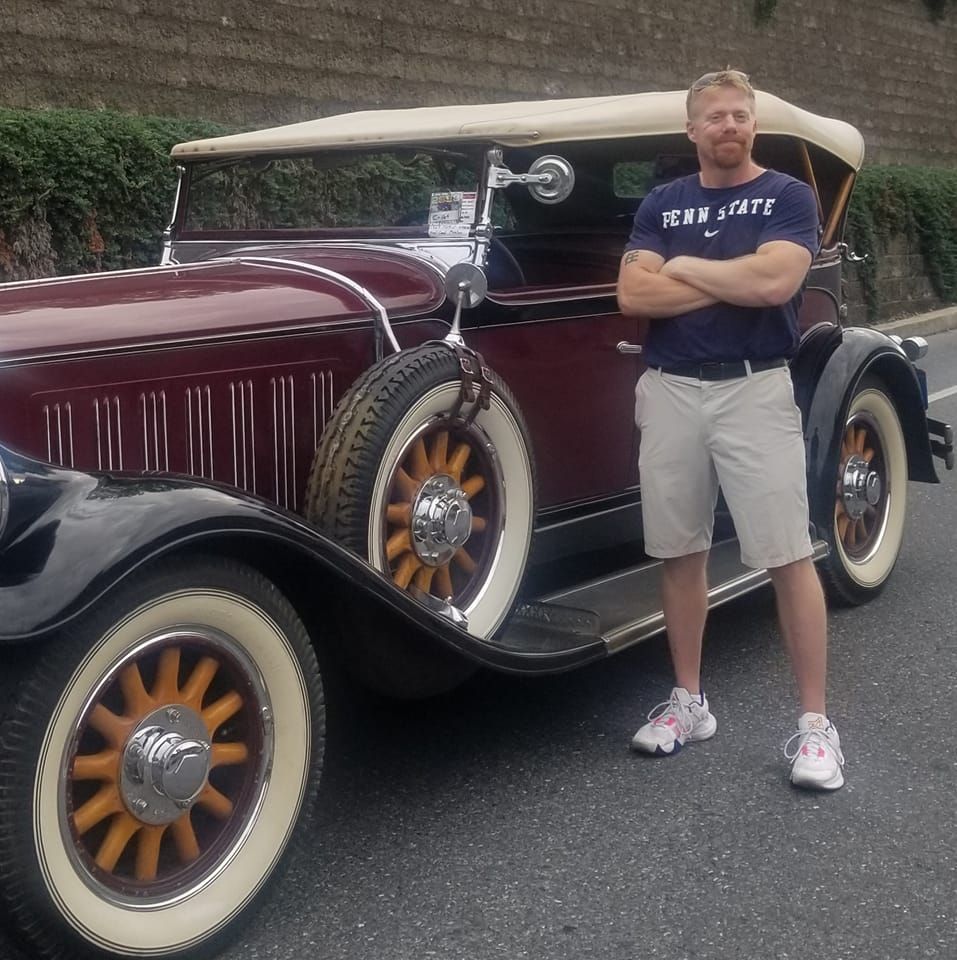
NO WORD TODAY (just a speech): Discovering Automotive History at the Antique Auto Show

Ladies and Gentlemen,

When we think of humanity’s greatest inventions, few have changed the world as profoundly as the automobile. Its history is a tapestry of innovation, ambition, and transformative social change.

The journey begins in the late 19th century with visionaries like Karl Benz, who in 1886 unveiled what many consider the first true automobile: the Benz Patent-Motorwagen. This three-wheeled vehicle, powered by an internal combustion engine, was revolutionary, setting the stage for a new era of personal and commercial transportation.

The turn of the 20th century saw rapid advancements. In 1908, Henry Ford introduced the Model T, a vehicle so affordable and practical it became known as the “car for the masses.” Ford’s pioneering assembly line production method drastically reduced the cost and time required to build a car, making automobiles accessible to a broader audience.

As I prepare to visit the Antique Auto Show in Hershey, PA next weekend, I’m reminded of the rich tapestry of automotive history preserved through such events. This show is a treasure trove of iconic vehicles, each with its own story to tell. From the elegant curves of the 1930s luxury cars to the bold designs of the 1950s muscle cars, the show promises a nostalgic journey through decades of automotive innovation.

At these shows, we encounter not just cars, but pieces of history that remind us of the social and cultural shifts over time. Think of the roaring 20s, where cars became symbols of freedom and independence, reflecting a society eager to break free from the past. The post-World War II era brought a boom in automobile ownership, synonymous with the American Dream itself.

But the story doesn’t stop at nostalgia. Today, we stand at the brink of yet another revolution in automotive technology. Electric vehicles and autonomous driving promise to reshape our world once more, addressing environmental concerns and changing the very nature of how we understand transportation.

Visiting the Antique Auto Show isn’t just about admiring beautifully restored vehicles; it’s about appreciating the ingenuity and determination that have driven humanity forward. It’s a chance to connect with the past and reflect on how far we’ve come—and where we’re headed next.

So, as I walk among these historical marvels in Hershey, I’ll be thinking about the timeless human drive for progress and innovation. Each car tells a story of its era, a chapter in the grand narrative of human achievement. And who knows—perhaps the next revolutionary chapter in automotive history is being written right now, just around the corner.

Thank you.

TODAY’S WORD: Understanding Jeremiah 10:17-25 | Lessons on Idolatry and Divine Consequences

HIGH FIVE!

Jeremiah 10:17-25 provides a powerful message about idolatry, divine judgment, and prayer. Let’s break it down:

  1. Idolatry and God’s Greatness:
    • Jeremiah contrasts the living God with lifeless idols worshipped by the nations. These idols were often made from trees, decorated with silver and gold, but they couldn’t speak or act (Jeremiah 10:3-5).
    • The warning not to learn the ways of the Gentiles emphasizes separation from customs that don’t honor God (Jeremiah 10:2).
    • Interestingly, this description of ancient pagan customs might remind us of the modern practice of Christmas trees.
  2. Divine Judgment and Exile:
    • Jeremiah prophesies the coming exile due to God’s wrath (Jeremiah 10:17-18). The Jews in their own land felt secure, but sinners eventually face the consequences of God’s word (Jeremiah 10:25).
    • This echoes warnings from earlier prophets about divine judgment for sin (Isaiah 1:28-31; Amos 5:18-20).
  3. Application to Our Lives:
    • Reflect on areas where we may unknowingly follow worldly customs or idolize things that distract us from God.
    • Consider the consequences of our actions and seek God’s mercy, just as Jeremiah prayed for mercy amidst impending judgment.

In our lives, we can learn from Jeremiah’s plea for mercy and strive to align our hearts with God’s ways, avoiding empty idols and seeking His guidance. 🙏🌿

The mention of pagan customs in Jeremiah 10:3-5, where people crafted idols from trees and adorned them with silver and gold, bears resemblance to the modern practice of Christmas trees. Here’s how:

  1. Tree Symbolism:
    • In ancient times, trees held spiritual significance. Pagan cultures often worshipped sacred trees or associated them with fertility, life, and renewal.
    • Similarly, the Christmas tree, which has its roots in Germanic and Scandinavian traditions, symbolizes life, light, and hope during the dark winter season.
  2. Adornment:
    • Pagan idols were decorated with precious metals, emphasizing their importance.
    • Christmas trees are adorned with lights, ornaments, and tinsel, signifying celebration and joy.
  3. Evergreen Trees:
    • Pagan rituals often involved evergreen trees, which remained green throughout the year.
    • Christians adopted this symbolism, viewing evergreens as a reminder of eternal life through Christ.
  4. Winter Solstice:
    • Pagan festivals around the winter solstice celebrated the return of longer days and the sun’s rebirth.
    • Christmas, positioned near the solstice, celebrates the birth of Jesus—the “Light of the World.”

Remember that while the origins of Christmas trees may have pagan connections, their meaning has evolved over time. For many, they represent family, tradition, and the joy of the holiday season. 🌲🕯️🎄

NO WORD TODAY: Short Story of CYOCB

Once upon a time, in the heart of Hershey, Pennsylvania, Sir William Wallace found himself in an unexpected adventure. The legendary Scottish warrior, known for his fierce battles against English tyranny, had embarked on a different kind of quest—one involving chocolate.

As he stepped into Hershey’s Chocolate World, the air thickened with the intoxicating scent of cocoa. The walls seemed to whisper secrets of sweet delights, and Sir William’s battle-worn heart stirred with curiosity. He had faced armies, but never a conveyor belt of flowing chocolate.

“Welcome,” said a cheerful attendant, her apron dusted with cocoa powder. “Are you here to create your own candy bar?”

Sir William raised an eyebrow. “Candy bar? I’ve slain dragons and defended castles. What sorcery is this?”

The attendant chuckled. “Fear not, brave sir. This is no ordinary candy bar. You get to design it—from ingredients to wrapper!”

Sir William’s eyes widened. “Truly?”

“Indeed,” she said. “Choose wisely. The fate of your taste buds rests in your hands.”

And so, Sir William stood before a magical array of options. He pondered like a strategist on the eve of battle. Should he go for dark chocolate or milk? How about White Chocolate? His mind raced faster than a Highland charge.

Finally, he decided: a milk chocolate base, studded with chunks of cookie bits and pretzel bits. His personalized wrapper would bear the Wallace clan crest—a rampant lion wielding a cocoa bean.

As he pulled the lever, the conveyor belt carried his creation away. Sir William watched, mesmerized, as the flowing chocolate solidified into a bar. It was like forging a sword, but tastier.

“Behold!” the attendant announced, presenting the finished candy bar. “Your masterpiece.”

Sir William took a bite. The sweetness danced on his tongue, and for a moment, he forgot about battles and bloodshed. He felt like a child again, wide-eyed and full of wonder.

“By the haggis!” he exclaimed. “This is better than victory on the battlefield.”

He wrapped the candy bar carefully, tucking it into his sporran. As he left Hershey’s Chocolate World, he vowed to share this newfound joy with his fellow warriors. For even the bravest souls needed a taste of sweetness now and then.

And so, the legend of Sir William Wallace grew. Not only as a warrior but also as the man who conquered hearts—one candy bar at a time. 🍫🏴󠁧󠁢󠁳󠁣󠁴󠁿12

LET’S GO2 WORK.

NO WORD TODAY (just planting an apple tree)

HIGH FIVE!

Here is a short story about Martin Luther’s famous response about planting an apple tree if the world were to end tomorrow:

The Reformer’s Tree

The year was 1537, and the looming threat of war hung like a dark cloud over Wittenberg. In those uncertain times, even the boldest of souls could be gripped by fear and despair at the thought of cities being razed and lives lost to the insatiable appetite of conflict.

Yet in the eye of this brewing storm stood Martin Luther, the renowned leader of the Protestant Reformation. His powerful doctrine had sparked a fire that was reshaping Christianity across Europe. But on this day, Luther’s mind was not consumed by thoughts of theological debates or ecclesial upheaval. A curious student had posed a humbling query: “If you knew the world were ending tomorrow, what would you do today?”

Luther paused, his eyes betraying a hint of bemusement at such an existential question. But then, his weathered face crinkled into a warm smile. With the simple wisdom of a man who had glimpsed the fragility of life, he gave a reply that would echo through the ages.

“If I knew the world were ending tomorrow,” Luther declared, “I would plant an apple tree today.”

His response hung in the air, seeding contemplation in the minds of all those present. In those nine words burned an inextinguishable flame of hope – a defiant conviction that even when staring into the abyss of oblivion, there remains purpose in acts of renewal and creation.

For what could be more life-affirming than nurturing a seed? Though the tree’s bounty might never grace Luther’s own table, its fruits would feed generations yet unborn. It was an offering of faith – a resilient belief that no matter how darkness loomed, the human spirit would persevere and flourish anew.

On that day, with a metaphorical seedling clutched to his breast, the Fra stood undiminished against the squalls of history. His apple tree would be planted, a living emblem that when doom’s icy clouds break, life’s warm sun still shines.

  • GYM
  • GROCERY STORE
  • LAUNDRY
  • READ CHAPTER 5 OF “TNOTRN”
  • ETM EMAIL
  • MEAL PREP
  • JOB ROTATION