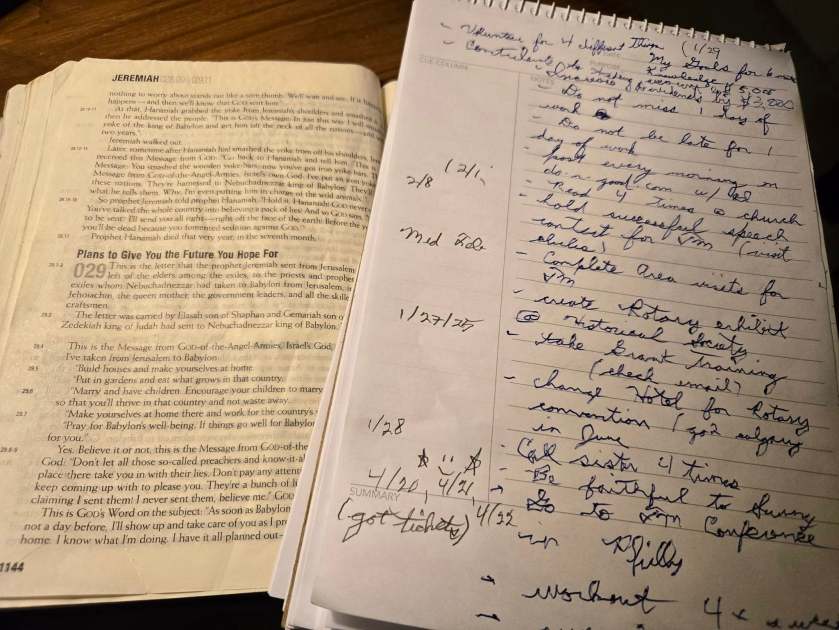


God’s Plans for Your Future: Jeremiah 29 Explained

HIGH FIVE!

The text in Jeremiah 29:1-14, found in the Bible, holds significant meaning, particularly for those seeking hope and reassurance. This passage is part of a letter that the prophet Jeremiah sent to the Jewish exiles in Babylon. Here are some key points:

Context

  • Exile in Babylon: The Israelites were taken into exile by the Babylonians. This letter addresses their situation far from home, in a foreign land.

Key Messages

  • Hope and Future: One of the most quoted verses is Jeremiah 29:11, where God says, “For I know the plans I have for you… plans to prosper you and not to harm you, plans to give you hope and a future.” This verse provides reassurance that despite the current suffering, there is a future filled with hope and prosperity.
  • Settling in Exile: God, through Jeremiah, advises the exiles to build houses, plant gardens, and seek the prosperity of the city where they are exiled. Essentially, they are encouraged to make the best of their situation and contribute positively to their new community.
  • Promises of Return: God promises that after seventy years, He will bring them back to their homeland. This is a promise of restoration and return, reflecting God’s faithfulness.

Application

  • Modern Relevance: Many people today find comfort in this passage during challenging times, seeing it as a reminder that God has a plan and purpose for their lives, even when the future looks bleak.

This passage is often cited in sermons and personal reflections as a source of encouragement and a reminder of God’s faithfulness and plans for welfare and hope.

TODAY’S WORD: Jeremiah 31:1-6: God’s Everlasting Love and Promise of Restoration

HIGH FIVE!

The text in the image, “BELIEVE THERE IS GOOD IN THE WORLD,” with the word “GOOD” highlighted, serves as an inspirational reminder to maintain a positive outlook and believe in the inherent goodness around us. The reference to “Jeremiah 31:1-6” adds a spiritual dimension, suggesting that this message is also rooted in faith and divine promise.

Jeremiah 31:1-6 speaks of God’s everlasting love and the promise of restoration and joy for His people. It reassures us that despite challenges and hardships, God’s love and mercy are unwavering, and He is always working towards our restoration and well-being123.

For you, Kevin, this message can be a source of encouragement and hope. It aligns with your values of kindness and positivity, as well as your faith. It can serve as a reminder to look for the good in every situation and to trust in God’s plan for your life. It might also inspire you to continue your acts of kindness and generosity, knowing that these actions contribute to the goodness in the world.

#TeamKevin

TODAY’S WORD

HIGH FIVE!

Psalm 88 is a unique chapter in the Book of Psalms. Unlike many other Psalms that end on a hopeful or uplifting note, Psalm 88 maintains a tone of deep sorrow and lament throughout. Let’s delve into its significance together:

  1. Authorship and Context:
    • Psalm 88 is attributed to Heman the Ezrahite, a skilled musician and one of the sons of Korah.
    • The context of this Psalm is distressing. It describes the psalmist’s intense suffering, feelings of abandonment, and nearness to death.
  2. Themes and Imagery:
    • Lament and Despair: The entire Psalm is a cry of distress. The psalmist feels overwhelmed by troubles, darkness, and the silence of God.
    • Isolation: The psalmist feels cut off from others, as if abandoned by friends and family.
    • Sheol (the Grave): The psalmist speaks of being close to Sheol, the place of the dead, emphasizing their desperate situation.
    • God’s Silence: Unlike other Psalms, there is no expression of hope or assurance. The psalmist feels unheard by God.
  3. Unique Features:
    • Psalm 88 is the only Psalm that doesn’t include any positive elements or expressions of trust in God.
    • It ends abruptly without resolution, leaving the reader in a state of tension.
  4. Application:
    • Psalm 88 resonates with those experiencing deep suffering, grief, or spiritual desolation.
    • It reminds us that it’s okay to express our raw emotions to God, even when we feel abandoned or unheard.
    • Despite its darkness, the Psalm is part of Scripture, acknowledging the reality of human pain.

In summary, Psalm 88 stands out for its unfiltered honesty about suffering and the absence of easy answers. It invites us to bring our pain before God, even when hope seems distant. If you have further questions or need additional insights, feel free to ask! 😊