The image shows “PSALM 94” displayed in pink glittery text overlaid on what appears to be the interior of a vehicle with leather seats.
Psalm 94 is a significant biblical text from the Book of Psalms. It is often known as a psalm of vengeance or justice, where the writer calls upon God as the righteous judge to intervene against wickedness and oppression. The psalm expresses themes of:
Divine justice and judgment
God’s role as the ultimate defender of the righteous
Comfort for the oppressed
Trust in God’s protection
The ultimate triumph of righteousness over evil
The psalm begins with “O Lord God of vengeance, O God of vengeance, shine forth!” and goes on to appeal to God to judge the wicked and protect the vulnerable. It’s often turned to in times when people are seeking divine justice or feeling oppressed, as it affirms God’s role as the ultimate judge and protector.
The modern, stylized presentation of this reference in a vehicle context might suggest someone drawing on this psalm for personal strength, protection during travel, or as a reminder of their faith in daily life.
THANK YOU. (we are working today… then… going to that GYM after)
The image shows a Bible opened to the Book of Mark, Chapter 11, with what appears to be a “Cast” logo or button overlaid on it. The Book of Mark is one of the four Gospels in the New Testament that tells the story of Jesus’s life, teachings, and ministry.
Mark 11 is a significant chapter that contains several important events, including:
Jesus’s triumphal entry into Jerusalem (often celebrated as Palm Sunday)
The cleansing of the Temple
Jesus’s teachings about faith and prayer
The withering of the fig tree (a demonstration of the power of faith)
Based on what’s visible in the image, there appear to be psalm numbers (100, 101) and references to worship, suggesting this might be in a study Bible or worship guide that includes both scripture and worship materials.
If the “Cast” button has additional significance or context, I’d be happy to discuss that if you provide more information about its purpose or meaning in this context.
It says “EASY” I might be telling you that believing in the power of faith is EASY. Now tell me about Mark 11…
I apologize for misreading the “EASY” text. Let me share about Mark 11, though I appreciate your observation about faith – though interestingly, this chapter shows that living out faith isn’t always as “easy” as it might seem.
Mark 11 is a pivotal chapter that contains several significant events:
The Triumphal Entry (verses 1-11):
Jesus enters Jerusalem riding on a donkey
People spread cloaks and palm branches on the road
Crowds shouted “Hosanna!” (meaning “save us”)
This fulfilled Old Testament prophecies about the Messiah
The Fig Tree and Temple Clearing (verses 12-19):
Jesus curses a fruitless fig tree (symbolizing spiritual barrenness)
He clears the Temple of merchants and money changers
He declares “My house shall be called a house of prayer for all nations”
This shows Jesus’s authority and concern for genuine worship
Lessons on Faith and Prayer (verses 20-25):
The disciples find the fig tree withered
Jesus teaches about the power of faith: “Have faith in God”
The famous teaching: “Whatever you ask in prayer, believe that you have received it, and it will be yours”
Emphasizes forgiveness as crucial to effective prayer
Jesus’s Authority Questioned (verses 27-33):
Religious leaders challenge Jesus’s authority
Jesus responds with a question about John’s baptism
The image shows the Biblical reference “Deuteronomy 15:1-11” with a red heart symbol being placed above it. This passage from Deuteronomy is significant because it discusses debt forgiveness and caring for the poor. In these verses, God instructs the Israelites about the “year of release” (occurring every seven years), when debts were to be forgiven, and emphasizes the importance of being generous and open-handed toward those in need within their community.
The heart symbol placed above the text appears to represent love, compassion, and generosity – key themes of this Biblical passage. The passage specifically calls for people to be generous to their poor and needy neighbors, not to be “hard-hearted” or “tight-fisted,” but rather to be open-handed and willing to help.
The visual representation with the heart emphasizes the compassionate and loving nature of these instructions, suggesting that debt forgiveness and helping the poor should be done not just as a duty, but as an act of love and care for others in the community.
Please tell me about Deuteronomy 15:1-11… (BTW- God is interested in your time… not just your money)
Deuteronomy 15:1-11 presents a fascinating concept called the “Sabbatical Year” or the “Year of Release.” This passage reveals God’s comprehensive approach to social and economic justice. Let me break down its key aspects:
Timing Component:
Every seven years, debts were to be canceled
This demonstrates God’s concern with how we use and structure our time
It established a regular rhythm of forgiveness and fresh starts
Financial Aspects:
All debts between Israelites were to be forgiven
Lenders were instructed not to deny loans even when the year of release was approaching
God promised to bless those who gave generously
Heart Attitude:
The text specifically warns against having a “hard heart” or “closed hand”
Encourages generosity and compassion
Emphasizes the importance of willing, cheerful giving
Time Management:
The seven-year cycle taught people to think long-term
Required planning and trust in God’s provision
Showed that time itself is a gift from God to be used wisely
Social Justice:
Aimed to prevent permanent poverty
Created a system of regular economic reset
Protected the dignity of the poor
The passage shows that God’s concern goes beyond mere financial transactions – it’s about how we structure our society, use our time, and care for others. The seven-year cycle taught people to organize their lives around God’s principles and to trust His provision rather than their own accumulation of wealth.
This continues to be relevant today as it challenges us to think about:
How we use our time
Our attitude toward debt and lending
Our responsibility to help others
The importance of regular rhythms of release and renewal
The connection between time management and compassion
The passage ultimately reveals that God is interested in transforming our entire approach to life, time, and resources, not just our monetary giving.
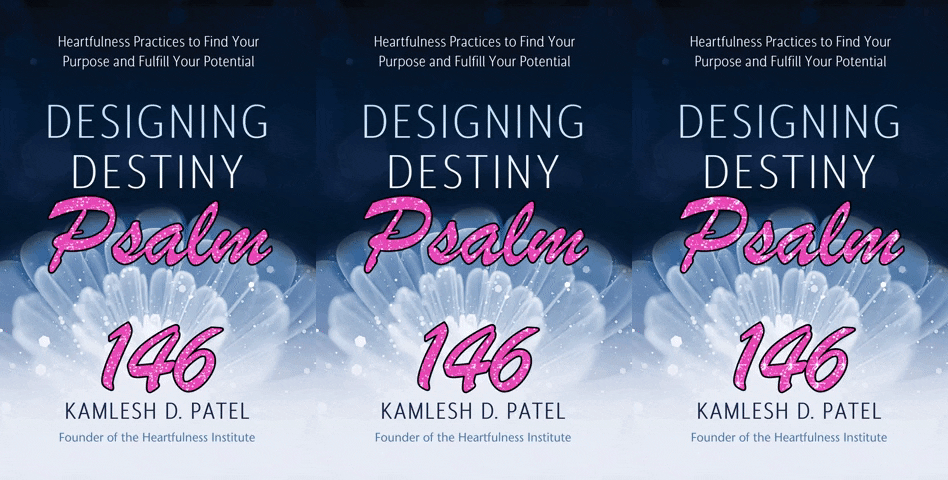
This appears to be a book cover for “Designing Destiny: Psalm 146” by Kamlesh D. Patel, who is identified as the Founder of the Heartfulness Institute. The subtitle indicates it contains “Heartfulness Practices to Find Your Purpose and Fulfill Your Potential.”
The significance of this text appears to be multi-layered:
Spiritual Connection: Psalm 146 is a biblical psalm of praise, but its incorporation into a book about Heartfulness (a meditation practice) suggests an interfaith or universal spiritual approach to personal development.
Personal Development Focus: The title “Designing Destiny” implies empowerment and agency in shaping one’s life path, while the subtitle directly addresses finding purpose and reaching one’s potential.
Heartfulness Integration: The book appears to blend Heartfulness meditation practices (a modern form of Raja Yoga) with spiritual wisdom to help readers work on their personal growth and spiritual development.
Author’s Authority: Kamlesh D. Patel’s position as founder of the Heartfulness Institute lends credibility to the teachings presented in the book, as he’s an established figure in the field of meditation and spiritual practice.
The visual design, with its ethereal blue background and illuminated elements, suggests themes of enlightenment, spiritual awakening, and transformation.
Would you like me to elaborate on any particular aspect of the book’s significance?
Please tell me about PSALM 146
Psalm 146 is one of the final five psalms in the Book of Psalms (Psalms 146-150), which are known as the “Hallelujah Psalms” because they all begin and end with “Hallelujah” (Praise the Lord).
Here are the key themes and messages of Psalm 146:
Trust in God, Not in Human Leaders
The psalm warns against putting ultimate trust in human princes or leaders
It emphasizes that mortals cannot save and their plans perish when they die
God’s Eternal Nature
Contrasts human mortality with God’s eternal faithfulness
Describes God as the maker of heaven and earth, the sea, and everything in them
Emphasizes God’s everlasting faithfulness
God’s Care for the Vulnerable The psalm specifically mentions God’s care for:
The oppressed
The hungry
Prisoners
The blind
Those who are bowed down
The righteous
Strangers/foreigners
Orphans and widows
Divine Justice
Describes how God upholds justice for the oppressed
Mentions how God frustrates the ways of the wicked
God’s Sovereignty
Declares that the Lord will reign forever
Establishes God as the ultimate ruler of Zion throughout all generations
This psalm is particularly significant because it emphasizes social justice, divine protection, and the importance of placing one’s trust in God rather than in human institutions or leaders. Its themes of hope, justice, and divine care for the vulnerable have made it relevant across generations and cultures.
In the context of the book shown in the image, the choice of Psalm 146 likely relates to its themes of divine guidance, purpose, and the transformation of human lives through faith and righteous action, which align with the book’s focus on finding purpose and fulfilling potential through spiritual practices.
The text “MICAH 6:1-8” appears to be a biblical reference to the Book of Micah, chapter 6, verses 1-8. This passage from the Old Testament is particularly well-known for verse 8, which contains one of the most quoted statements about ethical and moral behavior in the Bible.
The passage, particularly verse 8, states: “He has shown you, O mortal, what is good. And what does the Lord require of you? To act justly and to love mercy and to walk humbly with your God.”
Given that this text appears overlaid on what appears to be boxes in a warehouse or storage facility, it could be suggesting a connection between this biblical message about justice, mercy, and humility and what appears to be some kind of charitable or humanitarian work involving the distribution of goods or supplies.
Without more context, I can’t be certain about the specific connection intended between the biblical reference and the boxes shown, but Micah 6:8’s emphasis on justice and mercy often resonates with organizations involved in charitable work or humanitarian aid.
ON NOVEMBER 13, I AM VOLUNTEERING @ THE CENTRAL PA FOOD BANK… WANNA MEET ME THERE? or NEED A RIDE?
Let me help you explore how to apply Micah 6:1-8 to your life. This passage can be broken down into very practical ways:
“Act Justly” (Do what is right):
Be honest in your daily interactions
Treat others fairly at work, home, and in relationships
Stand up for those who are treated unfairly
Make ethical decisions, even when it’s difficult
Pay people what you owe them
Keep your promises
“Love Mercy” (Show compassion):
Forgive others when they wrong you
Help people who are struggling
Show kindness, even to those who may not “deserve” it
Be patient with others’ mistakes
Look for opportunities to show compassion
Give people second chances
“Walk Humbly with God” (Practice humility):
Recognize that your achievements and blessings come from God
Listen more than you speak
Be willing to admit when you’re wrong
Serve others without seeking recognition
Be open to learning from others
Don’t look down on those who are different from you
Practical Application Questions:
When faced with a decision today, ask: “What is the just thing to do?”
Look for someone who needs mercy – how can you help them?
Consider areas where pride might be affecting your relationships
Ask yourself: “Am I treating others the way God treats me?”
Remember that this passage emphasizes that God isn’t looking for elaborate religious displays, but rather a genuine heart that pursues justice, mercy, and humility in everyday life. Start with small steps – maybe choose one area to focus on this week, and gradually incorporate these principles into your daily routine.
The image shows “John 11:32-44” displayed in pink text against a moody, gray background featuring silhouettes of people and bare trees with streetlamps.
This appears to be a reference to a Bible passage – specifically John chapter 11, verses 32-44. This passage tells the famous story of Jesus raising Lazarus from the dead. In these verses, Jesus arrives at the tomb of Lazarus, who had been dead for four days, and performs one of his most well-known miracles by bringing him back to life.
The somber, atmospheric nature of the image with the silhouettes and bare trees seems to reflect the themes of death and resurrection present in this biblical passage. The contrast between the dark imagery and the bright pink text could symbolize hope or divine intervention in times of darkness and grief, which are central themes in this story.
Would you like me to elaborate on any particular aspect of this biblical passage or the symbolic elements in the image?
How can I relate this passage to my everyday life?
The passage from John 11:32-44 offers several powerful lessons that can be relevant to everyday life:
Dealing with Grief and Loss
Just as Mary and Martha grieved for Lazarus, it’s natural and healthy to experience grief
The passage shows that even Jesus wept (John 11:35), reminding us that expressing emotions is human and valid
It’s okay to be vulnerable and share your pain with others who care about you
Hope in Dark Times
When Mary and Martha were in their darkest moment, hope appeared
In your own life, difficult situations that seem hopeless may have unexpected solutions
Maintaining faith and hope during challenging times can help you persevere
The Power of Community
Martha and Mary were surrounded by friends who came to comfort them
This reminds us of the importance of:
Being there for others in their time of need
Accepting help and support when we’re struggling
Building and maintaining meaningful relationships
Divine Timing
Jesus deliberately waited before coming to Bethany
Sometimes what we perceive as delays or unanswered prayers may have a greater purpose
This can help us practice patience and trust in our own lives
Personal Growth Through Challenges
The experience strengthened the faith of those who witnessed it
Our own difficulties can lead to:
Deeper understanding
Stronger relationships
Personal development
Increased resilience
Taking Action
Jesus didn’t just offer sympathy; he took action
This encourages us to:
Be proactive in helping others
Take concrete steps to address problems
Not just offer words, but also deeds
Believing in Possibilities
The story encourages us to remain open to unexpected solutions
Sometimes what seems impossible might actually be possible
My dear brothers and sisters, today I come before you with a heavy heart but an unwavering spirit. Our text today comes from the Book of Isaiah, chapter 40, verse 31: “But they that wait upon the Lord shall renew their strength; they shall mount up with wings as eagles; they shall run, and not be weary; and they shall walk, and not faint.”
In these troubled times, when darkness seems to press in from all sides, we must remember that God’s promise remains unbroken. Like those ancient Israelites wandering in the wilderness, we too may feel lost, may feel tired, may feel that our journey is too difficult to bear. But I tell you today, my friends, that God has not brought us this far to leave us.
I was walking in our beloved community yesterday, and I saw a young boy struggling to climb a steep hill. He would take two steps forward, then slide back one. His mother stood at the bottom, watching. Some might have rushed to carry him up that hill, to make his journey easier. But that wise mother knew something profound – she knew that her son needed to learn to climb his own mountains.
And that’s what we face today, my friends – a mountain. A mountain of division, a mountain of confusion, a mountain of hate. But like that young boy, we must keep climbing. We may slide back, we may stumble, but we must keep moving forward.
Some will tell you that the mountain is too high. Some will say we should be content to stay in the valley. But I say to you today that God did not create us for the valley! We were made for the mountaintop!
Remember Moses, who climbed Mount Sinai to receive God’s law. Remember Jesus, who went up the mountain to deliver his greatest sermon. The view from the valley may be comfortable, but it is from the mountaintop that we can see the Promised Land.
And yes, the climb is difficult. Yes, our feet may bleed, and our muscles may ache. But with every step we take, we’re not just climbing for ourselves. We’re climbing for that little boy who deserves to attend any school in this nation. We’re climbing for that elderly woman who shouldn’t have to give up her seat on the bus. We’re climbing for generations yet unborn who deserve to inherit a world where they are judged not by the color of their skin but by the content of their character.
My brothers and sisters, we cannot wait for someone else to carve steps into this mountain. We cannot wait for hatred to simply melt away like snow in the spring. We must climb! And as we climb, we must remember three things:
First, we must climb with love in our hearts, not hatred. Hatred is too heavy a burden to bear up this mountain.
Second, we must climb together. No one reaches the summit alone. We need each other – black and white, young and old, rich and poor.
Third, we must climb with faith. Faith in God, faith in justice, faith in the fundamental goodness that resides in every human heart.
And when our strength fails us – and it will fail us – we must remember Isaiah’s words. We must wait upon the Lord. Not with passive waiting, but with active waiting, with hopeful waiting, with faithful waiting. And He will renew our strength.
I tell you today, my beloved community, that though the mountain before us seems insurmountable, though the journey seems too long, though our bodies may be weary, our spirits must remain strong. For I have seen the other side of the mountain. I have glimpsed what lies beyond these troubled times. And I tell you, it is beautiful.
Let us pray together for the strength to climb. Let us pray for the courage to keep moving forward when others say we should turn back. Let us pray for the wisdom to know that every step, no matter how small, brings us closer to justice.
And most of all, let us pray for love to guide our feet as we make this climb together.
This image appears to be a classroom or educational poster illustrating “Give Me 5” – a common classroom management technique used to get students’ attention and prepare them to listen. It lists 5 expectations for good listening behavior:
Mouth closed
Body still
Ears listening
Brain focused
Eyes to the front
The reference to “ROMANS 3:19-28” at the bottom suggests this might be from a Christian education context, as it references a Bible passage from the Book of Romans. This particular passage in Romans discusses themes of God’s law, righteousness through faith, and justification – though the connection to listening behaviors seems to be more about using the “Give Me 5” technique in a religious educational setting rather than directly relating to the biblical passage’s content.
The hand visual serves as a mnemonic device to help students remember these five listening behaviors, with cute cartoon illustrations accompanying each expectation to make it more engaging and memorable for children.
This type of visual aid is commonly used in elementary classrooms and educational settings to establish clear behavioral expectations and routines for students.
Can you please tell me more about Romans 3:19-28?
Romans 3:19-28 is a significant passage from the New Testament that addresses core concepts in Christian theology, particularly regarding righteousness, sin, and salvation. Here are the key points from this passage:
Universal Sin (verses 19-20):
Establishes that everyone is accountable to God’s law
No one can be justified (made righteous) by following the law alone
The law makes people conscious of their sin
Righteousness Through Faith (verses 21-24):
Introduces God’s provision of righteousness through faith in Jesus Christ
This righteousness is available to all who believe
Emphasizes that salvation is a gift of God’s grace
All have sinned and fall short of God’s glory
Justification is freely given through Christ’s redemption
Christ’s Atonement (verses 25-26):
Presents Christ as the sacrifice of atonement
Demonstrates God’s justice
Shows how God can be both just and the justifier of those who have faith
Faith Over Works (verses 27-28):
Eliminates boasting about one’s own righteousness
Establishes that justification comes through faith, not by observing the law
Sets forth the principle that people are justified by faith apart from works of the law
This passage is particularly important in Protestant Christian theology as it forms much of the basis for the doctrine of “justification by faith alone” (sola fide), which was a central theme of the Protestant Reformation.
How can I relate this to my life?
Romans 3:19-28 can be related to daily life in several meaningful ways:
Dealing with Perfectionism:
The passage teaches that no one is perfect and all fall short
This can help relieve the pressure of trying to be flawless
Encourages self-acceptance while acknowledging room for growth
Reminds us that our worth isn’t based on perfect performance
Grace in Relationships:
Just as we receive grace, we can extend it to others
Helps us be more forgiving and understanding
Reduces judgmental attitudes
Encourages showing kindness even when others make mistakes
Personal Growth:
Recognizes that change comes from inner transformation
Focus on progress rather than perfection
Encourages authenticity rather than pretense
Emphasizes growth through faith rather than just following rules
Mental Health:
Reduces anxiety about meeting impossible standards
Promotes healthy self-acceptance
Provides framework for dealing with guilt
Encourages seeking help and support
Professional Life:
Helps maintain perspective when facing failures
Encourages humility in success
Promotes ethical behavior based on internal values
Emphasizes integrity over appearance
Decision Making:
Provides framework for moral choices
Encourages considering motivations, not just actions
Helps balance justice with mercy
Promotes thoughtful rather than reactive decisions
Self-Worth:
Bases identity on being valued by God rather than achievements
Reduces dependence on others’ approval
Provides stable foundation for self-esteem
Encourages healthy balance of humility and confidence
The core message is that we don’t have to earn acceptance through perfect behavior, which can be liberating and transformative in how we approach life’s challenges and relationships.
This image appears to be referencing Leviticus 19:32-37, which is a passage from the biblical book of Leviticus. The text is displayed in a pink/neon style font over a moody landscape photograph featuring silhouetted trees backlit by what appears to be a sunrise or sunset, with dramatic cloudy skies.
The referenced passage from Leviticus 19:32-37 contains important moral and ethical commandments, particularly about:
Showing respect for the elderly
Treating foreigners/strangers with kindness
Using honest measurements and dealing fairly in business
Following God’s laws and commandments
This section is part of what’s known as the “Holiness Code” in Leviticus, which outlines various moral and ritual laws that the Israelites were to follow. The dramatic and contemplative nature of the background image seems chosen to emphasize the gravity and significance of these biblical teachings.
How can I relate Leviticus 19:32-37 to my life???
Leviticus 19:32-37 contains several principles that remain very relevant to modern life. Let me break down how you can apply these teachings practically:
Respect for the Elderly (v.32)
Take time to listen to older people’s experiences and wisdom
Offer assistance to elderly neighbors or family members
Show patience and consideration in public spaces (like holding doors or giving up seats)
Value the perspective that comes with life experience
Treatment of Strangers/Newcomers (v.33-34)
Welcome new people in your workplace, neighborhood, or community
Stand up against discrimination
Help immigrants or newcomers navigate unfamiliar systems
Show kindness to people from different backgrounds
Remember times when you were the “outsider” and how you wanted to be treated
Honest Business Practices (v.35-36)
Be truthful in all transactions, whether business or personal
Don’t take advantage of others’ trust or ignorance
Be transparent in dealings with money
Give fair value for what you receive
Be honest on your timesheets, expense reports, and tax returns
Provide honest work for honest pay
General Moral Principles
Treat others with fairness and respect
Consider the impact of your actions on others
Stand up for what’s right, even when it’s difficult
Build trust through consistent ethical behavior
These principles essentially promote creating a just, compassionate, and ethical society – starting with your own daily choices and interactions.











 DO-N-GOOD.COM