

TODAY’S WORD: Understanding Matthew 15:1-9 and Its Lessons

HIGH FIVE!

The image contains a logo and text related to Rotary International, a global service organization. The key elements are:

  1. The Rotary International wheel logo in gold on a blue background.
  2. Text that says “The World Needs More #Rotarians!”

This message is likely meant to encourage more people to join Rotary clubs and participate in their community service and humanitarian efforts. The use of a hashtag (#Rotarians) suggests this may be part of a social media campaign to promote Rotary membership and engagement.

The text “MATTHEW 15:1-9” appears at the bottom, which is likely a Bible verse reference. However, without additional context, I can’t determine its specific relevance to the Rotary message above it.

Overall, the image seems to be promoting Rotary International and encouraging increased participation in their organization through a combination of their recognizable logo and a call to action for more members.

You’re asking about Matthew 15:1-9, a passage from the New Testament of the Bible. This section contains teachings of Jesus and deals with religious traditions and hypocrisy. Here’s a brief overview:

  1. The passage begins with Pharisees and scribes approaching Jesus to question him.
  2. They ask why his disciples don’t follow the tradition of washing their hands before eating.
  3. Jesus responds by questioning why they break God’s commandments for the sake of their traditions.
  4. He accuses them of hypocrisy, citing Isaiah’s prophecy about people who honor God with their lips but whose hearts are far from him.
  5. Jesus criticizes their focus on human rules rather than God’s commandments.
  6. He gives an example of how they use tradition to avoid caring for their parents, contradicting the commandment to honor one’s father and mother.

This passage is often interpreted as Jesus emphasizing the importance of genuine faith and obedience to God over rigid adherence to human-made religious traditions. It’s a critique of religious leaders who prioritize outward appearances of piety over true spiritual commitment and compassion.

It’s worth noting that the image you shared earlier referenced Matthew 15:19, which is a bit further in the chapter. That specific verse lists things Jesus says come from the heart and defile a person, such as evil thoughts and false testimony. Without more context, it’s not clear how that relates to the Rotary message in the image.
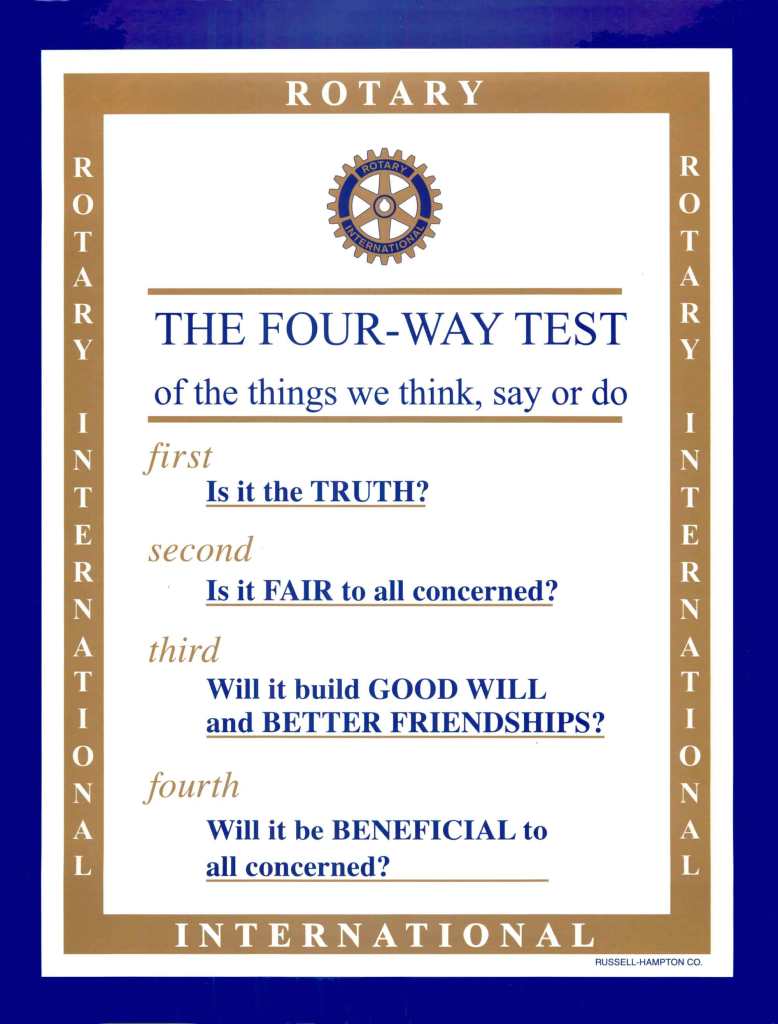
Ah, I see you’re referring to Rotary International’s famous “Four-Way Test.” This ethical code is a cornerstone of Rotary’s principles. Let me provide the complete Four-Way Test for context:

  1. Is it the TRUTH?
  2. Is it FAIR to all concerned?
  3. Will it build GOODWILL and BETTER FRIENDSHIPS?
  4. Will it be BENEFICIAL to all concerned?

The first question, “Is it the truth?” which you mentioned, emphasizes the importance of honesty and integrity in all dealings. This aligns with Rotary’s commitment to ethical behavior in both personal and professional life.

Rotarians are encouraged to apply this test to their thoughts, words, and actions. It’s a simple yet powerful tool for ethical decision-making and reflects Rotary’s dedication to service above self and high ethical standards in business and personal relationships.
NO WORD TODAY (just a speech): Discovering Automotive History at the Antique Auto Show

Ladies and Gentlemen,

When we think of humanity’s greatest inventions, few have changed the world as profoundly as the automobile. Its history is a tapestry of innovation, ambition, and transformative social change.

The journey begins in the late 19th century with visionaries like Karl Benz, who in 1886 unveiled what many consider the first true automobile: the Benz Patent-Motorwagen. This three-wheeled vehicle, powered by an internal combustion engine, was revolutionary, setting the stage for a new era of personal and commercial transportation.

The turn of the 20th century saw rapid advancements. In 1908, Henry Ford introduced the Model T, a vehicle so affordable and practical it became known as the “car for the masses.” Ford’s pioneering assembly line production method drastically reduced the cost and time required to build a car, making automobiles accessible to a broader audience.

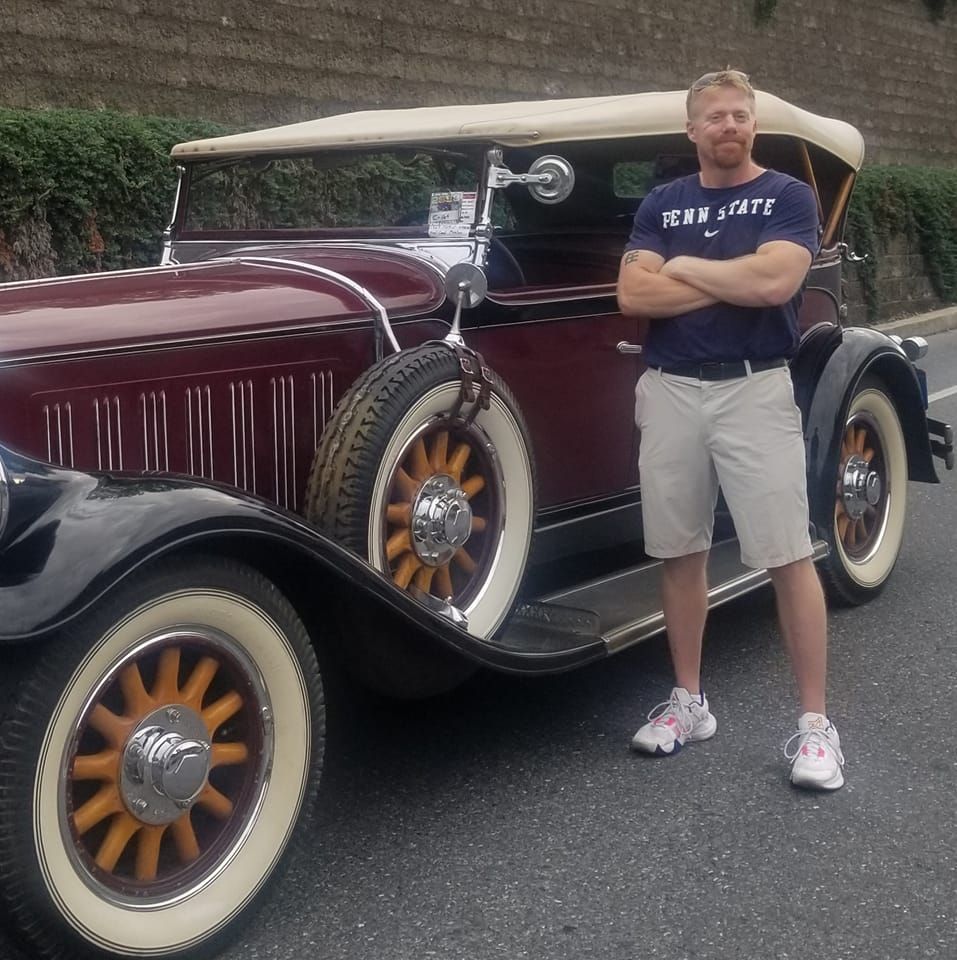
As I prepare to visit the Antique Auto Show in Hershey, PA next weekend, I’m reminded of the rich tapestry of automotive history preserved through such events. This show is a treasure trove of iconic vehicles, each with its own story to tell. From the elegant curves of the 1930s luxury cars to the bold designs of the 1950s muscle cars, the show promises a nostalgic journey through decades of automotive innovation.

At these shows, we encounter not just cars, but pieces of history that remind us of the social and cultural shifts over time. Think of the roaring 20s, where cars became symbols of freedom and independence, reflecting a society eager to break free from the past. The post-World War II era brought a boom in automobile ownership, synonymous with the American Dream itself.

But the story doesn’t stop at nostalgia. Today, we stand at the brink of yet another revolution in automotive technology. Electric vehicles and autonomous driving promise to reshape our world once more, addressing environmental concerns and changing the very nature of how we understand transportation.

Visiting the Antique Auto Show isn’t just about admiring beautifully restored vehicles; it’s about appreciating the ingenuity and determination that have driven humanity forward. It’s a chance to connect with the past and reflect on how far we’ve come—and where we’re headed next.

So, as I walk among these historical marvels in Hershey, I’ll be thinking about the timeless human drive for progress and innovation. Each car tells a story of its era, a chapter in the grand narrative of human achievement. And who knows—perhaps the next revolutionary chapter in automotive history is being written right now, just around the corner.

Thank you.

NO WORD TODAY

HIGH FIVE!

“The Summer Olympics: A Journey Through Time”

Introduction: Ladies and gentlemen, esteemed guests, and fellow sports enthusiasts, today I invite you to embark on a journey through history—a journey that celebrates the spirit of athleticism, camaraderie, and human achievement. Our destination? The Summer Olympics, an event that transcends borders, cultures, and generations.


Body:

  1. Origins and Inauguration:
    • The Summer Olympics, officially known as the Games of the Olympiad, trace their roots back to ancient Greece. In 776 BCE, the first recorded Olympic Games took place in Olympia, honoring the gods through athletic contests.
    • Fast forward to 1896: Athens, Greece—the birthplace of democracy—hosted the inaugural modern Summer Olympics. Athletes from 14 nations competed in 42 events, marking the revival of this ancient tradition.
  2. Evolution and Global Reach:
    • Over the years, the Summer Olympics have grown exponentially. From fewer than 250 male competitors in 1896, we now witness over 11,000 athletes (almost half of whom are women) representing 206 nations.
    • The Games have crisscrossed continents, leaving their mark in 19 countries. From the United States to Japan, from Australia to Great Britain, each host city adds its unique chapter to the Olympic saga.
  3. Unforgettable Moments:
    • Jesse Owens defying racial prejudice with his four gold medals in the 1936 Berlin Olympics.
    • Nadia Comăneci’s perfect 10s in gymnastics at the 1976 Montreal Games.
    • The “Miracle on Ice” when the U.S. ice hockey team upset the Soviet Union in 1980.
    • Usain Bolt’s lightning-fast sprints, leaving us breathless in Beijing, London, and Rio.
  4. Unity Amidst Challenges:
    • The Olympics have weathered storms—literal and metaphorical. World Wars led to cancellations, but the Games returned stronger.
    • Boycotts, political tensions, and controversies have tested the Olympic spirit, yet athletes continue to inspire us with their dedication and sportsmanship.

Conclusion: As we celebrate the look ahead to the Paris 2024 games, let us remember that the Summer Olympics are more than medals and records. They symbolize our shared humanity, our pursuit of excellence, and our ability to come together despite differences. So, whether you’re a sprinter or a spectator, let the Olympic flame ignite your passion and remind you that the journey matters as much as the destination.

Thank you, and may the Olympic spirit burn brightly within us all! 🌟🔥