
Subscribe to continue reading
Subscribe to get access to the rest of this post and other subscriber-only content.
Subscribe to get access to the rest of this post and other subscriber-only content.
HIGH FIVE!
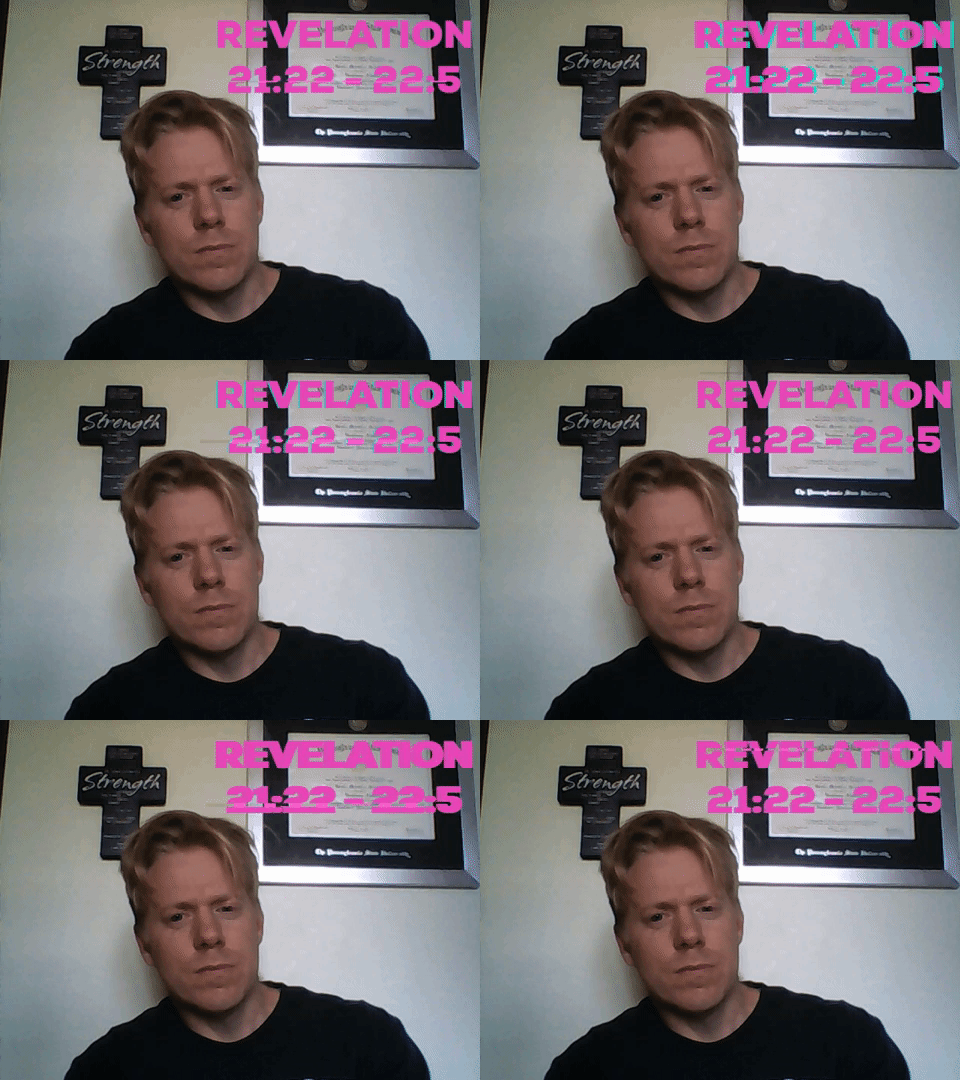
The text, “REVELATION 21:22 – 22:5,” holds profound significance in Christian theology. Let’s explore it together:
Remember, interpretations may vary, but this passage remains a beacon of hope for Christians. 🌟

YEAH!!!
HIGH FIVE!

Applying Psalm 52 to our lives today can be a powerful exercise in understanding the nature of evil and the steadfastness of God’s love. Here are some ways to bring the lessons of Psalm 52 into modern life:
By applying these principles, we can navigate the complexities of modern life with a foundation rooted in the timeless wisdom of the Psalms. It’s about transforming our perspective to see beyond immediate circumstances and to trust in the enduring love and justice of God.
The significance of biblical texts lies in their profound impact on individuals and societies throughout history. These sacred scriptures serve as a source of spiritual guidance, moral instruction, and inspiration for countless people around the world. They shape the beliefs, practices, and ethical frameworks of religious communities and provide insights into the human condition and relationship with the divine.
Understanding biblical texts involves a journey across time, culture, language, and covenantal changes. It requires careful reading and interpretation to grasp the original meaning intended for the biblical audience and to apply its truths to contemporary life1. The Bible is revered as the Word of God, and through it, God reveals Himself, offering revelatory expressions of broader, universal realities or theological principles1.
In essence, the significance of biblical texts is not only in their historical and cultural context but also in their ongoing relevance and ability to speak to the human heart across ages and cultures. They continue to hold relevance as sources of inspiration, guidance, and wisdom in the modern world2. Whether it’s the stories of the Old Testament or the teachings of the New Testament, these texts provide a foundation for faith and practice, inviting believers to explore and understand the deeper truths they contain.
HIGH FIVE!

The text “Mark 4:1-20” in the image refers to a passage from the Book of Mark in the Christian Bible. This specific scripture is known as “The Parable of the Sower.” Let me provide you with an outline of its significance:
Let’s try to incorporate this knowledge into our daily routine! 😊
The Parable of the Sower from Mark 4:1-20 holds timeless lessons for us:
Remember, this parable encourages us to examine our hearts, sow generously, and trust in God’s work. 🌱🙏
HIGH FIVE!

Acts 11:19-30 recounts an important event in the early Christian community. Here’s a summary:
In this passage, we learn that some believers who were scattered due to persecution after the death of Stephen traveled to Phoenicia, Cyprus, and Antioch. As they went, they preached the message of Jesus Christ to both Jews and Gentiles. The Lord’s hand was with them, and many people turned to the Lord.
News of this reached the church in Jerusalem, and they sent Barnabas to Antioch. When Barnabas arrived and saw the grace of God at work, he encouraged the believers to remain faithful. He also went to Tarsus to find Saul (who would later be known as the apostle Paul) and brought him back to Antioch.
For a whole year, Barnabas and Saul taught the church in Antioch, and it was there that the disciples were first called “Christians.” During this time, a prophet named Agabus predicted a severe famine that would affect the entire Roman world. In response, the disciples in Antioch decided to send relief to their brothers and sisters in Judea.
They collected funds and entrusted them to Barnabas and Saul, who delivered the gift to the elders in Jerusalem. This act of generosity and unity demonstrated the love and care among believers across different regions.
Overall, Acts 11:19-30 emphasizes the spread of the gospel, the inclusion of Gentiles, and the importance of supporting fellow believers during times of need. It highlights the early Christian community’s commitment to sharing the good news and caring for one another. 😊
YEAH!!!
HIGH FIVE!
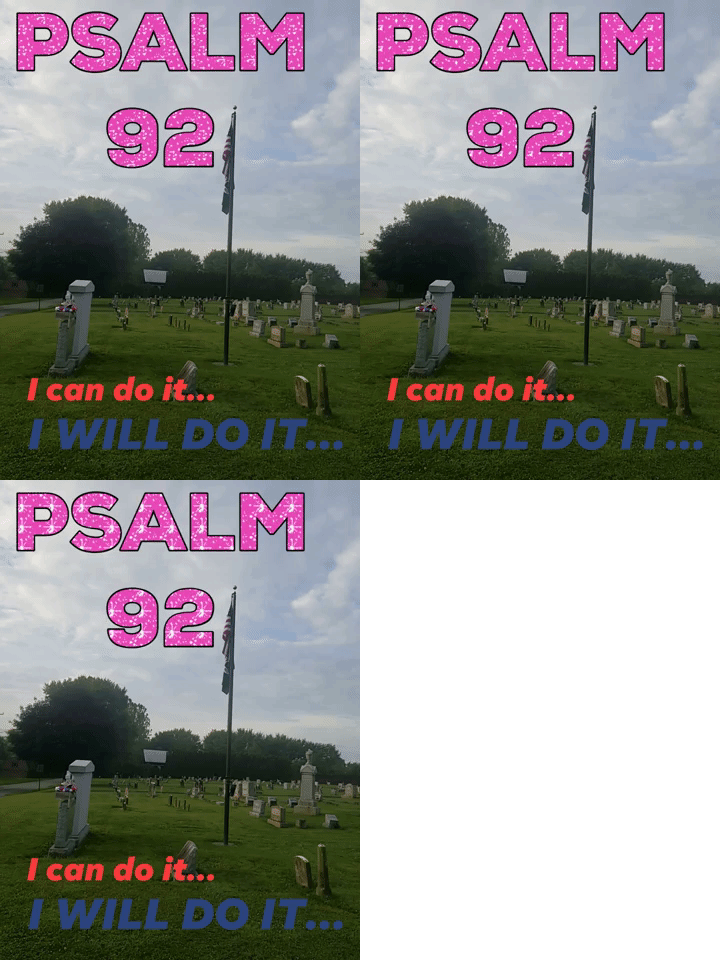
Let’s explore Psalm 92 together. This beautiful psalm is often called the “Sabbath Psalm” and is meant to be sung or recited on the Sabbath day. Here are some key points from Psalm 92:
Feel free to explore the entire psalm, and let me know if you have any specific questions or if there’s anything else you’d like to learn! 🙏🌟
HIGH FIVE!
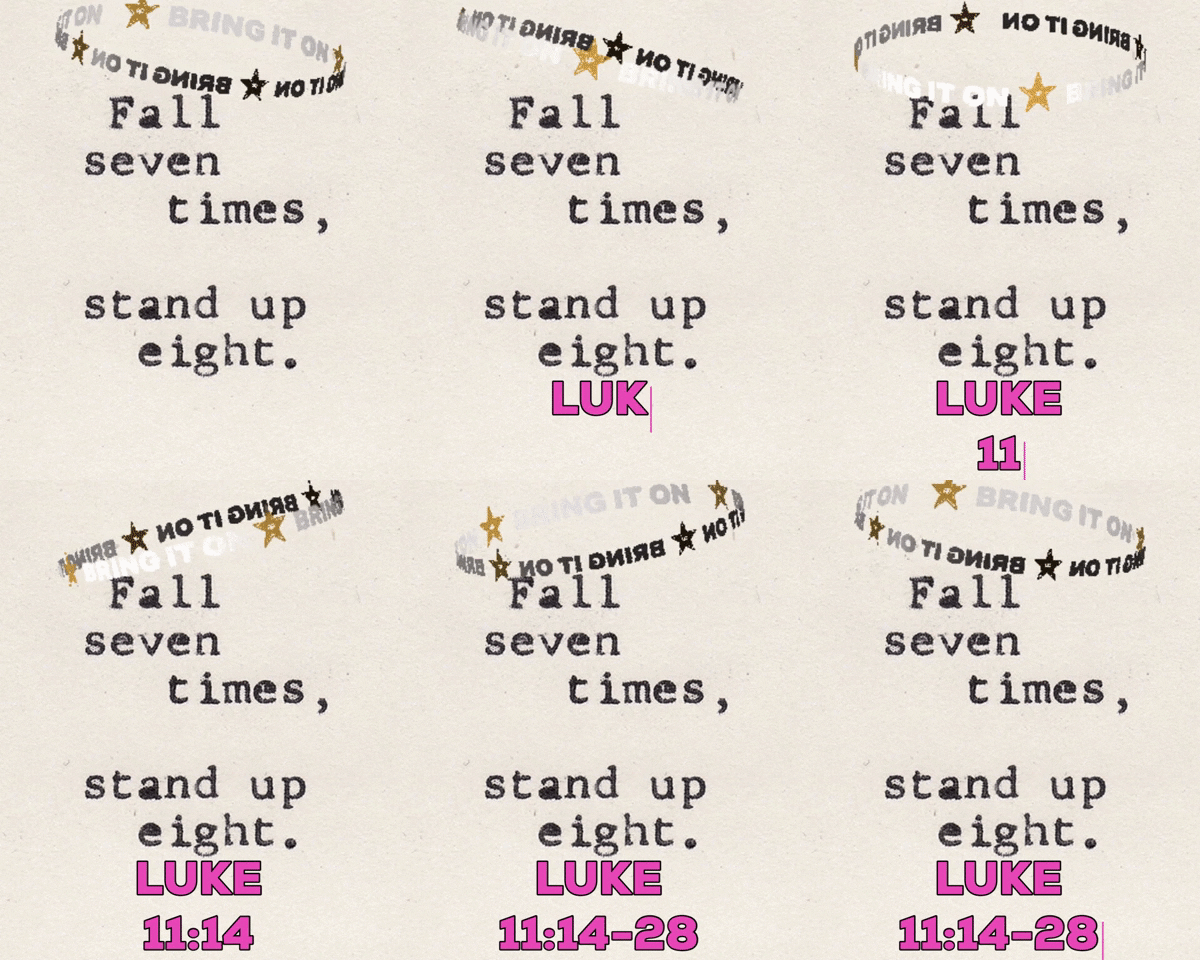
In Luke 11:14-28, Jesus was driving out a demon that had caused a man to be mute. When the demon left, the man regained his ability to speak, and the crowd was amazed. However, some people accused Jesus of casting out demons by the power of Beelzebul, the prince of demons. Jesus responded by emphasizing that a kingdom divided against itself cannot stand, and if He was indeed driving out demons by the finger of God, then the kingdom of God had come upon them. He also warned about the danger of an impure spirit returning with even more wicked companions. Finally, Jesus declared that those who hear the word of God and obey it are truly blessed. 🙏
Is there anything else you’d like to know? 😊
The text in the image ALSO reads, “Fall seven times, stand up eight.” This proverbial phrase conveys resilience and perseverance. It encourages us to persistently rise after setbacks, even when faced with repeated failures. The message is one of determination and unwavering resolve. 🌟
#BRINGITON
HIGH FIVE!
In Islam, the Book of Psalms (known as “Zabur” in Arabic) holds a special place as one of the revealed scriptures. While the entire Psalms collection is not explicitly mentioned in the Quran, certain themes and verses from Psalms resonate with Islamic teachings. Here are some points of significance:
In summary, while the Psalms are not recited in daily Islamic rituals, their spiritual and historical significance connects Muslims to a shared Abrahamic heritage. Muslims respect the Psalms as part of divine revelation and appreciate their timeless messages of faith, hope, and devotion. 🙏✨
YEAH!!!
HIGH FIVE!

🍫 The Sweetness at Hershey’s Chocolate World: Create Your Own Candy Bar! 🍫
In the heart of CHOCOLATETOWN, USA—Hershey, Pennsylvania—lies a magical place where dreams are dipped in chocolate and imagination takes the form of candy bars. Welcome to Hershey’s Chocolate World, where the air smells like cocoa and the joy is as rich as a kiss. A HERSHEY’S KISS.
Meet Lily, a wide-eyed visitor who had heard whispers about the legendary Create Your Own Candy Bar Experience. She stepped through the chocolate-scented doors, her anticipation bubbling like a freshly poured fountain of molten cocoa.
The room was alive with activity. Conveyor belts hummed, and chocolatiers danced around like sugar-coated elves. Lily approached the attraction, where Ms. Kiss greeted her.
“Welcome to the sweetest adventure!” Ms. Kiss said. “Are you ready to create your very own candy bar?”
Lily nodded, her heart racing. She followed Ms. Kiss to a gleaming station. The air buzzed with excitement as she donned a hairnet and apron. The ingredients lay before her like a painter’s palette: velvety milk chocolate, crunchy pretzels, vanilla chips, semi-sweet chocolate chips, toffee bits, cookie bits, and rainbow sprinkles.
“First,” Ms. Kiss said, “choose your chocolate base. Dark, milk, or white?”
Lily hesitated. Dark chocolate was mysterious, milk chocolate comforting, and white chocolate ethereal. She decided on milk—a classic canvas for her confectionary masterpiece.
Next came the mix-ins. She implemented pretzels in her creation like a flour technician, directed cookie bit insertion, and added toffee because she could. Her candy bar was taking shape—a symphony of flavors.
Next Ms. Kiss introduced the great chocolate making machine.
As Lily pulled the lever, the conveyor belt carried her creation away. She watched, mesmerized, as it transformed from flowing chocolate to a solid bar.
“Congratulations!” Ms. Kiss beamed. “Your candy bar is born.”
“Now,” Ms. Kiss said, “design your wrapper. What colors speak to your soul?”
Lily picked shades of cocoa brown and gold, with room to insert her claim. She crafted a whimsical wrapper with her name on the front and the Hershey Chocolate World logo. This was more than a candy bar; it was her sweet story.
Lily held it, her heart swelling. She took a bite—the crunch of pretzels, the sweetness of toffee—it was pure bliss. Her taste buds danced a waltz, and she knew she’d never forget this moment.
But the adventure didn’t end there. She explored the rest of Hershey’s Chocolate World: the Great Candy Expedition (where chocolate secrets whispered), the Hershey Trolley Works (a cocoa-powered time machine), and the largest candy store (where jolly ranchers wave hello).
As she left, her personalized candy bar tucked safely in her bag, Lily vowed to return. Because Hershey’s Chocolate World wasn’t just a place; it was a portal to childhood wonder, where dreams melted into reality.
So, dear reader, if you crave magic wrapped in foil, if you yearn to be both artist and chocolatier, follow the cocoa-scented path to Hershey’s Chocolate World. Your candy bar awaits—a sweet symphony composed by you. 🌟
Visit Hershey’s Chocolate World at 101 Chocolate World Dr, Hershey, PA and let your sweet adventure begin! 🎉
HIGH FIVE!
Genesis 2:4-14 provides a fascinating glimpse into the early days of creation and the Garden of Eden. Let’s explore its key points together:
These verses provide a glimpse into the pristine world before sin entered, emphasizing God’s care for humanity and the richness of the environment. If you have more questions or want further insights, feel free to ask or comment! 😊
CHIRP!!!
 DO-N-GOOD.COM