TODAY’S WORD: Finding Peace and Provision in Psalm 147

HIGH FIVE!

Psalm 147 is a beautiful passage, often interpreted as a song of praise to God for His goodness and providence. It highlights themes such as God’s power in creation, His care for the needy, and the importance of praising Him.

The psalm emphasizes that:

  1. God is powerful and mighty: It speaks of God’s command over nature, including His ability to count the stars and call them by name.
  2. God is compassionate: It highlights His care for the brokenhearted and the humble.
  3. God provides: It describes how He provides for the needs of His creation, such as giving rain and making grass grow on the hills.
  4. The call to praise: The psalm calls on all creation to praise God for His abundant goodness and care.

The text is a reminder of God’s constant and attentive care over all His creation, urging believers to respond with heartfelt praise and gratitude. It’s a text that encourages reflection on the many ways in which we experience God’s presence and goodness in our lives.

Here are a few ways you can use the wisdom from Psalm 147 in your daily life:

  1. Practice Gratitude: Like the psalm calls us to praise God for His goodness, take a moment each day to reflect on the things you’re grateful for. This can shift your mindset and bring more positivity into your life.
  2. Be Compassionate: Psalm 147 highlights God’s care for the brokenhearted and humble. Try to extend compassion and kindness to those around you, whether it’s through lending a helping hand, listening to someone, or simply being present.
  3. Trust in Provision: Just as the psalm speaks of God providing for creation, remind yourself that you are being cared for and provided for, even in tough times. Trust that your needs will be met and find peace in that trust.
  4. Praise and Worship: Take time to praise and worship, whether through prayer, singing, or simply being mindful of the beauty around you. This can help you feel more connected to the divine and cultivate a sense of inner peace.
  5. Reflect on God’s Power: Remembering the vastness of God’s power, such as His command over nature, can put our daily struggles into perspective. It can help you feel more grounded and less overwhelmed by challenges.

Incorporating these elements into your daily routine can enhance your spiritual well-being and foster a deeper connection to your faith.

TODAY’S WORD: Lessons from Psalm 112: Integrity and Resilience

HIGH FIVE!

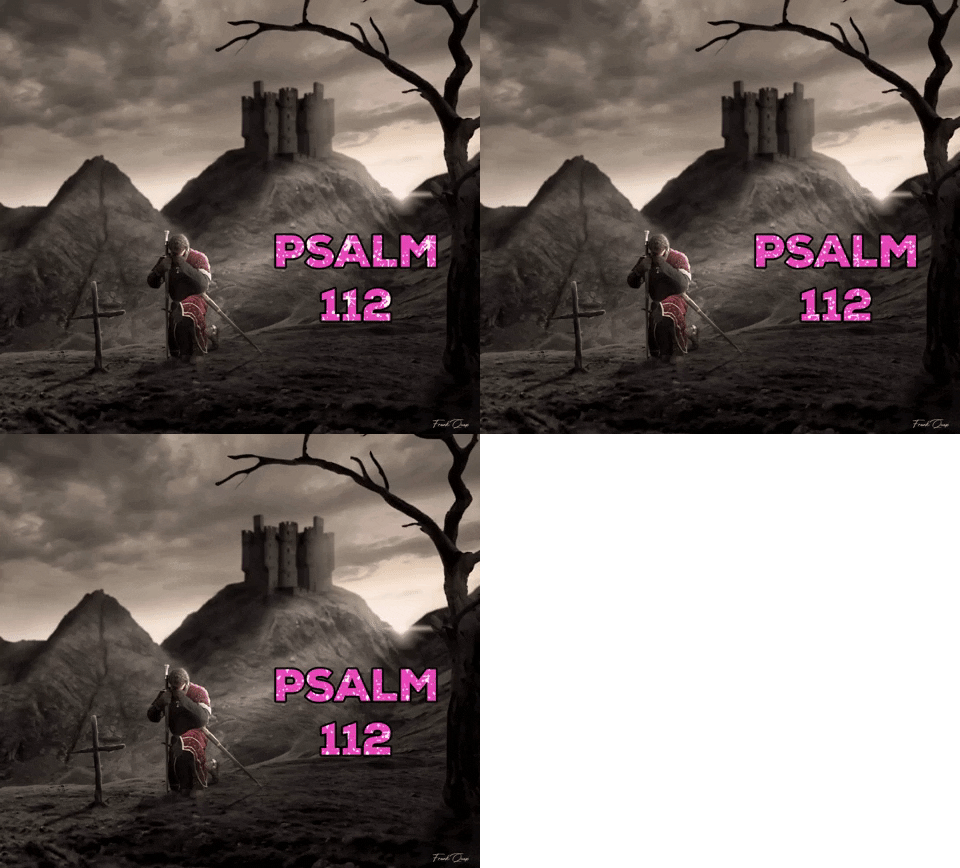
The text “PSALM 112” appears to be superimposed on the image in bright pink lettering. This refers to the 112th chapter or psalm in the Book of Psalms, which is part of the Hebrew Bible and Christian Old Testament.

The juxtaposition of this biblical reference with the dark, moody medieval-style scene creates an intriguing contrast. Psalm 112 is generally known as a psalm of praise that speaks about the blessings and character of the righteous person who fears the Lord. Its themes include generosity, justice, and steadfastness in faith.

The imagery in the photo, with its ominous castle on a hill, barren landscape, and lone knight figure, seems to evoke a sense of struggle or a difficult journey. This could be interpreted as a visual metaphor for the spiritual journey or trials described in many psalms, including themes of perseverance through hardship that are common in biblical literature.

The stark contrast between the ancient, somber scene and the modern, bright pink text also creates a thought-provoking juxtaposition of old and new, perhaps suggesting the enduring relevance of these ancient scriptures to modern life or interpretation.

Psalm 112 offers several principles that can be applied to modern life, regardless of one’s religious beliefs. Here’s how you might relate its themes to your personal journey:

  1. Integrity and ethics: The psalm emphasizes the importance of being upright and just in one’s dealings. This can translate to maintaining strong ethical standards in your personal and professional life.
  2. Generosity: It speaks of being generous and lending freely. This could inspire you to be more charitable, whether through donations, volunteering, or simply being kind to others.
  3. Financial wisdom: There are references to managing wealth wisely. This can be interpreted as encouragement to be financially responsible and to use your resources to benefit others as well as yourself.
  4. Resilience: The psalm mentions not being shaken by bad news. This can be seen as a call to develop emotional resilience and maintain a positive outlook even in challenging times.
  5. Legacy: It talks about descendants being mighty in the land. This could motivate you to consider the long-term impact of your actions and the legacy you want to leave.
  6. Compassion: The righteous person is described as being gracious and compassionate. This can inspire you to cultivate empathy and kindness in your interactions with others.
  7. Steadfastness: There’s an emphasis on having a steadfast heart and not being afraid. This can encourage you to stay true to your principles and face life’s challenges with courage.
  8. Light in darkness: The psalm mentions light dawning in the darkness for the upright. This could be interpreted as finding hope and guidance during difficult times through adhering to positive principles.

To apply these ideas practically, you might:

  • Reflect on your personal values and how you can better embody them
  • Look for opportunities to be generous or volunteer in your community
  • Work on building your resilience through mindfulness or stress management techniques
  • Consider how your current actions might impact your long-term legacy
  • Practice compassion and kindness in your daily interactions

Remember, the interpretation and application of religious texts can be deeply personal. You’re encouraged to reflect on how these themes resonate with your own life experiences and values.

TODAY’S WORD: Embrace Thankfulness and Peace with Psalm 100 Insights

HIGH FIVE!

Psalm 100 is a beautiful and uplifting chapter from the Book of Psalms in the Bible. It is often referred to as a “Psalm of Thanksgiving” and is unique in its call for all people to praise and worship God joyfully. Here are some key themes and how you might relate them to your life:

Significance of Psalm 100

  1. Joyful Praise: The psalm begins with a call to make a joyful noise to the Lord and to serve Him with gladness. This emphasizes the importance of approaching God with a joyful heart and a spirit of gratitude.
  2. Acknowledgment of God’s Sovereignty: It reminds us that the Lord is God, and it is He who made us. This recognition of God’s sovereignty can help us find peace and purpose, knowing that we are part of His creation.
  3. Gratitude and Thanksgiving: The psalm encourages entering God’s presence with thanksgiving and praise. This can inspire us to cultivate a habit of gratitude in our daily lives, recognizing and appreciating the blessings we have.
  4. God’s Eternal Goodness: It highlights God’s enduring love and faithfulness across all generations. This assurance of God’s unchanging nature can provide comfort and hope, especially during challenging times.

Relating Psalm 100 to Your Life

  • Practice Gratitude: Start each day by listing things you are thankful for. This can help shift your focus from challenges to blessings.
  • Joyful Service: Approach your daily tasks and interactions with a positive attitude, seeing them as opportunities to serve others and God with gladness.
  • Acknowledge God’s Role: Reflect on how God’s presence and guidance have shaped your life. This can deepen your sense of purpose and connection to your faith.
  • Celebrate God’s Goodness: Make time for worship and praise, whether through singing, prayer, or other forms of expression. This can strengthen your spiritual life and bring joy to your heart.

By incorporating these themes into your life, you can find greater joy, purpose, and peace, much like the psalmist intended for all who read and reflect on Psalm 100123.

How do you feel about these themes? Do any of them resonate with you personally?

TODAY’S WORD

HIGH FIVE!

The text “PSALM 33” likely refers to a specific verse from the Book of Psalms in the Bible. Psalm 33 is a song of praise and trust in God’s providence. It emphasizes God’s power, creation, and sovereignty. The mention of “today” suggests that the message from this psalm is relevant for the present moment. If you’d like, I can provide the full text of Psalm 33 for further context. 🙏

YES

Here is an extended version of Psalm 33:

Psalm 33

  1. Rejoice in the Lord, O you righteous! For praise from the upright is beautiful.
  2. Give thanks to the Lord with the harp; Sing praises to Him with the lute, a ten-stringed instrument.
  3. Sing to Him a new song; Play skillfully with a shout of joy.
  4. For the word of the Lord is right, And all His work is done in truth.
  5. He loves righteousness and justice; The earth is full of the goodness of the Lord.
  6. By the word of the Lord the heavens were made, And all the host of them by the breath of His mouth.
  7. He gathers the waters of the sea together as a heap; He lays up the deep in storehouses.
  8. Let all the earth fear the Lord; Let all the inhabitants of the world stand in awe of Him.
  9. For He spoke, and it was done; He commanded, and it stood fast.
  10. The Lord brings the counsel of the nations to nothing; He makes the plans of the peoples of no effect.
  11. The counsel of the Lord stands forever, The plans of His heart to all generations.
  12. Blessed is the nation whose God is the Lord, The people He has chosen as His own inheritance.

May these words bring comfort and inspiration to your heart. 🙏

  • GYM
  • HAIRCUT
  • GROCERY STORE
  • LAUNDRY
  • JOB ROTATION
  • JS/ PSH/LI
  • ROTARY (ask)
  • Toastmasters

In The Know…

It is right to give him thanks and praise…

A READING FOR YOU…

For to which of the angels did God ever say,

“You are my Son;
    today I have become your Father”[a]?

Or again,

“I will be his Father,
    and he will be my Son”[b]?

And again, when God brings his firstborn into the world, he says,

“Let all God’s angels worship him.”[c]

In speaking of the angels he says,

“He makes his angels spirits,
    and his servants flames of fire.”[d]

But about the Son he says,

“Your throne, O God, will last for ever and ever;
    a scepter of justice will be the scepter of your kingdom.
You have loved righteousness and hated wickedness;
    therefore God, your God, has set you above your companions
    by anointing you with the oil of joy.”[e]

10 He also says,

“In the beginning, Lord, you laid the foundations of the earth,
    and the heavens are the work of your hands.
11 They will perish, but you remain;
    they will all wear out like a garment.
12 You will roll them up like a robe;
    like a garment they will be changed.
But you remain the same,
    and your years will never end.”[f]

13 To which of the angels did God ever say,

“Sit at my right hand
    until I make your enemies
    a footstool for your feet”[g]?

14 Are not all angels ministering spirits sent to serve those who will inherit salvation?

TODAY’s POA = CAREERLINK + ETM Virtual Ribbons + WEGNER (PAC) + ETM & CTM Workbook + read about Comb Jelly in “World of Wonders”

https://www.linkedin.com/in/kevin-schafer-mba-532098104/