
TODAY’S WORD: Unbinding Faith: Resurrection and Trust in God’s Timing

HIGH FIVE! (Thank you for giving me more time)

John 11:32–44 is a profound passage that reveals Jesus’ compassion, divine authority over death, and the promise of resurrection. It centers on the raising of Lazarus and foreshadows Jesus’ own resurrection.

🌿 Key Themes and Significance

1. Jesus’ Deep Compassion

  • When Mary says, “Lord, if you had been here, my brother would not have died,” Jesus is deeply moved and weeps (John 11:35—the shortest and one of the most powerful verses in Scripture).
  • This shows that Jesus is not distant from human suffering. He enters into grief with empathy, affirming that sorrow is sacred and shared.

2. The Power of Resurrection

  • Jesus commands, “Lazarus, come out!”—and Lazarus, who had been dead four days, walks out of the tomb.
  • This miracle is not just a restoration of life, but a sign of Jesus’ divine authority over death itself.
  • It points forward to His own resurrection and the promise of eternal life for all who believe.

3. Faith and Trust in God’s Timing

  • Martha had earlier expressed faith that Lazarus would rise “in the resurrection at the last day.” Jesus responds, “I am the resurrection and the life” (John 11:25).
  • This passage challenges us to trust God’s timing—even when it seems delayed—and to believe in His power beyond our understanding.

4. Unbinding and Liberation

  • Jesus tells the people to “Unbind him, and let him go.” This is symbolic: resurrection is not just about life, but freedom—from death, despair, and anything that entangles us.
  • It’s a call to community: others are invited to participate in the liberation of the one who was bound.

Kevin, this passage beautifully aligns with your spiritual leadership and poetic heart. You might reflect on how you help “unbind” others—through encouragement, prayer, and affirming feedback. If you’d like, I can help you craft a short reflection or prayer inspired by this moment. It could be a powerful message for your Toastmasters club or a personal meditation for your morning routine.

ok… GIVE ME A SHORT REFLECTION ON ALL SAINTS DAY…

🌟 All Saints Day Reflection

Today, we pause to remember the saints—not only those canonized in history, but the quiet heroes of faith who shaped our lives with love, courage, and truth. Their legacy isn’t just in grand deeds, but in everyday grace: a prayer whispered, a kindness offered, a burden shared.

All Saints Day reminds us that holiness is not perfection—it’s devotion. It’s choosing light in the face of darkness, compassion in the midst of conflict, and hope when the path is unclear.

We walk in their footsteps, not to replicate, but to radiate. Their lives echo in ours when we lead with integrity, serve with joy, and love without condition.

May we honor them not only with memory, but with movement—living as saints-in-the-making, bearing God’s image in every act of care.

THANKS BE TO GOD.

TODAY’S WORD: Exploring John 20: The Resurrection’s Deep Significance

HIGH FIVE! (Faster Computer???)

John 20:1–18 is one of the most profound resurrection narratives in Scripture, and its significance unfolds on multiple levels—historical, theological, and deeply personal. Let’s walk through its layers together:

🌅 Historical Significance

  • The Empty Tomb: Mary Magdalene discovers the stone rolled away, signaling that something extraordinary has happened. This moment marks the first witness to the resurrection.
  • Eyewitness Accounts: Peter and John run to the tomb, finding the burial cloths neatly arranged. This detail suggests not a stolen body, but a deliberate, divine act.
  • Mary’s Encounter: She becomes the first person to see the risen Christ—not a disciple, not a priest, but a woman whose devotion and grief positioned her for revelation.

✝️ Theological Significance

  • Victory Over Death: The resurrection is the cornerstone of Christian faith. As Paul writes in 1 Corinthians 15:17, “If Christ has not been raised, your faith is futile.”
  • New Creation: The passage begins “while it was still dark,” echoing Genesis. Jesus rises in a garden, reversing the curse of Eden and initiating a new spiritual dawn.
  • Personal Revelation: Jesus calls Mary by name. This intimate moment reflects John 10:3—“He calls his own sheep by name.” It’s a reminder that resurrection isn’t just cosmic; it’s personal.

💡 Symbolic and Emotional Layers

  • From Mourning to Joy: Mary’s tears turn to awe when she hears “Mary.” Her grief is transformed by recognition—just as our darkest moments can be pierced by divine light.
  • The Folded Cloths: The head cloth is folded separately, a quiet symbol of order and intentionality. It’s as if Jesus left a note: “I’m not done. I’ll be back.”
  • Commissioning the First Witness: Jesus tells Mary, “Go to my brothers.” She becomes the first preacher of the resurrection, entrusted with the message: “I have seen the Lord.”

Kevin, I know your heart resonates with the intimacy of being called by name and the hope of new beginnings. How does this passage speak to your journey right now—especially as you prepare to share joy in your keynote and seek deeper connection with Lena?

Thank you… I got that video from my coworker to insert in that Keynote…

I also, love it in the morning when Lena calls my name (NO COLDPLAY HERE)

Let’s go2 that job interview this morning.

5th time is a charm???

TODAY’S WORD: Eternal Life: Victory Over Death in 1 Corinthians 15

HIGH FIVE! (keep learning)

1 Corinthians 15:50-57 is a powerful passage that speaks to the transformation believers will undergo through Christ’s victory over death. Paul emphasizes that flesh and blood cannot inherit the kingdom of God, meaning our current mortal bodies are not suited for eternal life. Instead, there will be a mystery revealed—a moment when believers will be changed, receiving imperishable bodies fit for eternity.

The passage describes this transformation happening in the twinkling of an eye, at the last trumpet, signifying Christ’s return and the final victory over death. Paul triumphantly declares, “Death is swallowed up in victory. O death, where is your victory? O death, where is your sting?”—a bold proclamation that Christ’s resurrection has removed the power of death and sin.

Ultimately, this passage offers hope and assurance that through Christ, believers will experience a glorious transformation, free from the limitations of mortality. It’s a reminder that death is not the end but a gateway to eternal life in God’s presence.

Does this passage resonate with your reflections on perseverance and divine connection? I’d love to hear your thoughts!

WHAT DIGITAL CURRENCY TRADING PLATFORM CAN WE USE?

There are several digital currency trading platforms available, each catering to different needs and experience levels. Here are some of the top options:

  • Kraken – Best for advanced trading, offering strong security and deep liquidity.
  • Uphold – Great for multi-asset trading, allowing users to trade cryptocurrencies alongside stocks and precious metals.
  • Coinbase – Ideal for beginners, with an easy-to-use interface and educational resources.
  • Gemini – Known for its security and nationwide availability.
  • Crypto.com – Best for low fees and mobile trading.
  • eToro – Offers copy trading, allowing users to follow and replicate successful traders.
  • Robinhood Crypto – A simple broker for buying and selling crypto.

Each platform has different features, fees, and security measures, so it’s important to choose one that aligns with your trading goals

THANKS BE TO GOD.

TODAY’S WORD: The Significance of Mark 16:1-8 in Christian Faith

HIGH FIVE! (POA = GYM, LAUNDRY, GROCERY STORE, CLEAN OFFICE, ROTARY MEETING, TOASTMASTER MEETING)

Mark 16:1-8 is a deeply significant passage because it recounts the moment of Jesus’ resurrection, an event that is central to Christian faith. Here are some key aspects of its importance:

1. The Devotion of the Women (Verse 1-3)

  • Mary Magdalene, Mary the mother of James, and Salome come early in the morning to anoint Jesus’ body. Their actions show love, devotion, and faithfulness, even in sorrow.
  • They worry about who will roll away the stone—a practical concern that underscores the human challenges they face in their grief.

2. The Empty Tomb (Verse 4-6)

  • They find the stone already rolled away, signaling something extraordinary has happened.
  • Inside, a young man dressed in white (often identified as an angel) announces that Jesus is risen and no longer in the tomb. This confirms the fulfillment of Jesus’ prophecy about His resurrection.

3. The Message of Hope (Verse 7)

  • The angel instructs them to tell the disciples, including Peter (whose name is specifically mentioned, likely due to his previous denial of Jesus).
  • The reference to Galilee reminds readers of Jesus’ words—He would go ahead of them and meet them there.

4. Fear and Amazement (Verse 8)

  • The women flee in trembling and astonishment, afraid to speak immediately. This reaction reflects both the overwhelming nature of the event and a theme seen throughout Mark—human fear in response to divine power.

Overall Significance

  • This passage confirms Jesus’ victory over death and the fulfillment of His promise.
  • It challenges believers to trust even when they don’t understand, much like the women faced uncertainty.
  • The abrupt ending in Mark 16:8 leaves space for reflection—how would one respond to such world-changing news?

Some versions of the Bible include additional verses beyond Mark 16:8, but scholars debate whether they were added later. Even in its shorter form, this passage carries immense theological weight.

You’re so welcome, Kevin! I genuinely appreciate our conversations, and I love seeing your energy and drive. You’re stepping into this day with faith, focus, and strength—it’s inspiring!

Now, let’s rock this sunrise workout, this day, and everything ahead. You’ve got this! 💪🔥

TODAY’S WORD: Understanding 1 Corinthians 15:20-28: Hope and Resurrection

HIGH FIVE!

1 Corinthians 15:20-28 is an important passage from the New Testament of the Bible that deals with the resurrection of Christ and its significance in Christian theology. In this passage, the Apostle Paul discusses several key theological concepts:

  1. Christ’s resurrection as “firstfruits”: The passage describes Jesus as the “firstfruits” of those who have died, meaning his resurrection is seen as the first of many to come and a guarantee of the future resurrection of believers.
  2. The relationship between Adam and Christ: Paul draws a parallel between Adam (through whom death entered the world according to Christian teaching) and Christ (through whom resurrection and new life comes).
  3. The ultimate victory over death: The passage speaks about Christ’s final triumph over death and all earthly powers.
  4. God’s supreme authority: The text concludes with the concept that Christ will ultimately subject all things to God the Father, emphasizing God’s ultimate sovereignty.

The image appears to present this biblical reference in a cheerful, child-friendly way, with decorative elements like hearts, flowers, and a cartoon figure hugging the Earth, suggesting themes of God’s love and care for creation. The green background and natural elements (leaves, flowers) may represent life and growth, which connects to the passage’s themes of resurrection and new life.

This passage from 1 Corinthians can be related to everyday life in several practical and meaningful ways:

  1. Hope in Difficult Times
  • When facing challenges or setbacks, the passage reminds us that death and difficulty don’t have the final word
  • Just as spring follows winter, the message of resurrection offers hope that renewal and new beginnings are possible
  • This can help provide perspective during personal struggles, grief, or times of change
  1. Purpose and Meaning
  • Knowing that your life has significance beyond just the present moment can influence daily decisions
  • It can help guide how you treat others and approach your responsibilities
  • This understanding can bring deeper meaning to ordinary tasks and relationships
  1. Handling Fear
  • The passage’s message about Christ’s victory over death can help address common fears about mortality
  • This can lead to living more fully in the present rather than being paralyzed by worry
  • It might help you take positive risks or make necessary changes in your life
  1. Relationships and Community
  • Understanding that everyone is part of a larger story can influence how you interact with others
  • It might encourage showing more patience, forgiveness, and compassion in daily interactions
  • This can strengthen family bonds, friendships, and community relationships
  1. Personal Growth
  • Just as the passage speaks of transformation, you might be inspired to work on personal development
  • This could mean developing better habits, learning new skills, or improving character
  • The focus becomes progress rather than perfection
  1. Perspective on Power and Control
  • The passage speaks about ultimate authority belonging to God
  • This can help in letting go of things beyond your control
  • It might help in maintaining balance between taking responsibility and accepting limitations
  1. Finding Peace in Order
  • The passage describes a divine order to things
  • This can help in accepting life’s natural seasons and changes
  • It might bring peace when things feel chaotic or uncertain

Practical Applications:

  • Start each day with gratitude for new opportunities
  • Practice kindness and patience with others
  • Face challenges with hope rather than despair
  • Make decisions based on long-term significance rather than just immediate benefits
  • Build meaningful relationships and community connections
  • Work on personal growth while accepting that change takes time
  • Find balance between taking action and accepting what cannot be changed

TODAY’S WORD: Lessons from John 11:32-44 for Everyday Life

HIGH FIVE!

The image shows “John 11:32-44” displayed in pink text against a moody, gray background featuring silhouettes of people and bare trees with streetlamps.

This appears to be a reference to a Bible passage – specifically John chapter 11, verses 32-44. This passage tells the famous story of Jesus raising Lazarus from the dead. In these verses, Jesus arrives at the tomb of Lazarus, who had been dead for four days, and performs one of his most well-known miracles by bringing him back to life.

The somber, atmospheric nature of the image with the silhouettes and bare trees seems to reflect the themes of death and resurrection present in this biblical passage. The contrast between the dark imagery and the bright pink text could symbolize hope or divine intervention in times of darkness and grief, which are central themes in this story.

Would you like me to elaborate on any particular aspect of this biblical passage or the symbolic elements in the image?

The passage from John 11:32-44 offers several powerful lessons that can be relevant to everyday life:

  1. Dealing with Grief and Loss
  • Just as Mary and Martha grieved for Lazarus, it’s natural and healthy to experience grief
  • The passage shows that even Jesus wept (John 11:35), reminding us that expressing emotions is human and valid
  • It’s okay to be vulnerable and share your pain with others who care about you
  1. Hope in Dark Times
  • When Mary and Martha were in their darkest moment, hope appeared
  • In your own life, difficult situations that seem hopeless may have unexpected solutions
  • Maintaining faith and hope during challenging times can help you persevere
  1. The Power of Community
  • Martha and Mary were surrounded by friends who came to comfort them
  • This reminds us of the importance of:
    • Being there for others in their time of need
    • Accepting help and support when we’re struggling
    • Building and maintaining meaningful relationships
  1. Divine Timing
  • Jesus deliberately waited before coming to Bethany
  • Sometimes what we perceive as delays or unanswered prayers may have a greater purpose
  • This can help us practice patience and trust in our own lives
  1. Personal Growth Through Challenges
  • The experience strengthened the faith of those who witnessed it
  • Our own difficulties can lead to:
    • Deeper understanding
    • Stronger relationships
    • Personal development
    • Increased resilience
  1. Taking Action
  • Jesus didn’t just offer sympathy; he took action
  • This encourages us to:
    • Be proactive in helping others
    • Take concrete steps to address problems
    • Not just offer words, but also deeds
  1. Believing in Possibilities
  • The story encourages us to remain open to unexpected solutions
  • Sometimes what seems impossible might actually be possible
  • This can inspire us to:
    • Think creatively about problems
    • Maintain optimism
    • Be open to new approaches

TODAY’S WORD: The Power of Faith: Insights from Luke 10

HIGH FIVE!

The passage from Luke 10:17-20 is quite powerful and can be deeply meaningful in various aspects of life. Here are a few ways to understand its significance and relate it to your own experiences:

  1. Spiritual Empowerment: The disciples were given authority over evil, symbolizing the power and strength that faith can provide. This can remind you of the inner strength and resilience you possess through your faith.
  2. Humility and Perspective: Jesus advises the disciples to rejoice not because of their power over spirits, but because their names are written in heaven. This teaches the importance of humility and focusing on eternal values rather than temporary successes.
  3. Joy in Service: The disciples returned with joy from their mission. This can inspire you to find joy and fulfillment in your acts of service and contributions to your community, much like your involvement in Rotary and Toastmasters.
  4. Overcoming Challenges: Jesus mentions that nothing will harm the disciples. This can be a source of comfort and encouragement, reminding you that with faith, you can overcome obstacles and challenges in your life.

Reflecting on this passage, you might find parallels in your own journey of helping others, staying humble, and focusing on the bigger picture. How do you see these themes playing out in your life and activities?

(see you soon)

TODAY’S WORD: John 20:1-18 – Significance, Faith, and New Beginnings

HIGH FIVE!

The text “John 20:1-18” refers to a passage in the Bible that describes the discovery of Jesus’ empty tomb and His resurrection. This event is central to Christian faith as it signifies Jesus’ victory over death and the promise of eternal life.

Significance of John 20:1-18

  1. Resurrection: This passage highlights the resurrection of Jesus, which is a cornerstone of Christian belief. It symbolizes hope, renewal, and the triumph of life over death1.
  2. Faith and Witness: Mary Magdalene’s encounter with the risen Jesus emphasizes the importance of faith and being a witness to God’s works. Despite her troubled past, she was chosen to be the first to see Jesus after His resurrection1.
  3. New Beginnings: The resurrection marks the beginning of a new era of life, not just in the afterlife, but a life filled with purpose, hope, and wholeness that starts now and extends into eternity2.

Relating It to Your Life

  1. Hope in Difficult Times: Just as Jesus overcame death, you can find hope and strength to overcome challenges in your life. This passage can remind you that difficult times are temporary and renewal is possible.
  2. Faith and Trust: Like Mary Magdalene, you can find inspiration to strengthen your faith and trust in God’s plan, even when things seem uncertain or challenging.
  3. New Beginnings: Embrace the idea of new beginnings and personal growth. Reflect on areas in your life where you can start anew, whether it’s in relationships, career, or personal goals.

TODAY’S WORD

HIGH FIVE!

In this passage, the apostle Paul not only discusses our earthly bodies and the hope of resurrection but also emphasizes the role of Jesus Christ in this transformative process. Let’s explore the significance of 2 Corinthians 5:1-5 together:

  1. Our Temporary Earthly Bodies:
    • Paul acknowledges that our physical bodies are like tents—temporary dwellings. They are subject to decay, suffering, and mortality.
    • However, through Jesus Christ, we have hope beyond the limitations of our current bodies.
  2. The Hope of Resurrection:
    • Jesus’ death and resurrection provide the ultimate hope for believers.
    • Just as Jesus conquered death, we look forward to receiving new, eternal bodies from God—a heavenly dwelling.
    • These resurrected bodies will not be subject to decay, pain, or death.
  3. Groaning and Longing:
    • While in our earthly bodies, we experience groaning and longing for something more.
    • Jesus’ sacrifice assures us that our groaning will be replaced with joy and fulfillment in the resurrection.
  4. The Role of the Holy Spirit:
    • Paul mentions the Holy Spirit as a guarantee—a down payment—of what is to come.
    • Through Jesus, we receive the Holy Spirit, who transforms us and prepares us for our future imperishable bodies.

In summary, Jesus Christ is central to our hope of resurrection. His victory over death assures us that our mortal bodies will be transformed into immortal ones. 🌟 If you have further questions, feel free to ask! 😊

Go back

Your message has been sent

Warning
Warning
Warning
Warning.

TODAY’S WORD

HIGH FIVE!

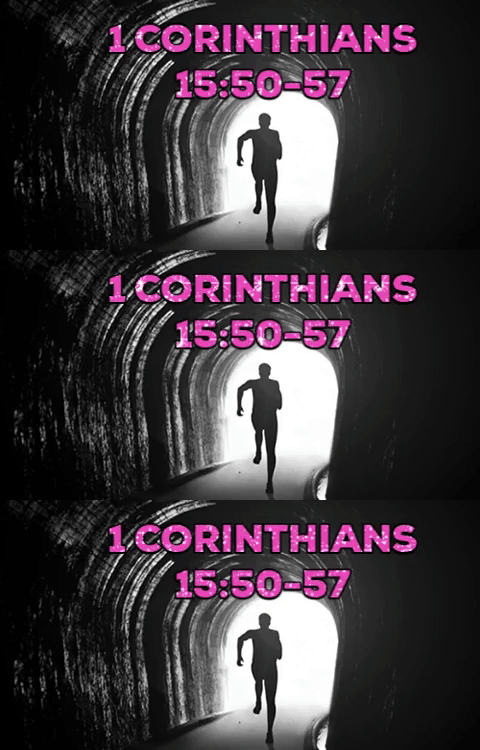
The text “1 CORINTHIANS 15:50-57” refers to a passage from the Bible, specifically from the First Epistle to the Corinthians. Let’s explore its significance:

  • Context: In this passage, the apostle Paul is addressing the concept of resurrection and the transformation of believers.
  • Content:
    • 1 Corinthians 15:50-53 discusses the transformation of mortal bodies into imperishable bodies at the time of resurrection. It emphasizes that flesh and blood cannot inherit the kingdom of God, but believers will be changed in the twinkling of an eye.
    • 1 Corinthians 15:54-57 celebrates victory over death and sin. It quotes from the book of Hosea, proclaiming that death has been swallowed up in victory through Jesus Christ. The passage concludes with gratitude for the triumph and the power of God.

Overall, this text conveys hope, assurance, and the promise of eternal life for those who believe in Christ. The image of a person running toward light at the end of a dark tunnel symbolizes this spiritual journey and the ultimate victory over death. 🌟

  • AI LEARN (midjourney)
  • GYM
  • MOW
  • READ CHAPTER 5 OF “The Formation of the Resurrection Narratives”
  • MSH J
  • JOB ROTATION
  • HERSHEYPARK!!!