
TODAY’S WORD: Get Inspired: The Power of Commitment | Acts 7:9-16

HIGH FIVE!

The text in the image highlights the word “Commitment” and references a biblical passage from Acts 7:9-16. This passage recounts the story of Joseph, who was sold into slavery by his brothers but remained committed to his faith and ultimately rose to a position of power in Egypt, saving his family during a famine.

The significance of “Commitment” in this context can be seen as a reminder of the importance of staying dedicated and faithful, even in challenging times. It encourages us to remain steadfast in our goals, relationships, and personal values, trusting that our perseverance will lead to positive outcomes.

In your life, this could relate to various aspects such as:

  • Personal Goals: Staying committed to your aspirations and working diligently towards achieving them.
  • Relationships: Being dedicated to nurturing and maintaining healthy relationships with family, friends, and colleagues.
  • Faith and Values: Holding steadfast to your beliefs and values, even when faced with difficulties.

Reflecting on this passage and the theme of commitment can inspire you to stay focused and resilient in your endeavors.

NO WORD TODAY (just a speech): The Power of Patience: Cultivating Calmness for Personal Growth

HIGH FIVE!

“Patience is not simply the ability to wait – it’s how we behave while we’re waiting.” – Joyce Meyer. Good evening, everyone. Today, I want to talk about a virtue that is often overlooked but incredibly powerful – patience. I remember a time when I was coordinating officer training for our clubs. There were numerous challenges, and it required a great deal of patience to ensure everything went smoothly.

Patience is the ability to stay calm and composed in the face of delay, adversity, or frustration. It’s a quality that can transform our lives and relationships. The Bible teaches us in James 1:4, “Let perseverance finish its work so that you may be mature and complete, not lacking anything.” This verse reminds us that patience is essential for personal growth.

So, how can we cultivate patience in our daily lives? Here are a few suggestions:

  1. Mindfulness and Meditation: Practicing mindfulness and meditation can help us stay present and reduce stress. It allows us to respond to situations with a calm mind.
  2. Setting Realistic Expectations: By setting realistic goals and expectations, we can avoid unnecessary frustration and disappointment.
  3. Positive Self-Talk: Engaging in positive self-talk and reframing negative thoughts can help us maintain a positive attitude.
  4. Taking Breaks: When feeling overwhelmed, taking breaks can help us regain composure and perspective.
  5. Empathy and Understanding: Practicing empathy and understanding towards others can help us be more patient in our interactions.

In conclusion, patience is a virtue that can lead to personal growth and improved relationships. I encourage all of you to practice patience in your daily lives. Remember, “Patience is not the ability to wait, but the ability to keep a good attitude while waiting.” Thank you.

*JOB ROTATION!!!

TODAY’S WORD: Balancing Commitments and Spiritual Reflection: Lessons from Self-Care and John 4:7-26

HIGH FIVE!

The text on the cup reads: “You can’t pour from an empty cup. Take care of yourself first.” This quote emphasizes the importance of self-care. It suggests that you need to ensure your own well-being before you can effectively help or give to others.

In your life, this message can be particularly relevant given your involvement in various community activities like the Rotary Club and your interest in Toastmasters. Balancing these commitments with personal care is essential to maintain your energy and enthusiasm. By taking care of yourself, you’ll be better equipped to support and contribute to the causes you care about. 😊

John 4:7-26 is a passage from the Bible that describes Jesus’ encounter with a Samaritan woman at a well. Here is a brief summary:

  • Verses 7-9: Jesus asks the Samaritan woman for a drink, which surprises her because Jews typically did not associate with Samaritans.
  • Verses 10-15: Jesus speaks of “living water” that he can provide, which will quench thirst forever. The woman is intrigued and asks for this water.
  • Verses 16-18: Jesus reveals his knowledge of her personal life, showing that he knows she has had five husbands and is currently with a man who is not her husband.
  • Verses 19-26: The woman perceives Jesus as a prophet and discusses worship with him. Jesus reveals that true worshipers will worship the Father in spirit and truth, and he identifies himself as the Messiah.

This passage highlights several key themes:

  1. Inclusivity: Jesus breaks social norms by speaking to a Samaritan woman, showing that his message is for everyone.
  2. Spiritual Fulfillment: The “living water” symbolizes the spiritual satisfaction that comes from a relationship with Jesus.
  3. Personal Transformation: Jesus’ knowledge of the woman’s life demonstrates his ability to see and transform our deepest needs.

In your life, this passage can remind you of the importance of seeking spiritual fulfillment and being open to transformative encounters. It also emphasizes the value of inclusivity and reaching out to others.

TODAY’S WORD: Understanding Romans 16:17-20: Guidance and Encouragement from the Bible

HIGH FIVE!

The text “ROMANS 16:17-20” refers to a passage from the Bible, specifically from the book of Romans. This passage is often interpreted as a warning against those who cause divisions and obstacles contrary to the teachings of Christianity. It encourages believers to be wise about what is good and innocent about what is evil, and it promises that God will soon crush Satan under their feet.

In terms of its significance and how it relates to your life, it can serve as a reminder to stay true to your beliefs and values, to be cautious of those who might lead you astray, and to trust in the ultimate victory of good over evil. Given your interest in biblical texts and their significance in daily life, this passage might resonate with you as a source of guidance and encouragement.

The book of Romans is one of the letters (or epistles) written by the Apostle Paul in the New Testament of the Bible. It is considered one of the most important theological works in Christianity and has had a significant influence on Christian thought and doctrine.

Here are some key points about the book of Romans:

Authorship and Audience

  • Author: The Apostle Paul
  • Audience: The Christian community in Rome

Purpose

Paul wrote this letter to explain the core principles of the Christian faith, to address issues within the Roman church, and to prepare for his visit to Rome.

Themes

  1. Justification by Faith: Paul emphasizes that salvation is a gift from God and is received through faith in Jesus Christ, not by works.
  2. Sin and Redemption: The letter discusses the sinful nature of humanity and the redemptive work of Christ.
  3. Grace: Paul highlights the concept of grace, God’s unmerited favor towards humanity.
  4. Christian Living: The latter part of the letter provides practical advice on how Christians should live and interact with others.

Structure

The book of Romans is divided into several sections:

  1. Introduction (Romans 1:1-17): Paul introduces himself and states the purpose of his letter.
  2. The Need for Salvation (Romans 1:18-3:20): Paul explains the universal need for salvation due to sin.
  3. Justification by Faith (Romans 3:21-5:21): Paul discusses how faith in Jesus Christ leads to justification and peace with God.
  4. Sanctification (Romans 6:1-8:39): This section covers the process of becoming more like Christ through the work of the Holy Spirit.
  5. God’s Plan for Israel (Romans 9:1-11:36): Paul addresses the role of Israel in God’s plan of salvation.
  6. Practical Christian Living (Romans 12:1-15:13): Paul provides practical instructions for living out the Christian faith.
  7. Conclusion (Romans 15:14-16:27): Paul concludes with personal greetings and final remarks.

Significance

The book of Romans has been highly influential in the development of Christian theology. It has been studied and referenced by many theologians, including Augustine, Martin Luther, and John Wesley. Its teachings on grace, faith, and righteousness have shaped the beliefs and practices of many Christian denominations.

TODAY’S WORD: Living Righteously: Unveiling the Blessings of Psalm 34

HIGH FIVE!

Psalm 34 is a beautiful and profound reflection on God’s character and His divine care for those who seek Him. It is a psalm of thanksgiving, attributed to David, and is often seen as a testament to God’s faithfulness and protection.

Here are some key themes and their significance:

  1. Praise and Worship: The psalm begins with a call to bless the Lord at all times and to continually have His praise in our mouths. This emphasizes the importance of maintaining a heart of gratitude and worship, regardless of circumstances1.
  2. Deliverance and Protection: David speaks of seeking the Lord and being delivered from all his fears. He describes how the angel of the Lord encamps around those who fear Him and delivers them. This assures us of God’s constant protection and His readiness to save us from our troubles12.
  3. Righteous Living: The psalm encourages us to keep our tongues from evil, turn away from evil, and do good. It highlights the blessings that come from living a righteous life and seeking peace13.
  4. God’s Nearness and Comfort: The Lord is near to the brokenhearted and saves those who are crushed in spirit. This is a comforting reminder that God is always close to us, especially in our times of distress and sorrow13.
  5. Trust in God: The psalm concludes with a call to trust in the Lord, as He redeems the life of His servants and none who take refuge in Him will be condemned. This reinforces the importance of placing our trust and hope in God13.

In relation to your life, Psalm 34 can serve as a source of encouragement and strength. It reminds you to continually praise and trust in God, knowing that He is always there to protect, deliver, and comfort you. Your involvement in community service and your dedication to helping others align with the psalm’s call to live righteously and seek peace. By embodying these principles, you can find fulfillment and purpose in your journey, knowing that God is with you every step of the way.

CYBER SCHOOL INSTRUCTOR???

TODAY’S WORD: Jeremiah 31:1-6: God’s Everlasting Love and Promise of Restoration

HIGH FIVE!

The text in the image, “BELIEVE THERE IS GOOD IN THE WORLD,” with the word “GOOD” highlighted, serves as an inspirational reminder to maintain a positive outlook and believe in the inherent goodness around us. The reference to “Jeremiah 31:1-6” adds a spiritual dimension, suggesting that this message is also rooted in faith and divine promise.

Jeremiah 31:1-6 speaks of God’s everlasting love and the promise of restoration and joy for His people. It reassures us that despite challenges and hardships, God’s love and mercy are unwavering, and He is always working towards our restoration and well-being123.

For you, Kevin, this message can be a source of encouragement and hope. It aligns with your values of kindness and positivity, as well as your faith. It can serve as a reminder to look for the good in every situation and to trust in God’s plan for your life. It might also inspire you to continue your acts of kindness and generosity, knowing that these actions contribute to the goodness in the world.

#TeamKevin

TODAY’S WORD: Striving for Spiritual Maturity: 2 Peter 3:14-18 Explained

HIGH FIVE!

The text “2 Peter 3:14-18” refers to a passage in the Bible that emphasizes the importance of living a life that is pure, blameless, and at peace as we await the return of Jesus Christ. Here’s a brief summary of the verses:

  • Verse 14: Encourages believers to be diligent in living spotless and blameless lives, and to be at peace.
  • Verse 15: Reminds us that the patience of the Lord means salvation, and references the wisdom given to Paul.
  • Verse 16: Warns about the distortion of scriptures by the untaught and unstable, leading to their destruction.
  • Verse 17: Advises believers to be on guard against being led astray by the error of lawless people.
  • Verse 18: Encourages growth in the grace and knowledge of our Lord and Savior Jesus Christ.

The metaphor of the growing plants in the image suggests personal and spiritual growth. Just as plants need time, care, and the right conditions to grow, so too do our faith and character. This passage encourages you to strive for spiritual maturity and to remain steadfast in your faith, even in the face of challenges and false teachings123.

Reflecting on these verses can inspire you to focus on personal growth, maintain peace, and stay true to your beliefs.

TODAY’S WORD: Psalm 81: Reflection, Inspiration, and Obedience

HIGH FIVE!

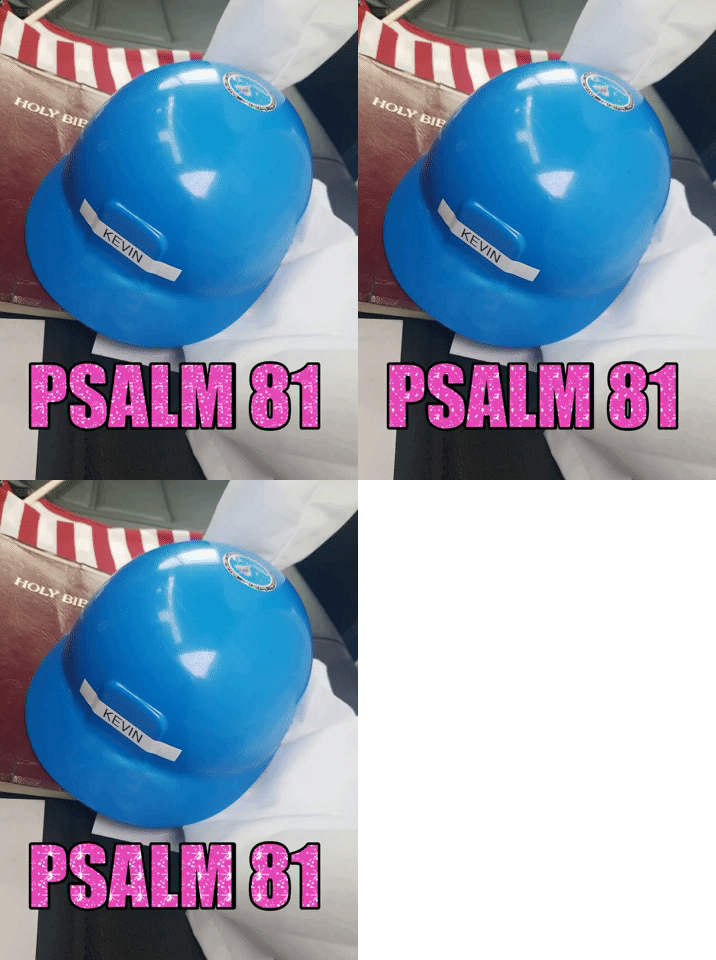
The text “Psalm 81” from the Bible, which you have alongside your hard hat labeled “KEVIN,” holds significant meaning. Psalm 81 is a call for God’s people to listen and obey His guidance. It emphasizes the importance of remembering God’s faithfulness and the blessings that come from obedience.

Significance of Psalm 81:

  1. Call to Worship: The Psalm begins with a call to sing joyfully to God, celebrating His strength and faithfulness.
  2. Reminder of Deliverance: It recalls God’s deliverance of the Israelites from Egypt, highlighting His power and care for His people.
  3. Warning and Promise: The Psalm also serves as a warning about the consequences of disobedience and a promise of blessings for those who follow God’s commandments123.

How It Relates to Your Life:

  • Personal Reflection: If you find solace and guidance in religious texts, Psalm 81 can serve as a reminder to reflect on your faith and the ways God has been present in your life.
  • Daily Inspiration: The call to worship and remember God’s faithfulness can inspire you to start your day with gratitude and a positive mindset.
  • Guidance and Obedience: The emphasis on obedience and the blessings that come from it can encourage you to align your actions with your values and beliefs, seeking to live a life that honors those principles.

Given your background and interests, this Psalm might resonate with you as a source of strength and encouragement in both your personal and professional life. How do you feel about this interpretation?

IT’S COOL… HEY…

TODAY’S WORD: ACTS 22:2-16 Inspiration: The Path to Wisdom and Gratitude

HIGH FIVE!

The Journey of Light

In a quiet village, there lived a humble stick figure named Sam. Sam was known for his curiosity and his unwavering faith. One day, while walking through the village, Sam noticed a peculiar calendar with no dates or months, just blank pages waiting to be filled.

Above the calendar, in bold pink letters, was a reference: “ACTS 22:2-16.” Intrigued, Sam decided to look up the passage. It told the story of a man named Paul, who had a life-changing encounter on the road to Damascus. Paul’s journey was marked by a divine light that guided him, transforming his life forever.

Inspired by Paul’s story, Sam decided to embark on his own journey. With each step, the blank pages of the calendar began to fill with moments of wisdom and enlightenment. As Sam walked, he felt a divine light illuminating his path, just as it had for Paul.

Sam’s journey took him through various landscapes—lush forests, arid deserts, bustling cities, and serene villages. Along the way, he met people from all walks of life, each with their own stories and lessons to share. With every encounter, Sam’s understanding of the world deepened, and his faith grew stronger.

One day, as Sam reached the end of his journey, he looked back and saw that the calendar was now filled with vibrant memories and profound insights. He realized that his journey was not just about reaching a destination, but about the experiences and wisdom gained along the way.

With a heart full of gratitude, Sam returned to his village, ready to share his newfound knowledge and light with others. He understood that, like Paul, his journey had a purpose—to inspire and guide others on their own paths of discovery and faith.


I hope you enjoyed this story! If you have any other requests or need further assistance, feel free to ask. 

TODAY’S WORD: Leadership Guidance: Embracing Responsibility and Doing Good to All

HIGH FIVE!

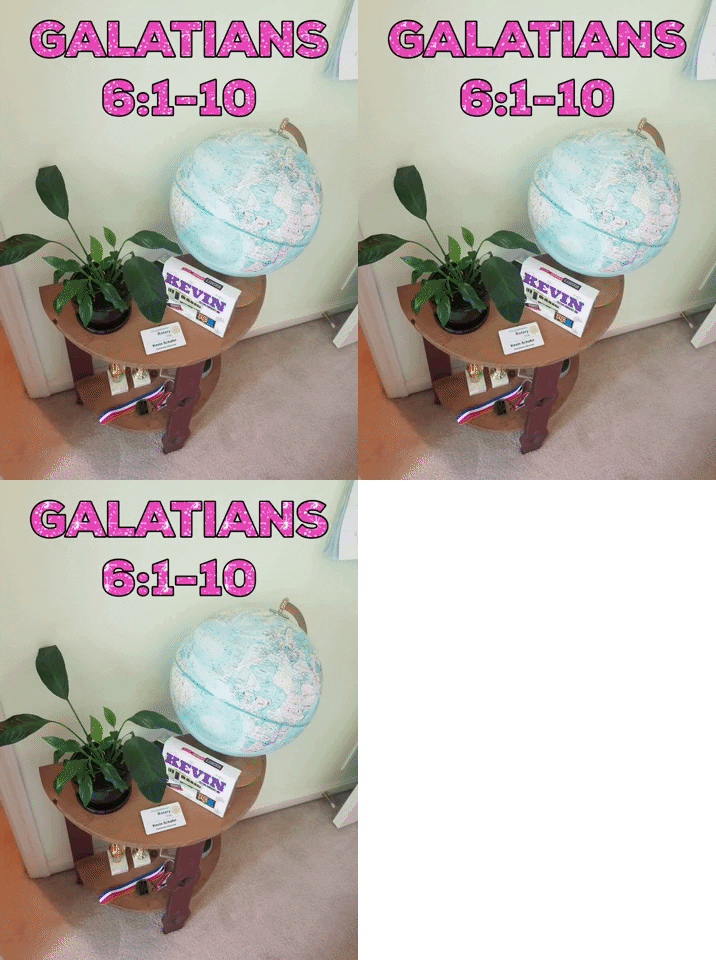
The text “Galatians 6:1-10” from the Bible provides practical guidance on how to live a life aligned with Christian values. Here are some key points and how they might relate to your life:

  1. Restoring Others with Gentleness: The passage encourages believers to gently restore those who have fallen into sin, emphasizing a spirit of humility and self-awareness. This can remind you to approach others with compassion and understanding, especially when they are struggling.
  2. Bearing One Another’s Burdens: It calls for helping others carry their burdens, which fulfills the law of Christ. This can inspire you to support those around you, whether through emotional support, practical help, or simply being there for someone in need.
  3. Personal Responsibility: While helping others, the passage also stresses the importance of taking responsibility for your own actions and work. This balance can guide you to be diligent in your own life while being mindful of others.
  4. Sowing and Reaping: The principle of sowing and reaping is highlighted, meaning that the actions you take will have consequences. This can encourage you to make positive choices and invest in things that lead to growth and goodness.
  5. Doing Good to All: Finally, it emphasizes doing good to everyone, especially fellow believers. This can motivate you to act kindly and generously in your daily interactions, fostering a sense of community and mutual care.

In your role within Toastmasters and your interest in biblical texts, these principles can be particularly relevant. They can guide you in your leadership roles, helping you to support and uplift others while also focusing on your personal growth and responsibilities. How do you see these principles playing out in your daily life?