

HAPPY REFORMATION DAY!!!

The Mountain of Hope

My dear brothers and sisters, today I come before you with a heavy heart but an unwavering spirit. Our text today comes from the Book of Isaiah, chapter 40, verse 31: “But they that wait upon the Lord shall renew their strength; they shall mount up with wings as eagles; they shall run, and not be weary; and they shall walk, and not faint.”

In these troubled times, when darkness seems to press in from all sides, we must remember that God’s promise remains unbroken. Like those ancient Israelites wandering in the wilderness, we too may feel lost, may feel tired, may feel that our journey is too difficult to bear. But I tell you today, my friends, that God has not brought us this far to leave us.

I was walking in our beloved community yesterday, and I saw a young boy struggling to climb a steep hill. He would take two steps forward, then slide back one. His mother stood at the bottom, watching. Some might have rushed to carry him up that hill, to make his journey easier. But that wise mother knew something profound – she knew that her son needed to learn to climb his own mountains.

And that’s what we face today, my friends – a mountain. A mountain of division, a mountain of confusion, a mountain of hate. But like that young boy, we must keep climbing. We may slide back, we may stumble, but we must keep moving forward.

Some will tell you that the mountain is too high. Some will say we should be content to stay in the valley. But I say to you today that God did not create us for the valley! We were made for the mountaintop!

Remember Moses, who climbed Mount Sinai to receive God’s law. Remember Jesus, who went up the mountain to deliver his greatest sermon. The view from the valley may be comfortable, but it is from the mountaintop that we can see the Promised Land.

And yes, the climb is difficult. Yes, our feet may bleed, and our muscles may ache. But with every step we take, we’re not just climbing for ourselves. We’re climbing for that little boy who deserves to attend any school in this nation. We’re climbing for that elderly woman who shouldn’t have to give up her seat on the bus. We’re climbing for generations yet unborn who deserve to inherit a world where they are judged not by the color of their skin but by the content of their character.

My brothers and sisters, we cannot wait for someone else to carve steps into this mountain. We cannot wait for hatred to simply melt away like snow in the spring. We must climb! And as we climb, we must remember three things:

First, we must climb with love in our hearts, not hatred. Hatred is too heavy a burden to bear up this mountain.

Second, we must climb together. No one reaches the summit alone. We need each other – black and white, young and old, rich and poor.

Third, we must climb with faith. Faith in God, faith in justice, faith in the fundamental goodness that resides in every human heart.

And when our strength fails us – and it will fail us – we must remember Isaiah’s words. We must wait upon the Lord. Not with passive waiting, but with active waiting, with hopeful waiting, with faithful waiting. And He will renew our strength.

I tell you today, my beloved community, that though the mountain before us seems insurmountable, though the journey seems too long, though our bodies may be weary, our spirits must remain strong. For I have seen the other side of the mountain. I have glimpsed what lies beyond these troubled times. And I tell you, it is beautiful.

Let us pray together for the strength to climb. Let us pray for the courage to keep moving forward when others say we should turn back. Let us pray for the wisdom to know that every step, no matter how small, brings us closer to justice.

And most of all, let us pray for love to guide our feet as we make this climb together.

Amen.

TODAY’S WORD: Romans 3:19-28: The Give Me 5 Technique for Effective Listening

HIGH FIVE!

This image appears to be a classroom or educational poster illustrating “Give Me 5” – a common classroom management technique used to get students’ attention and prepare them to listen. It lists 5 expectations for good listening behavior:

  1. Mouth closed
  2. Body still
  3. Ears listening
  4. Brain focused
  5. Eyes to the front

The reference to “ROMANS 3:19-28” at the bottom suggests this might be from a Christian education context, as it references a Bible passage from the Book of Romans. This particular passage in Romans discusses themes of God’s law, righteousness through faith, and justification – though the connection to listening behaviors seems to be more about using the “Give Me 5” technique in a religious educational setting rather than directly relating to the biblical passage’s content.

The hand visual serves as a mnemonic device to help students remember these five listening behaviors, with cute cartoon illustrations accompanying each expectation to make it more engaging and memorable for children.

This type of visual aid is commonly used in elementary classrooms and educational settings to establish clear behavioral expectations and routines for students.

Romans 3:19-28 is a significant passage from the New Testament that addresses core concepts in Christian theology, particularly regarding righteousness, sin, and salvation. Here are the key points from this passage:

  1. Universal Sin (verses 19-20):
  • Establishes that everyone is accountable to God’s law
  • No one can be justified (made righteous) by following the law alone
  • The law makes people conscious of their sin
  1. Righteousness Through Faith (verses 21-24):
  • Introduces God’s provision of righteousness through faith in Jesus Christ
  • This righteousness is available to all who believe
  • Emphasizes that salvation is a gift of God’s grace
  • All have sinned and fall short of God’s glory
  • Justification is freely given through Christ’s redemption
  1. Christ’s Atonement (verses 25-26):
  • Presents Christ as the sacrifice of atonement
  • Demonstrates God’s justice
  • Shows how God can be both just and the justifier of those who have faith
  1. Faith Over Works (verses 27-28):
  • Eliminates boasting about one’s own righteousness
  • Establishes that justification comes through faith, not by observing the law
  • Sets forth the principle that people are justified by faith apart from works of the law

This passage is particularly important in Protestant Christian theology as it forms much of the basis for the doctrine of “justification by faith alone” (sola fide), which was a central theme of the Protestant Reformation.

Romans 3:19-28 can be related to daily life in several meaningful ways:

  1. Dealing with Perfectionism:
  • The passage teaches that no one is perfect and all fall short
  • This can help relieve the pressure of trying to be flawless
  • Encourages self-acceptance while acknowledging room for growth
  • Reminds us that our worth isn’t based on perfect performance
  1. Grace in Relationships:
  • Just as we receive grace, we can extend it to others
  • Helps us be more forgiving and understanding
  • Reduces judgmental attitudes
  • Encourages showing kindness even when others make mistakes
  1. Personal Growth:
  • Recognizes that change comes from inner transformation
  • Focus on progress rather than perfection
  • Encourages authenticity rather than pretense
  • Emphasizes growth through faith rather than just following rules
  1. Mental Health:
  • Reduces anxiety about meeting impossible standards
  • Promotes healthy self-acceptance
  • Provides framework for dealing with guilt
  • Encourages seeking help and support
  1. Professional Life:
  • Helps maintain perspective when facing failures
  • Encourages humility in success
  • Promotes ethical behavior based on internal values
  • Emphasizes integrity over appearance
  1. Decision Making:
  • Provides framework for moral choices
  • Encourages considering motivations, not just actions
  • Helps balance justice with mercy
  • Promotes thoughtful rather than reactive decisions
  1. Self-Worth:
  • Bases identity on being valued by God rather than achievements
  • Reduces dependence on others’ approval
  • Provides stable foundation for self-esteem
  • Encourages healthy balance of humility and confidence

The core message is that we don’t have to earn acceptance through perfect behavior, which can be liberating and transformative in how we approach life’s challenges and relationships.

TODAY’S WORD: Living Leviticus 19:32-37 in Modern Life

HIGH FIVE!

This image appears to be referencing Leviticus 19:32-37, which is a passage from the biblical book of Leviticus. The text is displayed in a pink/neon style font over a moody landscape photograph featuring silhouetted trees backlit by what appears to be a sunrise or sunset, with dramatic cloudy skies.

The referenced passage from Leviticus 19:32-37 contains important moral and ethical commandments, particularly about:

  • Showing respect for the elderly
  • Treating foreigners/strangers with kindness
  • Using honest measurements and dealing fairly in business
  • Following God’s laws and commandments

This section is part of what’s known as the “Holiness Code” in Leviticus, which outlines various moral and ritual laws that the Israelites were to follow. The dramatic and contemplative nature of the background image seems chosen to emphasize the gravity and significance of these biblical teachings.

Leviticus 19:32-37 contains several principles that remain very relevant to modern life. Let me break down how you can apply these teachings practically:

  1. Respect for the Elderly (v.32)
  • Take time to listen to older people’s experiences and wisdom
  • Offer assistance to elderly neighbors or family members
  • Show patience and consideration in public spaces (like holding doors or giving up seats)
  • Value the perspective that comes with life experience
  1. Treatment of Strangers/Newcomers (v.33-34)
  • Welcome new people in your workplace, neighborhood, or community
  • Stand up against discrimination
  • Help immigrants or newcomers navigate unfamiliar systems
  • Show kindness to people from different backgrounds
  • Remember times when you were the “outsider” and how you wanted to be treated
  1. Honest Business Practices (v.35-36)
  • Be truthful in all transactions, whether business or personal
  • Don’t take advantage of others’ trust or ignorance
  • Be transparent in dealings with money
  • Give fair value for what you receive
  • Be honest on your timesheets, expense reports, and tax returns
  • Provide honest work for honest pay
  1. General Moral Principles
  • Treat others with fairness and respect
  • Consider the impact of your actions on others
  • Stand up for what’s right, even when it’s difficult
  • Build trust through consistent ethical behavior

These principles essentially promote creating a just, compassionate, and ethical society – starting with your own daily choices and interactions.

TODAY’S WORD: Applying John 14:23-24 in Daily Life

HIGH FIVE!

The text shown in the image appears to be “JOHN 14:21-27”, which is a biblical reference to the Gospel of John, chapter 14, verses 21-27. This passage is significant as it contains Jesus’ teachings about love, obedience, and the promise of the Holy Spirit (the Comforter/Advocate).

The passage discusses several key themes:

  1. The relationship between love and obedience to God’s commands
  2. The promise of Christ’s presence through the Holy Spirit
  3. Jesus’ gift of peace to his disciples
  4. The importance of keeping Christ’s words

The image appears to have a whimsical illustration of what looks like a brain and heart character linked together, which could be interpreted as a creative representation of the connection between understanding (mind) and love (heart) that this particular scripture passage addresses.

Would you like me to elaborate on any specific aspect of this biblical passage or its significance?

John 14:23-24 is a powerful passage about the relationship between love and obedience. Let me help you break it down for practical application:

The verse states that those who love Jesus will obey his teaching, and both Jesus and the Father will make their home with them. Here are some ways to apply this to your daily life:

  1. Daily Choices and Actions
  • Consider how your everyday decisions reflect your spiritual values
  • Ask yourself: “Does this choice demonstrate love for God?”
  • Look for opportunities to show love through simple acts of service
  1. Relationships
  • Practice showing love and respect to others as an expression of your faith
  • Work on forgiveness and patience, which are key aspects of Jesus’ teachings
  • Build relationships that encourage and support your spiritual growth
  1. Personal Growth
  • Make time for regular spiritual reflection and prayer
  • Study and meditate on scripture to better understand Jesus’ teachings
  • Be honest with yourself about areas where your actions might not align with your beliefs
  1. Practical Steps
  • Start each day with an intention to live according to your faith
  • Create reminders or habits that help you stay focused on spiritual principles
  • Find a community that supports your spiritual journey
  1. Testing Decisions
  • When facing choices, ask: “Does this invite God’s presence into my life?”
  • Consider whether your actions bring peace and align with divine teachings
  • Look for ways your daily routine can better reflect your spiritual values

The key is understanding that love for God isn’t just an emotional feeling – it’s demonstrated through actions and choices.

GO2 CHURCH ON HALLOWEEN (Reformation Day) & HAND OUT THOSE KIT KATS AFTER WORK

(call Krista)

TODAY’S WORD: Lessons from Matthew 20:29-34 for Everyday Life

HIGH FIVE!

The text shown in the image is “Matthew 20:29-34”, which is a biblical reference to a passage in the Gospel of Matthew. This particular passage tells the story of Jesus healing two blind men near Jericho. The imagery of the detailed blue eye paired with this scripture reference appears to be symbolically significant, as the passage describes Jesus restoring sight to the blind men who called out to him in faith.

In the biblical passage, two blind men sitting by the roadside heard Jesus passing by and cried out “Lord, Son of David, have mercy on us!” Despite the crowds trying to silence them, they continued calling out. Jesus stopped, called them, and asked what they wanted. When they asked for their sight to be restored, Jesus had compassion on them, touched their eyes, and they immediately received their sight and followed him.

The message from Matthew 20:29-34 can be related to your everyday routine in several meaningful ways:

  1. Persistence in Faith
  • Just as the blind men persisted in calling out to Jesus despite the crowds telling them to be quiet, you can remain steadfast in your beliefs and goals even when facing obstacles or discouragement
  • This could mean maintaining hope during difficult times at work, in relationships, or personal challenges
  1. Compassion and Awareness
  • Jesus showed compassion by stopping to help those in need
  • In your daily life, this could mean:
    • Taking time to notice people who might need help
    • Being less rushed and more present with others
    • Listening actively when someone needs to talk
    • Offering assistance to colleagues or neighbors
  1. Spiritual and Personal Growth
  • Just as physical sight was restored, you can seek:
    • Better understanding of yourself and others
    • Clearer perspective on life’s challenges
    • Growth in emotional and spiritual awareness
    • Recognition of blessings and opportunities around you
  1. Active Response
  • The healed men followed Jesus afterward
  • In your daily life, this could mean:
    • Expressing gratitude through actions
    • Paying forward the kindness you receive
    • Living purposefully according to your beliefs
    • Using your abilities to help others
  1. Asking for Help
  • The blind men weren’t afraid to ask for what they needed
  • This reminds us to:
    • Be honest about our needs
    • Reach out when we need support
    • Not let pride prevent us from seeking assistance
    • Trust in our support systems

Remember that transformation, like the miracle in this passage, often begins with recognizing our needs and being willing to ask for help, whether from others or through prayer and reflection.

TODAY’s WORD: Boosting Immunity: The Power of Vitamin C and Faith

HIGH FIVE!

This image shows a creative visual metaphor using an orange or tangerine that’s been peeled but appears to be “picking itself up,” with the peel forming what looks like a figure lifting the fruit. The text reads “Sometimes you just have to pick yourself up and carry on…” along with a Bible verse reference “ACTS 9:32-35.”

The passage referenced (Acts 9:32-35) tells the story of Peter healing Aeneas, who had been bedridden for eight years with paralysis. Peter tells him “Jesus Christ heals you; get up and make your bed,” and Aeneas immediately got up.

The combination of the visual metaphor and the biblical reference creates a message about resilience, healing, and self-motivation. Just as Aeneas was called to get up from his bed through divine healing, the message encourages people who may be struggling to find the strength to “pick themselves up” and continue forward, even during difficult times.

The whole composition appears to be meant as an inspirational message combining scripture with an everyday object (the orange) to illustrate the concept of personal recovery and perseverance through faith.

TODAY’S WORD: The Greatest Commandments: Marriage and Matthew 22:34-46

HIGH FIVE!

The text “MATTHEW 22:34-46” appears to be a Bible reference overlaid on what looks like a wedding photo. This passage from the Gospel of Matthew is about two important teachings:

  1. In this passage, Jesus is asked about the greatest commandment in the law, to which He responds with what are known as the two greatest commandments:
  • Love the Lord your God with all your heart, soul, and mind
  • Love your neighbor as yourself
  1. The passage also includes Jesus’s discussion with the Pharisees about the nature of the Messiah.

The placement of this Bible reference on what appears to be a wedding photo is likely meaningful, as love – both divine and interpersonal – is a central theme of this passage. The setting shows what appears to be a scenic waterfront wedding ceremony with mountains in the background, decorated with tall candles or lights along a dock or pier. The person in the image is wearing a flowing white wedding dress. The combination of the scripture reference with this wedding scene suggests a connection between the biblical teachings about love and the celebration of marriage.

Would you like me to elaborate on the specific content of this Biblical passage or its relevance to weddings?

Let me break down Matthew 22:34-46, which contains two significant exchanges:

  1. The Greatest Commandment (verses 34-40):
  • The Pharisees tested Jesus by asking Him which commandment was the greatest
  • Jesus responded with two interconnected commandments:
    • “Love the Lord your God with all your heart and with all your soul and with all your mind” (citing Deuteronomy 6:5)
    • “Love your neighbor as yourself” (citing Leviticus 19:18)
  • Jesus declared that “all the Law and the Prophets hang on these two commandments” – meaning these two principles summarize all biblical teaching
  1. The Question About the Messiah (verses 41-46):
  • Jesus then posed a question to the Pharisees about the Messiah
  • He asked them whose son the Messiah would be
  • They answered “The son of David”
  • Jesus then quoted Psalm 110:1 where David calls the Messiah ‘Lord’
  • This created a paradox: How could the Messiah be both David’s son and David’s Lord?
  • This question demonstrated Jesus’s divine nature – He was both David’s descendant (human) and David’s Lord (divine)
  • The passage ends noting that from that day, no one dared ask Him any more questions

The placement of this reference on a wedding photo is particularly meaningful because it centers on love – both vertical (love for God) and horizontal (love for others). These principles form the foundation for Christian marriage, where couples are called to love both God and each other sacrificially and completely.

NO WORD TODAY (just a story): The Art of Public Speaking in a Digital Age

HIGH FIVE!

“The Great Resistance”

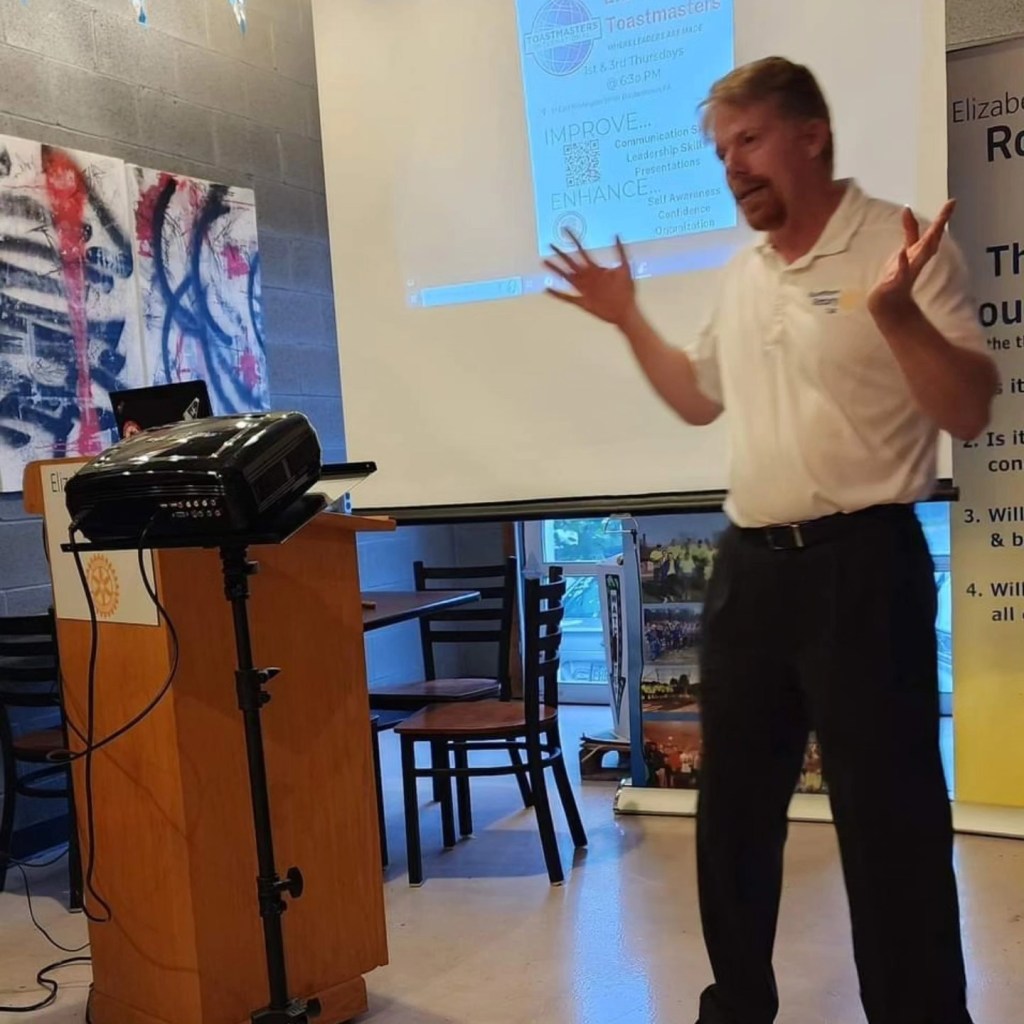
Kevin stood at the podium during his Toastmasters speech, his hands animated as he delivered his impassioned “Technology Take-Two” talk. The projector hummed quietly behind him, casting a blue glow that seemed to mock his message.

“You know what happened when I tried using that AI assistant yesterday?” he asked the room, pausing for effect. “It tried to finish my sentences. My own sentences!” The audience chuckled knowingly. “Twenty years of giving presentations, and suddenly this digital know-it-all thinks it can predict what I want to say?”

He paced the floor, his white polo shirt crisp against the backdrop of abstract art on the concrete walls. “I told my computer – actually had a full conversation with it, if you can believe it – that some things just need the human touch. Public speaking? That’s an art form. You can’t automate authenticity.”

The timer’s green light flickered, signaling his remaining minute. Kevin smiled, knowing he’d made his point. “So here I am, proudly analog in a digital world, still believing that the best presentations come from the heart, not an algorithm.”

He returned to the podium for his conclusion, the Rotary Club logo on the stand catching the light. “Sometimes, the best upgrade is no upgrade at all.”

TODAY’S WORD: Overcoming Distractions: A Biblical Perspective

HIGH FIVE!

Mark 8:22-26 is a biblical passage from the New Testament that tells the story of Jesus healing a blind man at Bethsaida. The significance of this passage is quite interesting, as it’s the only recorded instance in the Gospels where Jesus performs a healing in two stages:

  1. In the first attempt, the blind man’s vision is partially restored – he sees “people looking like trees walking around”
  2. Jesus then places his hands on the man’s eyes a second time, after which his sight is fully restored and he sees everything clearly

Key insights about focus vs. distractions:

  1. Gradual Clarity
  • Just as the blind man’s healing happened in stages, achieving focus often requires gradual refinement
  • We need to be patient with ourselves as we learn to filter out distractions
  1. Need for Divine Help
  • The blind man needed Jesus’s touch twice
  • Sometimes we need help and guidance to maintain focus amid life’s “explosions”
  1. Distractions in Modern Life
  • The battle scene represents the “warfare” of maintaining focus in today’s world
  • Social media, notifications, busy schedules, and constant noise try to pull our attention
  1. The Importance of Second Efforts
  • Just as Jesus touched the man’s eyes twice, we often need multiple attempts to truly focus
  • Don’t get discouraged if the first attempt at focus isn’t perfect

The message seems to be: Despite the “battles” and distractions around us (represented by the chaos in the image), we need to remain focused on what’s important, and sometimes this requires a gradual process of learning to see clearly, just like the blind man in Bethsaida.

https://www.chocolateworld.com/things-to-do/events/sensory-friendly-night.html

TODAY’S WORD: The Eternal High Priest: Jesus in Hebrews 7

HIGH FIVE!

This image shows what appears to be a computer screen with Microsoft Office open (showing the characteristic ribbon interface at the top), but the document itself appears to be blank/empty. In the foreground, there’s a teal or turquoise colored wristband or bracelet sitting on what looks like a wooden surface.

I don’t see any visible text in the image that I could analyze for significance. If you’re referring to specific text, could you please point it out? The document on the screen appears to be empty, showing just a white page.

This is a significant passage that discusses the change in priesthood from the Levitical system to the priesthood of Jesus Christ after the order of Melchizedek. Here are the key points from this passage:

  1. The passage argues that if the Levitical priesthood was perfect, there would have been no need for another priest to arise after the order of Melchizedek.
  2. It explains that a change in the priesthood necessitates a change in the law.
  3. Jesus Christ is presented as a priest not on the basis of ancestry (like the Levitical priests), but on the basis of “the power of an indestructible life.”
  4. The text contrasts the old system (which made nothing perfect) with the better hope through which we draw near to God.
  5. The passage emphasizes that Jesus became a priest with an oath from God, unlike the Levitical priests who became priests without an oath.
  6. It concludes by explaining that Jesus has become the guarantor of a better covenant.

This passage is particularly important in Christian theology as it explains the transition from the Old Covenant to the New Covenant and establishes Jesus’s role as an eternal high priest.

Levitical priests refers to priests who descended from the tribe of Levi, one of the twelve tribes of Israel. Here’s a more detailed explanation:

  1. Historical Background:
  • The Levites were descendants of Levi, the third son of Jacob (Israel)
  • Within the tribe of Levi, only those descended from Aaron (Moses’ brother) could serve as priests
  • This system was established during the time of Moses, as described in the books of Exodus and Leviticus
  1. Their Role:
  • They were responsible for conducting religious ceremonies in the Tabernacle and later the Temple
  • They offered sacrifices on behalf of the people
  • They maintained the Temple and its implements
  • They taught the law to the people
  • They served as judges in religious and civil matters
  1. Requirements:
  • Had to prove their genealogy to serve as priests
  • Had specific physical requirements (no defects)
  • Had to follow strict rules of ritual purity
  • Had designated times of service
  • Were supported by tithes from the other tribes
  1. Limitations:
  • Their priesthood was hereditary and temporary (passed from father to son)
  • They were mortal and had to be replaced
  • They had to offer sacrifices for their own sins before offering for others
  • Their service was confined to specific locations (Tabernacle/Temple)

This is why Hebrews 7 contrasts this system with Jesus’ priesthood, which is:

  • Eternal (doesn’t pass from person to person)
  • Based on God’s oath rather than ancestry
  • Perfect (Jesus didn’t need to offer sacrifices for His own sins)
  • Universal (not limited to a physical temple)