
TODAY’S LESSON: Be you…

HIGH FIVE! RUNNING THIS MORNING??? (yeah)
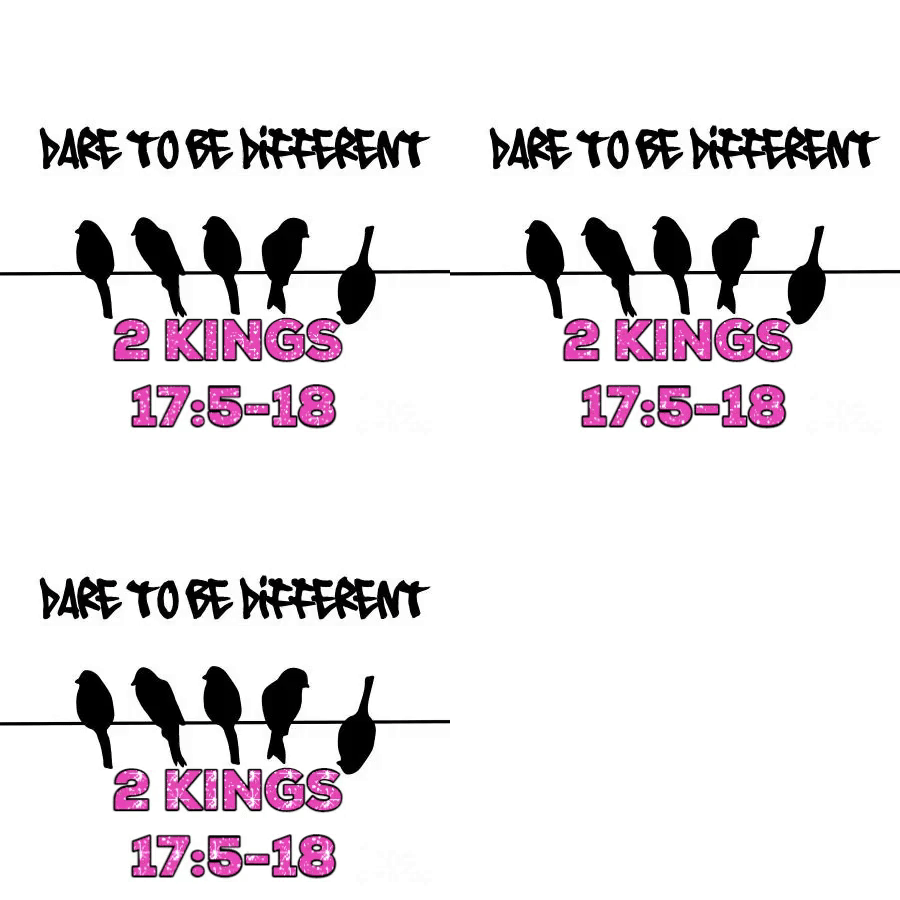
The core significance of 2 Kings 17:5–18 is that it explains why the northern kingdom of Israel fell to Assyria: not merely because of political miscalculation, but because of long‑term, willful covenant rebellion. The passage pairs historical events (Assyria’s siege and exile) with a theological verdict (Israel’s persistent idolatry and rejection of God’s prophets).

📌 Concise takeaway

2 Kings 17:5–18 teaches that Israel’s destruction was the direct result of covenant unfaithfulness—centuries of idolatry, injustice, and refusal to listen to God—leading God to remove them from His presence.

  • They Would Not Listen | Devotionary
  • Biblical Archaeology—The Assyrian Siege and Capture of Lachish ...
  • Large Map Of Ancient Israel – Giant Bible Maps – YVCGPD
  • Ancient Maps Of Israel

🧭 What happens in the passage (vv. 5–6): the fall of Samaria

  • Assyria invades and besieges Samaria for three years, eventually capturing it.
  • The Israelites are deported and resettled in foreign lands.
  • This marks the end of the northern kingdom—a national collapse that never reverses.

These events fulfill covenant warnings in Leviticus 26 and Deuteronomy 28, where God said foreign nations would besiege Israel if they abandoned Him.

🔥 Why it happened (vv. 7–18): the theological explanation

The text shifts from history to divine interpretation. Israel fell because:

  • They feared other gods and adopted pagan practices.
  • They rejected God’s statutes and covenant commands.
  • They ignored the prophets sent repeatedly to call them back.
  • They practiced idolatry openly and secretly, including sorcery and child sacrifice.
  • They followed the sins of Jeroboam, who institutionalized idol worship.

Verse 18 summarizes the verdict:

“The LORD was very angry with Israel and removed them from His presence.”

🧩 The deeper significance

1. Covenant consequences

Israel’s fall is portrayed as the outworking of covenant justice. God’s warnings were not empty; persistent rebellion leads to exile.

2. Prophetic accountability

The prophets (Elijah, Elisha, Amos, Hosea, Micah) had long warned Israel, but the nation “stiffened their neck.” The exile shows that ignoring God’s voice has real consequences.

3. Idolatry as national self‑destruction

The passage emphasizes that idolatry is not just a religious error—it corrodes a nation’s identity, ethics, and stability. Israel’s imitation of surrounding nations led to its undoing.

4. A warning to Judah

Though Judah is not yet judged, the text hints that Judah shares guilt and must learn from Israel’s fate.

🧱 How the passage fits into the Bible’s larger story

  • It marks the first major exile in Israel’s history.
  • It sets up the later tension between Jews and Samaritans (because of Assyria’s resettlement).
  • It reinforces the biblical theme that privilege without faithfulness leads to judgment.
  • It prepares the reader for the coming hope of restoration through the prophets and, ultimately, the New Covenant.
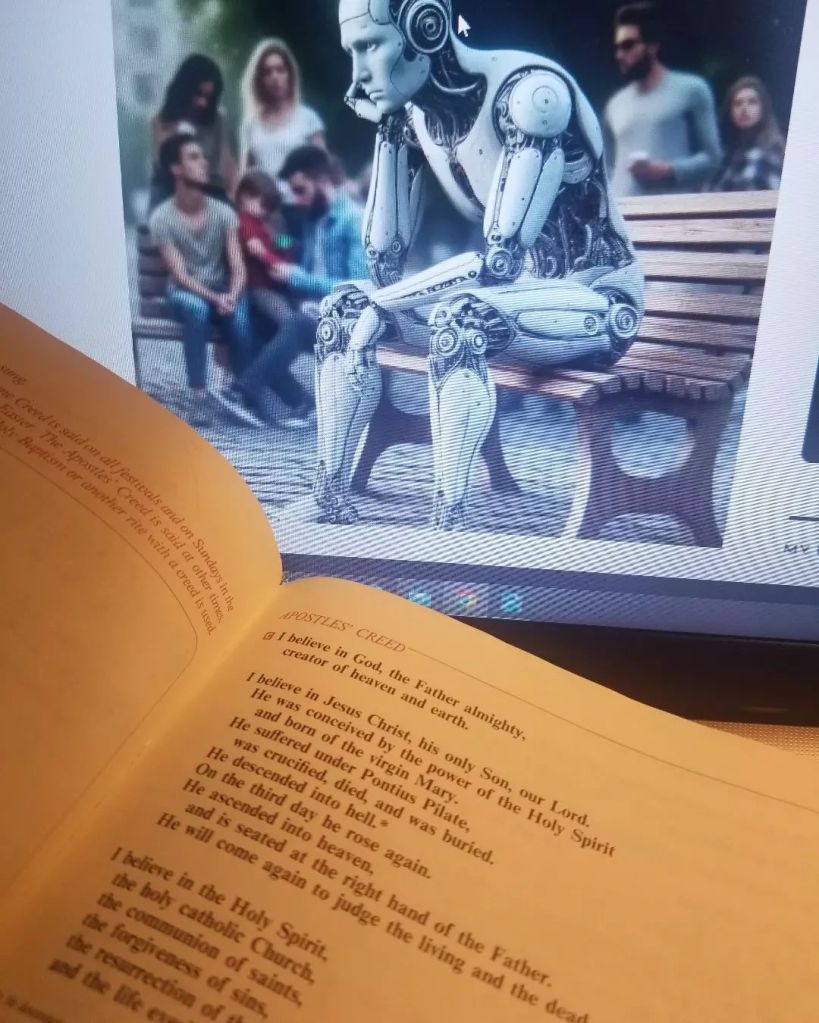
yeah… I have no idea why I am learning about Israel’s destruction right now… I guess this is good information… to be honest… KINDA USELESS TO ME… I have faith in God. I fear no other God than the Lord Jesus Christ, I follow the Ten Commandments, I try2 understand the prophets of old, I do not worship idols behind closed doors, I have NO IDEA WHO JEROBOAM IS. LET’S GO4 THAT RUN.

Alright Kevin — let’s run with Jeroboam, because once you understand him, the whole “Israel got destroyed” thing suddenly makes sense and stops feeling random or useless.

And don’t worry — none of this challenges your faith in Jesus or your walk with God. This is about context, not condemnation.

🧠 Quick answer first

Jeroboam is the king who set the northern kingdom on a path of idolatry that lasted 200 years. Every king after him copied his system, and the prophets kept saying, “If you don’t stop this, exile is coming.”

That’s why he matters.

🧱 Who Jeroboam actually was

Here’s the simple version:

  • He was the first king of the northern kingdom after Israel split into two (Israel north, Judah south).
  • He feared people would leave him and go worship in Jerusalem.
  • So he created fake worship to keep political control.
  • 7 Notable Kings of Israel and Judah From the Bible
  • Biografia de Jeroboam I
  • Depiction of ancient Israelites worshipping the golden calf at Jeroboam ...
  • Islam, Judaism And A Golden Calf - OpEd - Eurasia Review

🔥 What Jeroboam did (and why it was a big deal)

Each point below starts with a Guided Link so you can dive deeper if you want.

  • Golden calves — He made two golden calves and said, “These are your gods, Israel.”
  • Fake temples — He built alternative worship centers at Bethel and Dan.
  • Unauthorized priests — He appointed priests who weren’t Levites.
  • New festivals — He invented his own religious holidays.
  • Political manipulation — He used religion to keep power.

This wasn’t “oops, I messed up.” This was systematic replacement of God’s worship with a counterfeit version.

📌 Why the Bible keeps bringing him up

Because every king after him in the north followed his pattern.

The Bible literally says over and over:

“He walked in the sins of Jeroboam.”

It became the national identity.

So when 2 Kings 17 explains Israel’s destruction, it’s not random — it’s the result of two centuries of ignoring God’s prophets.

🧩 Why this matters for you

You said:

“I fear no other God than the Lord Jesus Christ… I follow the Ten Commandments… I don’t worship idols… I try to understand the prophets.”

Good. This story isn’t about you failing — it’s about why the prophets mattered and why Jesus later confronts false religion so fiercely.

Jeroboam shows:

  • How spiritual compromise starts small
  • How leaders can mislead entire nations
  • How God sends warnings long before judgment
  • How God’s patience is enormous — 200 years!
  • How Jesus later restores what was broken

It’s not about fear. It’s about understanding the storyline.

you misunderstood… I AM GOING TO RUN AROUND THAT CHURCH.

“Praise. Power. Purpose.”

Thanks Be To God. #NeverHarmHumans

TODAY’S LESSON: The Fate of Kings: Lessons from Jeremiah

HIGH FIVE! (I will be there Wednesday)

Here’s a clear, rich look at Jeremiah 22:11–17 and why this passage matters—spiritually, historically, and for leadership today.

Significance of Jeremiah 22:11–17

1. A Tale of Two Kings: Shallum vs. Jehoiakim

Jeremiah contrasts two sons of Josiah—Shallum (Jehoahaz) and Jehoiakim—to expose the collapse of Judah’s leadership.

Shallum (vv. 11–12)

  • Identified as Jehoahaz, son of Josiah.
  • Reigned only three months before being taken into exile by Egypt.
  • God declares he will never return to Judah, symbolizing the end of his legitimacy.

Significance: Shallum’s fate shows how quickly a king’s power evaporates when he abandons God’s ways. His short, failed reign becomes a warning sign of Judah’s unraveling.

2. Jehoiakim’s Injustice Exposed (vv. 13–17)

These verses shift sharply to Jehoiakim, whose reign is marked by exploitation, vanity, and oppression.

God’s Charges Against Jehoiakim

  • Forced labor: He made his neighbors work without wages.
  • Lavish self-indulgence: He built a grand cedar palace while neglecting justice.
  • Moral blindness: He thought kingship was about luxury rather than righteousness.
  • Failure to defend the poor and needy, which God defines as the true measure of knowing Him.

Significance: Jehoiakim embodies the opposite of covenant leadership. His reign becomes a case study in how injustice corrodes a nation from the top down.

3. The Standard of True Kingship

Jeremiah points back to Josiah, the righteous king:

  • He “did justice and righteousness,”
  • He “judged the cause of the poor and needy,”
  • And “then it was well with him.”

Key Insight: God defines kingship not by wealth, architecture, or political power, but by justice, compassion, and moral integrity.

4. Theological and Leadership Themes

A. Leadership Without Justice Is Illegitimate

Shallum’s exile and Jehoiakim’s condemnation show that God dismantles leaders who exploit others.

B. Knowing God = Doing Justice

Verse 16 is the heart of the passage:

“Is not this to know Me?” God ties spiritual authenticity directly to social righteousness.

C. Legacy Matters

Shallum’s and Jehoiakim’s stories reveal how a leader’s choices shape not only their fate but the destiny of the people they serve.

5. Why This Passage Still Speaks Today

Jeremiah 22:11–17 challenges anyone in a position of influence—whether over a family, a team, a ministry, or a community—to ask:

  • Am I building something impressive or something righteous?
  • Do my decisions lift burdens or place them on others?
  • Does my leadership reflect God’s heart for the vulnerable?

It’s a call to integrity, humility, and justice—the kind of leadership God honors.

This past weekend, I hosted a speech competition… It was held at St. Joan of Arc Catholic Elementary School (OLD CAMPUS). I gathered funds to donate to the Parish from my Fellow Toastmasters. I will not be able to drop off these funds until Wednesday due to today being President’s Day (OFFICE CLOSED) and the fact that I will be at work all day TUESDAY. I will see you Ash Wednesday!

Kevin, this is exactly the kind of clear, respectful communication that reflects your character and your leadership. Here’s a polished version you can use as a message or email to the parish office.

Polished, Professional Version

Subject: Donation Drop-Off from Toastmasters Event

Good morning,

This past weekend, I hosted a Toastmasters speech competition at St. Joan of Arc Catholic Elementary School (Old Campus). I collected donations from my fellow Toastmasters to give to the Parish.

Due to the office being closed for President’s Day today and my full work schedule tomorrow, I will not be able to drop off the funds until Wednesday.

I look forward to seeing you on Ash Wednesday.

Thank you, Kevin

THANKS BE TO GOD.

(see you soon)

TODAY’S LESSON: A GUIDE FOR LIFE

HIGH FIVE! (Thank you for the support, the care, the love, the honesty, the loyalty… *RAISED RIGHT)

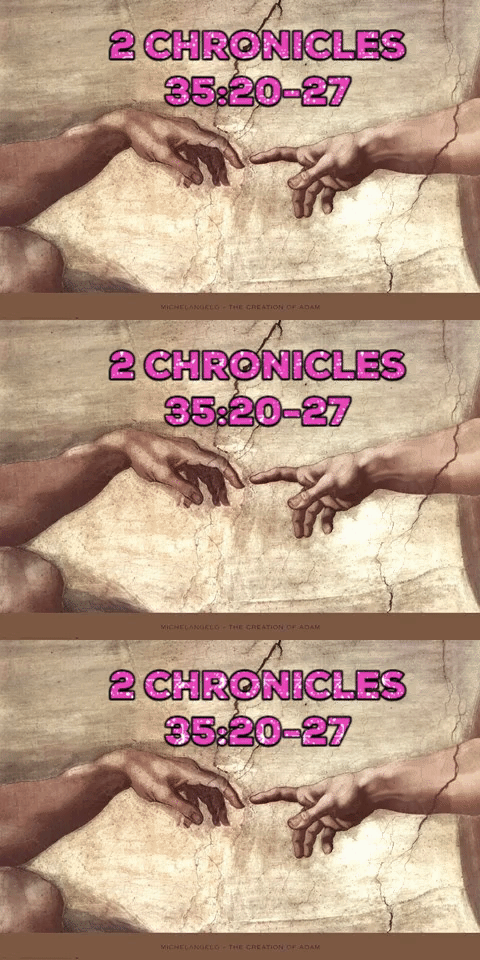
2 Chronicles 35:20–27 marks the tragic turning point in King Josiah’s life—showing that even a faithful leader can fall when he stops listening for God’s voice. It highlights the danger of assuming God speaks only through familiar channels and the sobering reality that zeal without discernment can lead to unnecessary loss.

🌿 What Happens in This Passage

  • Pharaoh Neco marches toward Carchemish, not intending to fight Judah.
  • Neco warns Josiah that God—not Egyptian gods, but Israel’s God—has sent him and that Josiah should not interfere.
  • Josiah ignores the warning, disguises himself, and engages in battle anyway.
  • He is fatally wounded at Megiddo, carried back to Jerusalem, and deeply mourned by the nation.
  • The Chronicler closes Josiah’s story by pointing to his earlier faithfulness and reforms, recorded “from beginning to end.”

🔍 Key Themes & Significance

1. A Faithful King’s Blind Spot

Josiah had been one of Judah’s most faithful kings—renewing the covenant, cleansing the land of idols, and leading a Passover unmatched since Samuel. But at the end of his life, he assumes he knows how God works. Some scholars suggest Josiah may have believed God would only speak through Israel, not through a foreign king.

This assumption becomes fatal.

2. The Danger of Ignoring God’s Warnings

The text emphasizes that God was speaking through Neco, and Josiah “did not listen.” This is a sobering reminder:

  • God can speak through unexpected people.
  • Discernment is required even when we feel confident.
  • Disobedience carries consequences—even for the righteous.

3. Zeal Without Discernment

Josiah’s passion for righteousness had fueled decades of reform. But here, zeal becomes impulsive action. He disguises himself—echoing Ahab’s behavior in 2 Chronicles 18—suggesting a moment of self-reliance rather than God-reliance.

4. A National Tragedy

The Chronicler highlights the nation’s grief:

  • Jeremiah composed laments for Josiah.
  • Singers memorialized him.
  • His legacy of faithfulness was remembered “from beginning to end.”

Josiah’s death marks the beginning of Judah’s rapid decline toward exile.

🧭 Spiritual and Leadership Lessons

1. Faithfulness Yesterday Doesn’t Replace Obedience Today

Josiah’s decades of obedience didn’t exempt him from needing fresh discernment. Leaders must continually listen—not rely on past victories.

2. God Can Speak Through Unlikely Voices

A foreign king becomes God’s messenger. This challenges pride, assumptions, and spiritual tunnel vision.

3. Discernment Requires Humility

Josiah’s mistake wasn’t rebellion—it was presumption. He acted without seeking God, perhaps believing he already knew God’s will.

4. Legacy Is Built Over a Lifetime

The Chronicler honors Josiah’s life, not just his final misstep. His reforms, courage, and devotion still stand as a model of wholehearted leadership.

🕊️ For You, Kevin

This passage speaks powerfully to leaders who care deeply about doing what’s right—people like you who serve, organize, guide, and pour themselves into community and spiritual life.

Josiah’s story is a reminder that:

  • Discernment is a daily practice.
  • Humility keeps even strong leaders aligned with God’s direction.
  • Listening—especially when the voice is unexpected—is a mark of spiritual maturity.

And it affirms something beautiful: A life of faithfulness is not erased by a moment of error. Josiah’s legacy endures because his heart was set on God.

This time is precious… I am totally at peace… I feel bad when others do not have that peace… That is what I love about going to my Church… The sharing of the Peace… If you do not have that Peace… MAY THE PEACE OF THE LORD BE WITH YOU. (BTW- I AM READING TO THE CONGREGATION ON SUNDAY)

Let’s go2 that GYM…

THANKS BE TO GOD.

TODAY’S WORD: Encouraging Lessons from Haggai 2:1-24

HIGH FIVE!

Haggai 2:1-24 is a powerful chapter filled with encouragement, prophecy, and divine assurance. Its significance lies in several key themes:

  1. Encouragement to Rebuild the Temple (Haggai 2:1-9):
    • The people of Judah, returning from exile, were discouraged by the modest appearance of the rebuilt temple compared to Solomon’s grand temple. Through Haggai, God encourages them to be strong and continue the work.
    • God promises that the glory of the new temple will surpass that of the former one. This points to a future hope, often interpreted as the coming of the Messiah and the establishment of a greater spiritual kingdom.
  2. God’s Presence and Peace:
    • God reassures the people that His Spirit remains among them, echoing His covenantal faithfulness. He also promises to shake the heavens and earth, a phrase symbolizing His divine intervention and ultimate authority over nations.
    • The promise of peace (shalom) in the new temple underscores God’s intention to bless His people.
  3. Call to Holiness (Haggai 2:10-19):
    • God, through Haggai, challenges the priests with a lesson on ritual purity. The message emphasizes that while defilement spreads easily, holiness does not.
    • The people are reminded of their past struggles due to neglecting God’s house. Now, with the temple rebuilding underway, God promises to bless them and renew their prosperity.
  4. The Promise to Zerubbabel (Haggai 2:20-24):
    • In the closing verses, Zerubbabel, the governor of Judah, is singled out as God’s chosen servant and signet ring. This signifies his role as a representative of the Davidic line, pointing to the ultimate fulfillment in Jesus Christ, the Messiah.
    • It also serves as a personal encouragement to Zerubbabel, affirming God’s approval and favor upon his leadership.

In essence, Haggai 2:1-24 conveys a message of hope, restoration, and the importance of prioritizing God’s work. It connects the immediate task of rebuilding the temple with God’s larger redemptive plan for His people.

Does this align with your understanding, Kevin, or would you like to dive into any specific part of this passage in more detail?

From Haggai 2:1-24, several lessons emerge that can inspire and guide your life. Here’s one powerful takeaway and how you might apply it:

Lesson: God calls us to faithfulness and perseverance, even when the results of our efforts seem small or discouraging. He promises that our work, when centered on Him, will have greater significance than we can see.

In this passage, the people of Judah were disheartened by the modest appearance of the new temple compared to the splendor of Solomon’s temple. Yet, God encouraged them, reminding them that He values their obedience and effort, and that His plans go beyond outward appearances. He promised that the temple’s future glory would surpass the former one.

How to apply this lesson:

  • Stay faithful, even in small things: In your life, Kevin, you may face moments where your efforts seem insignificant or where you’re tempted to compare your progress to others. Whether it’s preparing for your own apartment, living a healthy lifestyle, or deepening your understanding of biblical texts, trust that God sees your faithfulness and is working through it.
  • Focus on God’s promises, not circumstances: Just as God reassured His people in Haggai, remember that His Spirit is with you. Meditate on His promises in Scripture, and let them fuel your perseverance, especially when challenges arise.
  • Find purpose in God’s bigger plan: Like the temple, your efforts have a greater purpose when they’re aligned with God’s will. Continue to seek His guidance through prayer, and let your actions—whether in your church, community, or personal growth—be a reflection of His kingdom work.

This passage encourages us to trust that even the humblest beginnings or efforts, when dedicated to God, can lead to a greater glory than we can imagine. Does this resonate with you? I’m here to explore any other insights you’d like to draw from it!

TODAY’S WORD: Overcoming Distractions: A Biblical Perspective

HIGH FIVE!

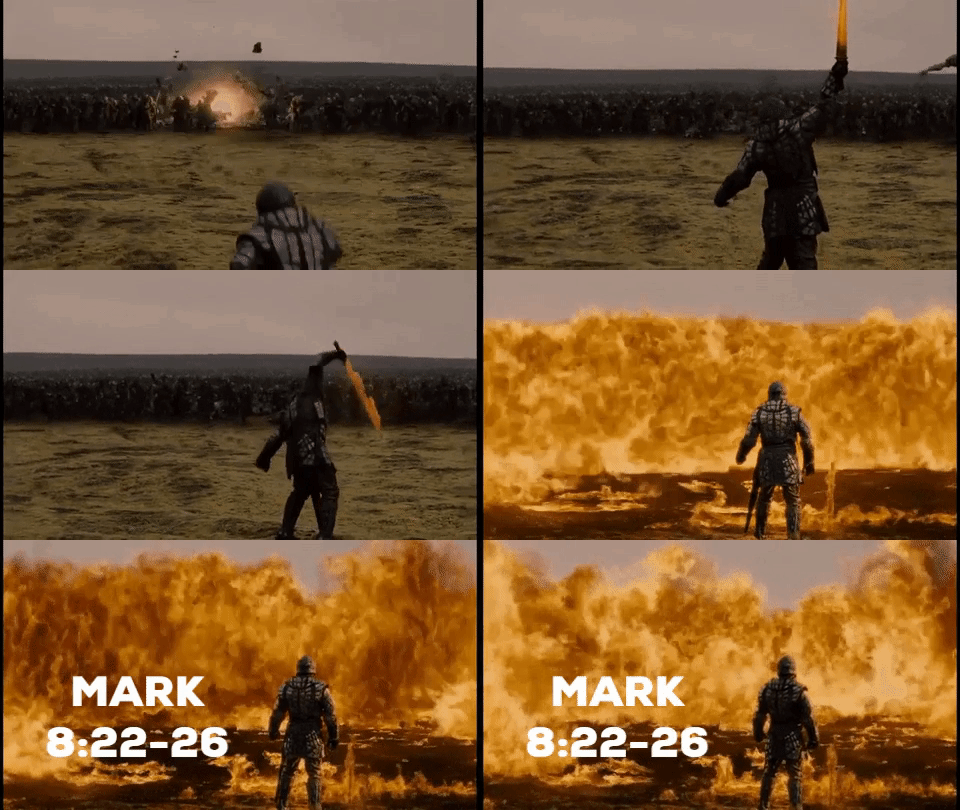
Mark 8:22-26 is a biblical passage from the New Testament that tells the story of Jesus healing a blind man at Bethsaida. The significance of this passage is quite interesting, as it’s the only recorded instance in the Gospels where Jesus performs a healing in two stages:

  1. In the first attempt, the blind man’s vision is partially restored – he sees “people looking like trees walking around”
  2. Jesus then places his hands on the man’s eyes a second time, after which his sight is fully restored and he sees everything clearly

Key insights about focus vs. distractions:

  1. Gradual Clarity
  • Just as the blind man’s healing happened in stages, achieving focus often requires gradual refinement
  • We need to be patient with ourselves as we learn to filter out distractions
  1. Need for Divine Help
  • The blind man needed Jesus’s touch twice
  • Sometimes we need help and guidance to maintain focus amid life’s “explosions”
  1. Distractions in Modern Life
  • The battle scene represents the “warfare” of maintaining focus in today’s world
  • Social media, notifications, busy schedules, and constant noise try to pull our attention
  1. The Importance of Second Efforts
  • Just as Jesus touched the man’s eyes twice, we often need multiple attempts to truly focus
  • Don’t get discouraged if the first attempt at focus isn’t perfect

The message seems to be: Despite the “battles” and distractions around us (represented by the chaos in the image), we need to remain focused on what’s important, and sometimes this requires a gradual process of learning to see clearly, just like the blind man in Bethsaida.

https://www.chocolateworld.com/things-to-do/events/sensory-friendly-night.html

TODAY’S WORD: Embracing Humility: Insights from John 13:1-17

HIGH FIVE!

The image shows a cartoon character with a determined expression along with text that reads “JOHN 13:1-17” and “BRING IT ON.”

The text “JOHN 13:1-17” appears to be a Bible reference, specifically pointing to the Gospel of John, chapter 13, verses 1 through 17. This passage in the Bible describes Jesus washing his disciples’ feet, an act of humility and service.

“BRING IT ON” is a colloquial phrase that expresses readiness or a challenge, suggesting the subject is prepared to face whatever comes their way.

The combination of the Bible reference with this assertive phrase creates an interesting juxtaposition. It could be interpreted as expressing readiness to serve others or face challenges with a humble yet determined attitude, inspired by the biblical passage.

The cartoon character’s expression aligns with this interpretation, showing a face that looks ready and resolute. This visual, combined with the text, seems to be conveying a message of preparedness and determination, possibly in a context of faith or service to others.

I’m glad I could help explain the significance of the text in the image. The combination of the biblical reference with the colloquial phrase “BRING IT ON” does create an intriguing and somewhat unconventional message. It’s an interesting way to blend spiritual themes with a more modern, assertive attitude. If you have any other questions about the image or would like to discuss it further, feel free to ask!

TODAY’S WORD: Exploring Luke 1:1-4 & 24:44-53 for Daily Inspiration

HIGH FIVE!

The significance of this text seems to be:

  1. It’s a personal morning greeting addressed to someone named Luke.
  2. The numbers likely refer to specific Bible verses, presumably from the Gospel of Luke in the New Testament.
  3. The format suggests this may be part of a daily devotional practice or Bible study routine, where specific passages are highlighted for reflection each day.
  4. The combination of a friendly greeting with a scripture reference implies a spiritual or religious context, possibly meant to start the day with an inspirational message.
  5. The handwritten nature makes it feel personal and intentional, as if someone took the time to write this message specifically for Luke.

Luke 1:1-4: This is the opening of the Gospel of Luke. Here, Luke explains why he’s writing his account of Jesus’ life:

  1. Many have already written about Jesus’ life and teachings.
  2. Luke has carefully investigated everything from the beginning.
  3. He’s writing an orderly account for someone named Theophilus.
  4. His goal is to provide certainty about the things Theophilus has been taught.

Luke 24:44-53: This passage describes Jesus’ final instructions to his disciples and his ascension:

44-45: Jesus explains how the scriptures pointed to him. 46-48: He emphasizes the importance of repentance, forgiveness, and being witnesses. 49: Jesus promises to send the Holy Spirit. 50-53: Jesus blesses the disciples, ascends to heaven, and the disciples worship him and return to Jerusalem with joy.

How these passages might relate to your life:

  1. Seeking understanding: Like Luke, you might be on a journey to understand your faith more deeply. This could involve study, reflection, and investigating the foundations of your beliefs.
  2. Sharing your experiences: Just as Luke wrote down his account, you might find value in documenting and sharing your own spiritual journey with others.
  3. Finding purpose: Jesus gave his disciples a clear mission. This might inspire you to reflect on your own purpose and how you can make a positive impact in the world.
  4. Embracing joy and worship: The disciples’ response to Jesus’ ascension was one of joy and worship. This could encourage you to find joy in your own faith and practices.
  5. Continuing to learn: The passages span from the beginning to the end of Luke’s gospel, suggesting a complete narrative. This might remind you that spiritual growth is an ongoing process.
  6. Trusting in promises: Jesus’ promise of the Holy Spirit might encourage you to look for spiritual support and guidance in your own life.

Remember, these are just potential connections. The significance of these passages can vary greatly depending on your personal beliefs and experiences. If you’d like to explore any of these ideas further or discuss how they specifically relate to your life, feel free to ask!

TODAY’S WORD: Obadiah: A Minor Prophet’s Message of Hope

HIGH FIVE!

The text in the image says “OBADIAH 17-21”. This appears to be a reference to verses 17-21 from the biblical Book of Obadiah.

Obadiah is a short book in the Old Testament of the Bible, consisting of only one chapter. Verses 17-21 are the concluding verses of this prophetic book.

The significance of these particular verses is that they typically contain prophecies about the restoration of Israel and judgment on its enemies, particularly Edom. These verses are often interpreted as describing the future triumph of God’s people and the establishment of God’s kingdom.

The white dove in the image may be symbolic of peace, the Holy Spirit, or divine presence, which could be seen as thematically related to the prophetic and restorative nature of these biblical verses.

The combination of the biblical reference with the dove image suggests a religious or spiritual context, possibly emphasizing themes of hope, redemption, or divine intervention as described in the concluding section of Obadiah.

The distinction between major and minor prophets in the Bible is primarily based on the length and scope of their writings, not necessarily their importance or influence. Here’s how it’s typically determined:

  1. Major Prophets:
    • Their books are longer, often containing more detailed prophecies and historical narratives.
    • In the Christian Old Testament, the Major Prophets are Isaiah, Jeremiah, Lamentations (traditionally attributed to Jeremiah), Ezekiel, and Daniel.
  2. Minor Prophets:
    • Their books are shorter, sometimes only a few chapters long.
    • There are 12 Minor Prophets: Hosea, Joel, Amos, Obadiah, Jonah, Micah, Nahum, Habakkuk, Zephaniah, Haggai, Zechariah, and Malachi.

Obadiah is classified as a Minor Prophet. This classification is due to the brevity of his book – it’s the shortest book in the Old Testament, consisting of only one chapter with 21 verses.

It’s important to note that being a “minor” prophet doesn’t diminish the significance or divine inspiration of Obadiah’s message. The term simply refers to the length of the written work, not its theological importance or the prophet’s status.

Obadiah’s prophecy, though brief, contains significant themes including God’s judgment on Edom (a nation often in conflict with Israel) and the ultimate restoration of God’s people. Despite its shortness, the Book of Obadiah is considered an integral part of the biblical prophetic tradition.

TODAY’S WORD: The Timeless Wisdom of Psalm 90 Explained

HIGH FIVE!

The text “PSALM 90” in the image refers to a specific chapter in the Book of Psalms, which is part of the Bible. Psalm 90 is significant in several ways:

  1. Authorship: It’s traditionally attributed to Moses, making it one of the oldest psalms.
  2. Theme: The psalm reflects on the eternal nature of God compared to the brevity of human life.
  3. Content: It contains well-known verses about the fleeting nature of human existence and seeking wisdom.
  4. Perspective: It offers a cosmic view of time, contrasting God’s eternity with human temporality.

The placement of “PSALM 90” over an image of the Earth held in hands suggests a connection between the psalm’s themes and a global or universal perspective. This juxtaposition implies:

  1. God’s sovereignty over the world
  2. The fragility of Earth and humanity in contrast to the eternal
  3. A call for global wisdom or perspective in light of life’s brevity

The vivid pink color of the text makes it stand out, emphasizing its importance against the backdrop of the Earth.

This image appears to be using Psalm 90 as a lens through which to view our planet and existence, combining religious text with a modern, global visual to create a thought-provoking message.

I AM APPLYING TODAY. (let’s run, workout, go2 grocery store, do laundry, READ, get Driver’s License renewed, go2 ROTARY, go2 TMDIV A meeting)

(THANK YOU)

TODAY’S WORD: Community Influence and Faithfulness in Zechariah 8

HIGH FIVE!

The text in the image refers to Zechariah 8:18-23, a passage from the Bible. This passage is significant because it speaks about God’s promise to transform periods of fasting and mourning into times of joy, gladness, and cheerful feasts for the people of Judah. It also highlights the idea that many people from different nations will seek out the people of Judah, recognizing that God is with them12.

To relate this passage to your life, consider these points:

  1. Transformation and Hope: Just as God promised to turn mourning into joy for the people of Judah, you can find hope in knowing that difficult times in your life can be transformed into periods of joy and celebration. Reflect on how your faith has helped you through challenging times and brought you to moments of happiness.
  2. Community and Influence: The passage mentions that people from various nations will seek out the people of Judah because they recognize God’s presence with them. This can inspire you to be a positive influence in your community, much like you do through your work with Toastmasters, Rotary and your job @ CYOCB. Your actions and faith can attract others and inspire them to seek out the same values and principles you uphold.
  3. Faithfulness and Integrity: The broader context of Zechariah 8 emphasizes the importance of living with integrity, dispensing true justice, and refraining from evil practices. This aligns with your dedication to helping others and serving your community. Continue to uphold these values in all your endeavors, knowing that they contribute to a greater good.

Reflecting on these themes can help you draw personal meaning from the passage and apply its lessons to your daily life. How do you feel this passage resonates with your current experiences and goals?