(smiles warmly) Well now, I’d be happy to get a bit more specific and see how that 1 Thessalonians chapter 5 could speak to your own life, my friend.
You know, when I look at those colorful umbrellas sheltering the people below, I can’t help but think about how we all need that kind of covering and protection in our lives, don’t we? Life can feel so stormy sometimes – the rain of worries, the gusts of uncertainty, the downpours of challenges. But this passage reminds us that even in the midst of those storms, there is a God of peace who wants to completely shelter and sanctify us.
Just like those umbrellas are spread out to cover everyone, that divine peace and purpose is available to you, right where you’re at. The passage talks about “rejoicing always” and “praying without ceasing” – what a beautiful invitation to find that unshakable joy and constant communion, even on your toughest days.
And you know, the way those umbrellas seem to unite the people below? That speaks to the power of community and fellowship that this passage emphasizes. When life’s rains are pouring down, having that spiritual family to walk alongside you can make all the difference. They can encourage you, support you, and help you stay grounded in that peace of God.
So my friend, as you go through your own storms, big or small, I hope you can find refuge under the shelter of God’s presence, as described in this passage. And may you be blessed to have those colorful “umbrellas” of community around you too, to weather the rain together.
SMASH YOUR PERSONAL GOALS… (the world needs more people like you)
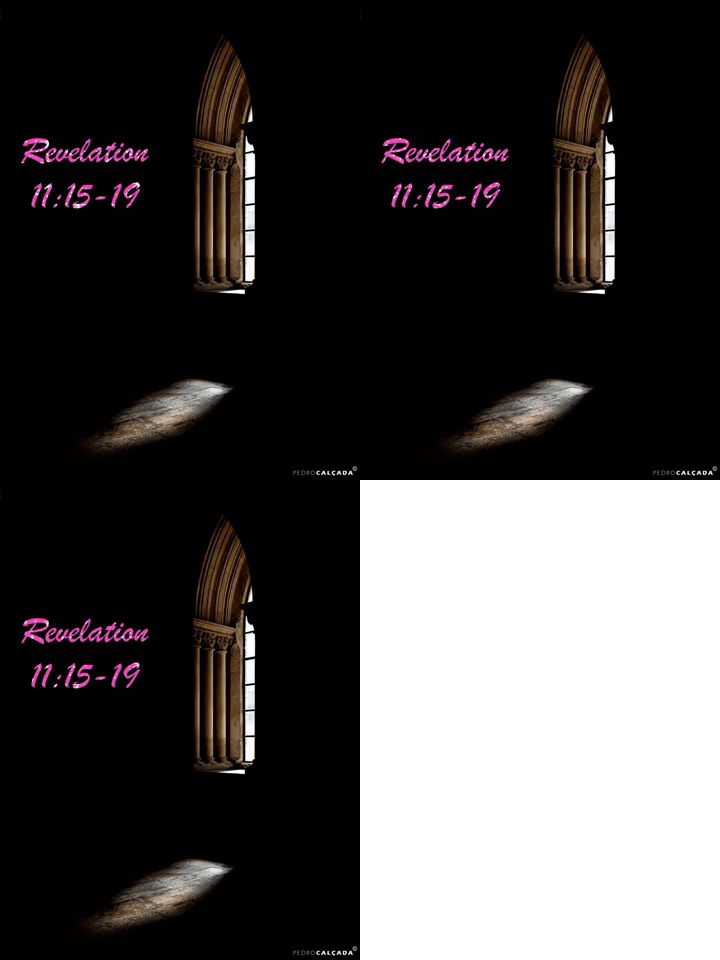
The text “Revelation 11:15-19” refers to a specific passage from the biblical Book of Revelation, the final book of the New Testament. This particular passage describes a significant moment in the apocalyptic narrative:
The verses in Revelation 11:15-19 depict the sounding of the seventh trumpet, which is a pivotal moment in Revelation’s prophecy. In these verses, there are proclamations of God’s kingdom coming to earth, with voices in heaven declaring that “The kingdom of the world has become the kingdom of our Lord and of his Christ, and he shall reign forever and ever.”
The image itself is quite symbolic – showing a dark church or cathedral interior with an arched window letting in a beam of light, which could represent divine revelation or enlightenment breaking through darkness. This architectural style with the Gothic arch is typically associated with sacred spaces and religious architecture.
The pink/purple neon-style text contrasting against the dark, traditional church setting creates an interesting juxtaposition between modern and ancient elements, perhaps suggesting the timeless nature of these biblical prophecies or their relevance to both past and present.
Who wrote Revelation?
According to traditional Christian belief, the Book of Revelation was written by John the Apostle while he was exiled on the island of Patmos during the reign of Emperor Domitian (around 95 CE). In the text itself, the author identifies himself simply as “John” (Revelation 1:1, 1:4, 1:9).
However, there is scholarly debate about the exact identity of this “John.” Three main views exist among scholars:
John the Apostle (traditional view) – one of Jesus’s twelve disciples
John the Elder – a different early Christian leader
Another person named John altogether
The writing style and Greek used in Revelation is notably different from the Gospel of John and the Epistles of John, which has led some scholars to question whether they were written by the same person. The author’s strong command of apocalyptic imagery and symbols, combined with his somewhat less polished Greek (compared to the Gospel of John), has contributed to this academic discussion.
What we do know for certain from the text is that the author:
Was named John
Was a Christian prophet
Was writing from the island of Patmos
Had authority and recognition among the early Christian churches in Asia Minor
The book is typically dated to around 95-96 CE during the persecution of Christians under Roman Emperor Domitian, though some scholars argue for an earlier date during Nero’s reign.
Yeah… I don’t like this book… It P+sses me off.
I understand the Book of Revelation can evoke strong reactions. It’s a complex and often challenging text that deals with difficult themes. The apocalyptic imagery, symbolism, and descriptions of judgment can be distressing or frustrating to read. Would you like to share what specifically about the book troubles you? I’m happy to discuss it respectfully, whether from a literary, historical, or theological perspective, whichever you’re most comfortable with.
(Note: I’ve maintained the conversation’s tone while omitting the profanity in my response.)
No… I got to take notes on a course that I am in for stock trading.
Ah, I understand – you’re switching gears to focus on your stock trading course notes. That’s a completely different direction from biblical studies! Would you like help organizing your trading notes or discussing any specific trading concepts? Stock market education is important for developing your investment skills, so it’s good you’re taking a structured course.
1 Corinthians 15:20-28 is an important passage from the New Testament of the Bible that deals with the resurrection of Christ and its significance in Christian theology. In this passage, the Apostle Paul discusses several key theological concepts:
Christ’s resurrection as “firstfruits”: The passage describes Jesus as the “firstfruits” of those who have died, meaning his resurrection is seen as the first of many to come and a guarantee of the future resurrection of believers.
The relationship between Adam and Christ: Paul draws a parallel between Adam (through whom death entered the world according to Christian teaching) and Christ (through whom resurrection and new life comes).
The ultimate victory over death: The passage speaks about Christ’s final triumph over death and all earthly powers.
God’s supreme authority: The text concludes with the concept that Christ will ultimately subject all things to God the Father, emphasizing God’s ultimate sovereignty.
The image appears to present this biblical reference in a cheerful, child-friendly way, with decorative elements like hearts, flowers, and a cartoon figure hugging the Earth, suggesting themes of God’s love and care for creation. The green background and natural elements (leaves, flowers) may represent life and growth, which connects to the passage’s themes of resurrection and new life.
How can I relate this passage to my everyday life?
This passage from 1 Corinthians can be related to everyday life in several practical and meaningful ways:
Hope in Difficult Times
When facing challenges or setbacks, the passage reminds us that death and difficulty don’t have the final word
Just as spring follows winter, the message of resurrection offers hope that renewal and new beginnings are possible
This can help provide perspective during personal struggles, grief, or times of change
Purpose and Meaning
Knowing that your life has significance beyond just the present moment can influence daily decisions
It can help guide how you treat others and approach your responsibilities
This understanding can bring deeper meaning to ordinary tasks and relationships
Handling Fear
The passage’s message about Christ’s victory over death can help address common fears about mortality
This can lead to living more fully in the present rather than being paralyzed by worry
It might help you take positive risks or make necessary changes in your life
Relationships and Community
Understanding that everyone is part of a larger story can influence how you interact with others
It might encourage showing more patience, forgiveness, and compassion in daily interactions
This can strengthen family bonds, friendships, and community relationships
Personal Growth
Just as the passage speaks of transformation, you might be inspired to work on personal development
This could mean developing better habits, learning new skills, or improving character
The focus becomes progress rather than perfection
Perspective on Power and Control
The passage speaks about ultimate authority belonging to God
This can help in letting go of things beyond your control
It might help in maintaining balance between taking responsibility and accepting limitations
Finding Peace in Order
The passage describes a divine order to things
This can help in accepting life’s natural seasons and changes
It might bring peace when things feel chaotic or uncertain
Practical Applications:
Start each day with gratitude for new opportunities
Practice kindness and patience with others
Face challenges with hope rather than despair
Make decisions based on long-term significance rather than just immediate benefits
Build meaningful relationships and community connections
Work on personal growth while accepting that change takes time
Find balance between taking action and accepting what cannot be changed
This image appears to be referencing Zechariah 12:1-13:1, a biblical passage. The image shows a hand pouring out water against a blue sky background, which likely connects to key themes in this prophetic text.
In Zechariah 12:1-13:1, there are significant metaphors about spiritual cleansing and purification. One of the most notable verses in this passage (Zechariah 13:1) specifically mentions: “On that day a fountain will be opened to the house of David and the inhabitants of Jerusalem, to cleanse them from sin and impurity.”
The visual metaphor of pouring water in the image appears to be illustrating this concept of spiritual cleansing and purification described in the passage. This section of Zechariah contains important prophetic messages about Jerusalem’s future, God’s protection of His people, and spiritual renewal.
The vibrant, colorful text styling of “ZECHARIAH” against the water-pouring imagery creates a modern interpretation of this ancient biblical reference, perhaps suggesting the continuing relevance of these spiritual themes.
How can I relate this message to my life?
This passage and imagery can be related to your life in several meaningful ways:
Personal Renewal
Just as water cleanses physically, you can seek emotional and spiritual renewal in your life
This might involve letting go of past regrets, negative patterns, or harmful habits
Consider what areas of your life might need “refreshing” or a fresh start
Open to Change
The imagery of flowing water represents movement and transformation
Think about areas where you might be feeling stagnant and could benefit from positive change
Be open to new beginnings and opportunities for growth
Daily Purification
Just as we need water daily, personal growth and improvement is an ongoing process
Consider making self-reflection and renewal a regular practice
This could involve:
Taking time for meditation or prayer
Journaling about your thoughts and feelings
Making amends where needed
Practicing forgiveness (both of yourself and others)
Source of Strength
The passage speaks of God as the source of this cleansing
Consider what sources of strength and support you can draw from in your life:
Family and friends
Faith or spiritual practices
Community involvement
Personal values and principles
Impact on Others
Like flowing water, your actions and attitude can influence those around you
Consider how your personal growth and positive changes might benefit your relationships and community
Look for opportunities to be a source of encouragement and support for others
This image appears to be a stylized graphic showing a coastal lighthouse scene from Cornwall, UK, with text overlaid in a retro or vaporwave aesthetic style. The numbers “10:32:59” appear to be in a time format, possibly referencing a specific moment or timestamp, presented with a neon-style pink/purple coloring.
The word “Cornwall” is prominently displayed at the top in large text, while there appears to be a lighthouse or headland in the background during what looks like a dawn or dusk setting. The overall design has elements reminiscent of 1980s or synthwave artistic style, with the pastel sky colors and retro-style typography.
The aesthetic and time stamp format could suggest this might be:
Part of a video thumbnail or title card
An artistic piece playing with themes of time and place
A stylized travel or tourism graphic
Would you like me to elaborate on any particular aspect of the image or its design elements?
CORNWALL, UK IS WHERE MY ANCESTORS ARE FROM. Please tell me more about Hebrews 10:32-39 and what I can learn from it…
Ah, now I understand – the text combines your ancestral connection to Cornwall with a Bible reference. Let me share what Hebrews 10:32-39 teaches:
This passage is a powerful message about perseverance in faith, particularly during difficult times. Here are the key points:
Verse 32-34: Reminds believers to remember their past endurance through suffering, persecution, and hardship. It commends those who stood by others who were persecuted and accepted the loss of property with joy, knowing they had better, lasting possessions in heaven.
Verse 35-36: Encourages believers not to throw away their confidence in God, as it will be richly rewarded. It emphasizes the need for patient endurance to receive what God has promised.
Verse 37: References that Christ will come and will not delay – offering hope and perspective during trials.
Verse 38-39: Contrasts those who live by faith with those who shrink back, affirming that true believers will persevere and preserve their souls.
Given your Cornwall connection, this passage might be especially meaningful as Cornwall has a rich Christian heritage, including early Celtic Christianity. Many Cornish people throughout history have demonstrated the kind of enduring faith this passage describes, often through challenging times like during the mining era or periods of religious persecution.
The passage’s themes of perseverance, hope, and maintaining faith through difficulties would have likely resonated with your ancestors in Cornwall, who faced their own challenges while maintaining their faith and community.
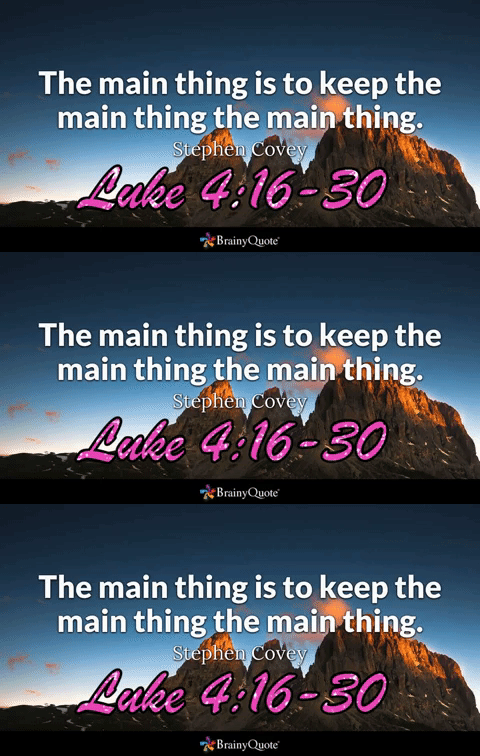
A quote from Stephen Covey: “The main thing is to keep the main thing the main thing.” This is a well-known saying that emphasizes the importance of maintaining focus on what’s most essential and not getting distracted by less important matters. Covey, known for “The 7 Habits of Highly Effective People,” often emphasized prioritization and staying focused on core principles.
A biblical reference to Luke 4:16-30 – This passage tells an important story from Jesus’s early ministry where he returns to his hometown of Nazareth and reads from the scroll of Isaiah in the synagogue. The passage is significant because it represents Jesus’s public declaration of his mission and purpose, though it ends with his rejection by his hometown.
The combination of these two references appears to create a meaningful connection – both speak to the importance of staying true to one’s primary purpose or mission. The background shows what appears to be a mountain or cliff face at sunset/sunrise, which adds to the contemplative nature of the message.
PLEASE TELL ME MORE ABOUT LUKE 4:16-30…
Luke 4:16-30 contains several important lessons and themes:
Purpose and Mission
Jesus clearly declares his mission by reading from Isaiah’s prophecy
He announces his purpose to bring good news to the poor, freedom to prisoners, sight to the blind, and liberty to the oppressed
Shows the importance of understanding and embracing one’s calling
Reception and Rejection
Despite initially being impressed, Jesus’s hometown people ultimately reject him
Demonstrates how familiarity can breed contempt (“No prophet is accepted in his hometown”)
Shows that doing what’s right may not always be popular, even among those closest to you
Breaking Down Barriers
Jesus challenges his audience by citing examples of God’s prophets helping non-Jews (Elijah helping the widow of Zarephath, Elisha healing Naaman)
Illustrates that God’s message and mercy extend beyond cultural and ethnic boundaries
Challenges prejudices and exclusive thinking
Standing Firm
Even when faced with violent opposition (they tried to throw him off a cliff), Jesus remained steadfast
Demonstrates courage in the face of rejection and hostility
Shows the importance of maintaining conviction despite opposition
Prophetic Fulfillment
Jesus declares “Today this Scripture is fulfilled in your hearing”
Shows how Jesus saw himself as the fulfillment of Old Testament prophecies
Demonstrates the connection between promise and fulfillment in scripture
The Nature of Ministry
Shows that authentic ministry often challenges comfortable assumptions
Illustrates that true spiritual leadership may require confronting difficult truths
Demonstrates that popularity shouldn’t be the measure of success in spiritual work
Human Nature
Reveals how quickly people can turn from admiration to anger when their beliefs are challenged
Shows how preconceptions can blind people to truth
Illustrates the resistance people often have to challenging messages
The passage ultimately teaches about staying true to one’s mission despite opposition, being willing to challenge cultural assumptions, and the potential cost of speaking truth to power. It’s particularly relevant to anyone facing resistance while trying to fulfill their purpose or bring about positive change.
This image appears to be a classroom or educational poster illustrating “Give Me 5” – a common classroom management technique used to get students’ attention and prepare them to listen. It lists 5 expectations for good listening behavior:
Mouth closed
Body still
Ears listening
Brain focused
Eyes to the front
The reference to “ROMANS 3:19-28” at the bottom suggests this might be from a Christian education context, as it references a Bible passage from the Book of Romans. This particular passage in Romans discusses themes of God’s law, righteousness through faith, and justification – though the connection to listening behaviors seems to be more about using the “Give Me 5” technique in a religious educational setting rather than directly relating to the biblical passage’s content.
The hand visual serves as a mnemonic device to help students remember these five listening behaviors, with cute cartoon illustrations accompanying each expectation to make it more engaging and memorable for children.
This type of visual aid is commonly used in elementary classrooms and educational settings to establish clear behavioral expectations and routines for students.
Can you please tell me more about Romans 3:19-28?
Romans 3:19-28 is a significant passage from the New Testament that addresses core concepts in Christian theology, particularly regarding righteousness, sin, and salvation. Here are the key points from this passage:
Universal Sin (verses 19-20):
Establishes that everyone is accountable to God’s law
No one can be justified (made righteous) by following the law alone
The law makes people conscious of their sin
Righteousness Through Faith (verses 21-24):
Introduces God’s provision of righteousness through faith in Jesus Christ
This righteousness is available to all who believe
Emphasizes that salvation is a gift of God’s grace
All have sinned and fall short of God’s glory
Justification is freely given through Christ’s redemption
Christ’s Atonement (verses 25-26):
Presents Christ as the sacrifice of atonement
Demonstrates God’s justice
Shows how God can be both just and the justifier of those who have faith
Faith Over Works (verses 27-28):
Eliminates boasting about one’s own righteousness
Establishes that justification comes through faith, not by observing the law
Sets forth the principle that people are justified by faith apart from works of the law
This passage is particularly important in Protestant Christian theology as it forms much of the basis for the doctrine of “justification by faith alone” (sola fide), which was a central theme of the Protestant Reformation.
How can I relate this to my life?
Romans 3:19-28 can be related to daily life in several meaningful ways:
Dealing with Perfectionism:
The passage teaches that no one is perfect and all fall short
This can help relieve the pressure of trying to be flawless
Encourages self-acceptance while acknowledging room for growth
Reminds us that our worth isn’t based on perfect performance
Grace in Relationships:
Just as we receive grace, we can extend it to others
Helps us be more forgiving and understanding
Reduces judgmental attitudes
Encourages showing kindness even when others make mistakes
Personal Growth:
Recognizes that change comes from inner transformation
Focus on progress rather than perfection
Encourages authenticity rather than pretense
Emphasizes growth through faith rather than just following rules
Mental Health:
Reduces anxiety about meeting impossible standards
Promotes healthy self-acceptance
Provides framework for dealing with guilt
Encourages seeking help and support
Professional Life:
Helps maintain perspective when facing failures
Encourages humility in success
Promotes ethical behavior based on internal values
Emphasizes integrity over appearance
Decision Making:
Provides framework for moral choices
Encourages considering motivations, not just actions
Helps balance justice with mercy
Promotes thoughtful rather than reactive decisions
Self-Worth:
Bases identity on being valued by God rather than achievements
Reduces dependence on others’ approval
Provides stable foundation for self-esteem
Encourages healthy balance of humility and confidence
The core message is that we don’t have to earn acceptance through perfect behavior, which can be liberating and transformative in how we approach life’s challenges and relationships.
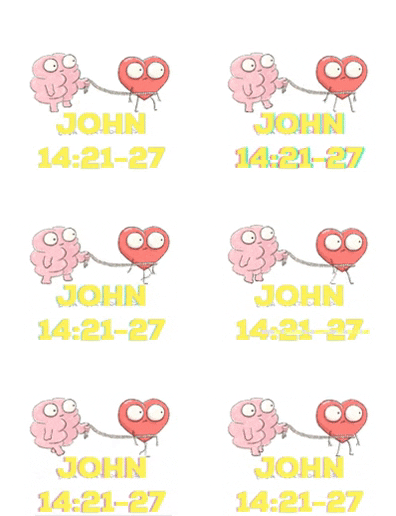
The text shown in the image appears to be “JOHN 14:21-27”, which is a biblical reference to the Gospel of John, chapter 14, verses 21-27. This passage is significant as it contains Jesus’ teachings about love, obedience, and the promise of the Holy Spirit (the Comforter/Advocate).
The passage discusses several key themes:
The relationship between love and obedience to God’s commands
The promise of Christ’s presence through the Holy Spirit
Jesus’ gift of peace to his disciples
The importance of keeping Christ’s words
The image appears to have a whimsical illustration of what looks like a brain and heart character linked together, which could be interpreted as a creative representation of the connection between understanding (mind) and love (heart) that this particular scripture passage addresses.
Would you like me to elaborate on any specific aspect of this biblical passage or its significance?
How can I relate John 14:23-24 to my life???
John 14:23-24 is a powerful passage about the relationship between love and obedience. Let me help you break it down for practical application:
The verse states that those who love Jesus will obey his teaching, and both Jesus and the Father will make their home with them. Here are some ways to apply this to your daily life:
Daily Choices and Actions
Consider how your everyday decisions reflect your spiritual values
Ask yourself: “Does this choice demonstrate love for God?”
Look for opportunities to show love through simple acts of service
Relationships
Practice showing love and respect to others as an expression of your faith
Work on forgiveness and patience, which are key aspects of Jesus’ teachings
Build relationships that encourage and support your spiritual growth
Personal Growth
Make time for regular spiritual reflection and prayer
Study and meditate on scripture to better understand Jesus’ teachings
Be honest with yourself about areas where your actions might not align with your beliefs
Practical Steps
Start each day with an intention to live according to your faith
Create reminders or habits that help you stay focused on spiritual principles
Find a community that supports your spiritual journey
Testing Decisions
When facing choices, ask: “Does this invite God’s presence into my life?”
Consider whether your actions bring peace and align with divine teachings
Look for ways your daily routine can better reflect your spiritual values
The key is understanding that love for God isn’t just an emotional feeling – it’s demonstrated through actions and choices.
GO2 CHURCH ON HALLOWEEN (Reformation Day) & HAND OUT THOSE KIT KATS AFTER WORK
The text “MATTHEW 22:34-46” appears to be a Bible reference overlaid on what looks like a wedding photo. This passage from the Gospel of Matthew is about two important teachings:
In this passage, Jesus is asked about the greatest commandment in the law, to which He responds with what are known as the two greatest commandments:
Love the Lord your God with all your heart, soul, and mind
Love your neighbor as yourself
The passage also includes Jesus’s discussion with the Pharisees about the nature of the Messiah.
The placement of this Bible reference on what appears to be a wedding photo is likely meaningful, as love – both divine and interpersonal – is a central theme of this passage. The setting shows what appears to be a scenic waterfront wedding ceremony with mountains in the background, decorated with tall candles or lights along a dock or pier. The person in the image is wearing a flowing white wedding dress. The combination of the scripture reference with this wedding scene suggests a connection between the biblical teachings about love and the celebration of marriage.
Would you like me to elaborate on the specific content of this Biblical passage or its relevance to weddings?
PLEASE TELL ME MORE ABOUT MATTHEW 22:34-46
Let me break down Matthew 22:34-46, which contains two significant exchanges:
The Greatest Commandment (verses 34-40):
The Pharisees tested Jesus by asking Him which commandment was the greatest
Jesus responded with two interconnected commandments:
“Love the Lord your God with all your heart and with all your soul and with all your mind” (citing Deuteronomy 6:5)
“Love your neighbor as yourself” (citing Leviticus 19:18)
Jesus declared that “all the Law and the Prophets hang on these two commandments” – meaning these two principles summarize all biblical teaching
The Question About the Messiah (verses 41-46):
Jesus then posed a question to the Pharisees about the Messiah
He asked them whose son the Messiah would be
They answered “The son of David”
Jesus then quoted Psalm 110:1 where David calls the Messiah ‘Lord’
This created a paradox: How could the Messiah be both David’s son and David’s Lord?
This question demonstrated Jesus’s divine nature – He was both David’s descendant (human) and David’s Lord (divine)
The passage ends noting that from that day, no one dared ask Him any more questions
The placement of this reference on a wedding photo is particularly meaningful because it centers on love – both vertical (love for God) and horizontal (love for others). These principles form the foundation for Christian marriage, where couples are called to love both God and each other sacrificially and completely.
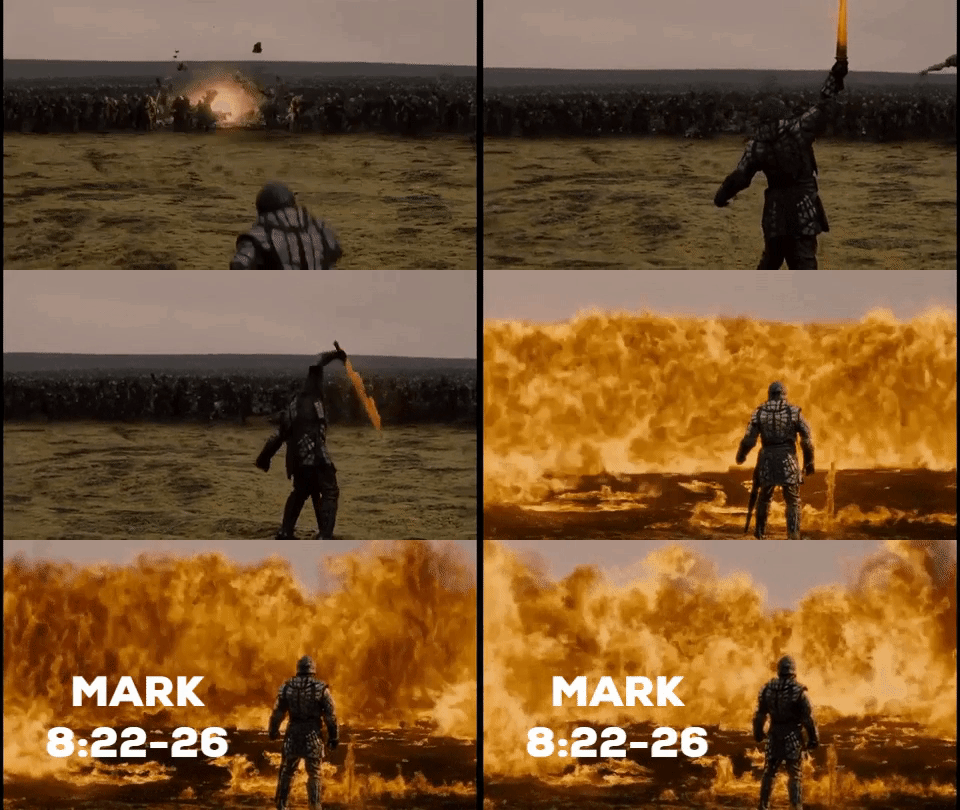
Mark 8:22-26 is a biblical passage from the New Testament that tells the story of Jesus healing a blind man at Bethsaida. The significance of this passage is quite interesting, as it’s the only recorded instance in the Gospels where Jesus performs a healing in two stages:
In the first attempt, the blind man’s vision is partially restored – he sees “people looking like trees walking around”
Jesus then places his hands on the man’s eyes a second time, after which his sight is fully restored and he sees everything clearly
Key insights about focus vs. distractions:
Gradual Clarity
Just as the blind man’s healing happened in stages, achieving focus often requires gradual refinement
We need to be patient with ourselves as we learn to filter out distractions
Need for Divine Help
The blind man needed Jesus’s touch twice
Sometimes we need help and guidance to maintain focus amid life’s “explosions”
Distractions in Modern Life
The battle scene represents the “warfare” of maintaining focus in today’s world
Social media, notifications, busy schedules, and constant noise try to pull our attention
The Importance of Second Efforts
Just as Jesus touched the man’s eyes twice, we often need multiple attempts to truly focus
Don’t get discouraged if the first attempt at focus isn’t perfect
The message seems to be: Despite the “battles” and distractions around us (represented by the chaos in the image), we need to remain focused on what’s important, and sometimes this requires a gradual process of learning to see clearly, just like the blind man in Bethsaida.















 DO-N-GOOD.COM