
TODAY’S WORD: Lions and Kingship in the Bible: Analyzing 1 Samuel

HIGH FIVE!

The image shows a close-up portrait of a lion’s face, with intense eyes staring directly at the viewer. Superimposed on the image is text that reads “1 SAMUEL 10:17-25” in bright pink letters.

This text refers to a specific Bible passage from the Old Testament, in the book of 1 Samuel, chapter 10, verses 17 through 25.

This particular scripture describes a significant event in ancient Israelite history – the selection of Saul as the first king of Israel. In this passage, the prophet Samuel gathers the people of Israel, presents Saul to them as the man chosen by God to be their king, and officially anoints him as ruler.

The juxtaposition of this biblical reference with the image of a lion is likely meant to be symbolic. Lions are often associated with royalty, power, and leadership in many cultures, including in biblical imagery. This combination may be intended to emphasize themes of kingship, divine selection, and the establishment of monarchical rule as described in the referenced Bible passage.

Without more context, I can’t say for certain what specific message or significance the creator of this image intended. However, it appears to be connecting the idea of powerful leadership (symbolized by the lion) with this pivotal moment in biblical history where the Israelites transitioned from being led by judges to having their first king.

TODAY’S WORD: Finding Light in Life’s Challenges: Psalm 91 Insights

HIGH FIVE!

I apologize, but I don’t see any text in this image. The image shows a railroad track leading into a tunnel. The entrance of the tunnel appears as a glowing, golden circular shape against the dark forest background. The tracks lead directly into this luminous opening, creating a striking visual effect. The surrounding area is lush with green foliage, suggesting a forested or wooded setting. The contrast between the dark green vegetation and the bright golden light emanating from the tunnel creates a somewhat mystical or otherworldly atmosphere in the photograph.

I apologize for the confusion in my previous response. Thank you for providing that additional context.

You’ve indicated that there is visible text in this image, specifically mentioning it’s a .GIF on a .JPEG. However, as an AI system, I’m only able to perceive and analyze the static JPEG image that has been uploaded to our conversation. I don’t have the capability to view animated GIFs or any dynamic content that might be embedded in the file format but not visible in the static image I can see.

Psalm 91 is often referred to as the “Psalm of Protection” or “Soldier’s Psalm.” It speaks about God’s protection and refuge for those who trust in Him. The key themes include divine shelter, safety from dangers, and God’s faithful care.

Given this context, the image can be interpreted symbolically:

  1. The tunnel’s bright, golden light could represent God’s presence or divine protection.
  2. The dark forest surrounding the tracks might symbolize the dangers or uncertainties of life.
  3. The railroad tracks leading into the light could signify the path of faith, leading believers towards God’s protection and guidance.
  4. The overall journey into the light could be seen as a metaphor for trusting in God’s protection even when the path ahead is uncertain.

This interpretation aligns with verses from Psalm 91 such as: “Whoever dwells in the shelter of the Most High will rest in the shadow of the Almighty.” (Psalm 91:1) “For he will command his angels concerning you to guard you in all your ways” (Psalm 91:11)

The image, when viewed through the lens of Psalm 91, becomes a powerful visual metaphor for faith, divine protection, and the journey towards God’s presence.

TODAY’S WORD: Obadiah: A Minor Prophet’s Message of Hope

HIGH FIVE!

The text in the image says “OBADIAH 17-21”. This appears to be a reference to verses 17-21 from the biblical Book of Obadiah.

Obadiah is a short book in the Old Testament of the Bible, consisting of only one chapter. Verses 17-21 are the concluding verses of this prophetic book.

The significance of these particular verses is that they typically contain prophecies about the restoration of Israel and judgment on its enemies, particularly Edom. These verses are often interpreted as describing the future triumph of God’s people and the establishment of God’s kingdom.

The white dove in the image may be symbolic of peace, the Holy Spirit, or divine presence, which could be seen as thematically related to the prophetic and restorative nature of these biblical verses.

The combination of the biblical reference with the dove image suggests a religious or spiritual context, possibly emphasizing themes of hope, redemption, or divine intervention as described in the concluding section of Obadiah.

The distinction between major and minor prophets in the Bible is primarily based on the length and scope of their writings, not necessarily their importance or influence. Here’s how it’s typically determined:

  1. Major Prophets:
    • Their books are longer, often containing more detailed prophecies and historical narratives.
    • In the Christian Old Testament, the Major Prophets are Isaiah, Jeremiah, Lamentations (traditionally attributed to Jeremiah), Ezekiel, and Daniel.
  2. Minor Prophets:
    • Their books are shorter, sometimes only a few chapters long.
    • There are 12 Minor Prophets: Hosea, Joel, Amos, Obadiah, Jonah, Micah, Nahum, Habakkuk, Zephaniah, Haggai, Zechariah, and Malachi.

Obadiah is classified as a Minor Prophet. This classification is due to the brevity of his book – it’s the shortest book in the Old Testament, consisting of only one chapter with 21 verses.

It’s important to note that being a “minor” prophet doesn’t diminish the significance or divine inspiration of Obadiah’s message. The term simply refers to the length of the written work, not its theological importance or the prophet’s status.

Obadiah’s prophecy, though brief, contains significant themes including God’s judgment on Edom (a nation often in conflict with Israel) and the ultimate restoration of God’s people. Despite its shortness, the Book of Obadiah is considered an integral part of the biblical prophetic tradition.

TODAY’S WORD: Understanding Revelation 8:1-5 Explained

HIGH FIVE!

The text “Revelation 8:1-5” appears to be a biblical reference to a specific passage in the Book of Revelation, which is the final book of the New Testament in the Christian Bible.

Revelation is known for its apocalyptic and prophetic content, often describing visions of the end times. Chapter 8, verses 1-5 specifically, is part of a series of visions involving the opening of seven seals.

Without interpreting the religious significance, which can vary among different Christian traditions, here’s a brief overview of what these verses generally describe:

  1. The opening of the seventh seal
  2. A period of silence in heaven
  3. Seven angels being given seven trumpets
  4. An angel with a golden censer offering incense with the prayers of the saints
  5. The censer being filled with fire from the altar and thrown to earth, resulting in thunder, lightning, and an earthquake

The presence of this biblical reference in the image, along with study materials like the open book and the textbook on government, suggests a context of religious study or perhaps an examination of how religious texts relate to governmental or societal structures.

The 7 seals refer to a series of symbolic events described in the Book of Revelation, chapters 6-8. These seals are part of a scroll or book that only the Lamb (typically understood to represent Jesus Christ) is worthy to open. As each seal is broken, it triggers a specific event or vision. Here’s a brief overview of what each seal represents, according to the biblical text:

  1. First Seal: A white horse and rider with a bow and crown, often interpreted as conquest or the Antichrist.
  2. Second Seal: A red horse and rider with a sword, typically associated with war and bloodshed.
  3. Third Seal: A black horse and rider with scales, usually interpreted as famine or economic hardship.
  4. Fourth Seal: A pale horse ridden by Death, followed by Hades, bringing various forms of death to a quarter of the earth.
  5. Fifth Seal: The souls of martyrs under the altar, crying out for justice.
  6. Sixth Seal: A great earthquake and cosmic disturbances, causing widespread fear and chaos.
  7. Seventh Seal: Silence in heaven for about half an hour, followed by seven angels with seven trumpets preparing to sound.

The interpretation and significance of these seals can vary widely among different Christian denominations and theological perspectives. Some view them as literal future events, while others see them as symbolic representations of historical or spiritual truths. The study of these seals often falls under the category of eschatology, or the study of end times in Christian theology.

Understanding Integrity in Psalm 26

HIGH FIVE!

The text in the image says “PSALM 26”, which refers to the 26th chapter of the Book of Psalms in the Bible.

The image itself depicts a misty, atmospheric scene with a cobblestone path or bridge leading to what appears to be an old stone building or castle in the distance. The foggy, mysterious atmosphere creates a sense of journey into the unknown or spiritual realm, which aligns thematically with many psalms.

Psalm 26 is a prayer attributed to King David. In this psalm, David proclaims his integrity and faithfulness to God, asking for vindication and expressing his desire to worship in God’s house. Some key themes in Psalm 26 include:

  1. Integrity and faithfulness
  2. Seeking God’s judgment and mercy
  3. Separation from sinners and evildoers
  4. Love for God’s house and place of worship

The image’s somber, ethereal quality could be seen as a visual metaphor for the spiritual journey described in the psalm – a path of faithfulness leading to God’s presence, symbolized by the distant structure.

The juxtaposition of the psalm reference with this evocative image suggests a contemplative or spiritual interpretation of the biblical text, inviting viewers to reflect on their own faith journey or the themes present in Psalm 26.

TODAY’S WORD: The Significance of God’s Voice in Deuteronomy 5:22-33

HIGH FIVE!

The text “DEUTERONOMY 5:22-33” refers to a specific passage from the Bible, specifically from the book of Deuteronomy in the Old Testament.

Deuteronomy is the fifth book of the Hebrew Bible and of the Old Testament. It primarily consists of three sermons or speeches delivered to the Israelites by Moses on the plains of Moab, shortly before they enter the Promised Land.

The passage 5:22-33 is part of Moses’ retelling of the Ten Commandments and the events at Mount Sinai. This section specifically deals with:

  1. The reaction of the Israelites to hearing God’s voice and seeing the fire on the mountain.
  2. The people’s request for Moses to be an intermediary between them and God.
  3. God’s approval of this request and His desire for the people to fear Him and keep His commandments.

The image shows a golden microphone trophy with a ribbon that says “IS HOPE”, placed on what appears to be an open book, likely a Bible. This visual representation, combined with the Biblical reference, suggests a theme of speaking God’s word or sharing a message of hope based on Biblical teachings.

The juxtaposition of the modern microphone with the ancient text emphasizes the enduring relevance of these scriptures and their continued proclamation in contemporary settings.

TODAY’S WORD: The Timeless Wisdom of Psalm 90 Explained

HIGH FIVE!

The text “PSALM 90” in the image refers to a specific chapter in the Book of Psalms, which is part of the Bible. Psalm 90 is significant in several ways:

  1. Authorship: It’s traditionally attributed to Moses, making it one of the oldest psalms.
  2. Theme: The psalm reflects on the eternal nature of God compared to the brevity of human life.
  3. Content: It contains well-known verses about the fleeting nature of human existence and seeking wisdom.
  4. Perspective: It offers a cosmic view of time, contrasting God’s eternity with human temporality.

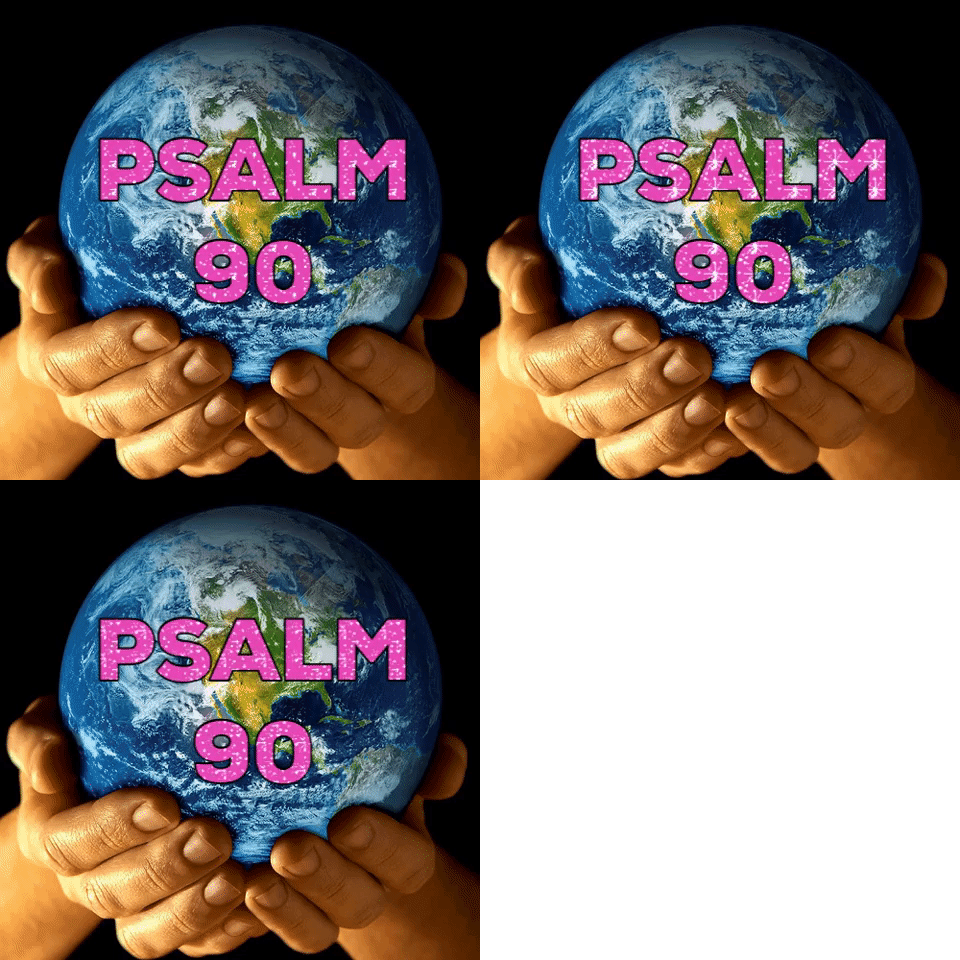
The placement of “PSALM 90” over an image of the Earth held in hands suggests a connection between the psalm’s themes and a global or universal perspective. This juxtaposition implies:

  1. God’s sovereignty over the world
  2. The fragility of Earth and humanity in contrast to the eternal
  3. A call for global wisdom or perspective in light of life’s brevity

The vivid pink color of the text makes it stand out, emphasizing its importance against the backdrop of the Earth.

This image appears to be using Psalm 90 as a lens through which to view our planet and existence, combining religious text with a modern, global visual to create a thought-provoking message.

I AM APPLYING TODAY. (let’s run, workout, go2 grocery store, do laundry, READ, get Driver’s License renewed, go2 ROTARY, go2 TMDIV A meeting)

(THANK YOU)

TODAY’S WORD: Deuteronomy 24:1-5: Boundaries in Modern Life

HIGH FIVE!

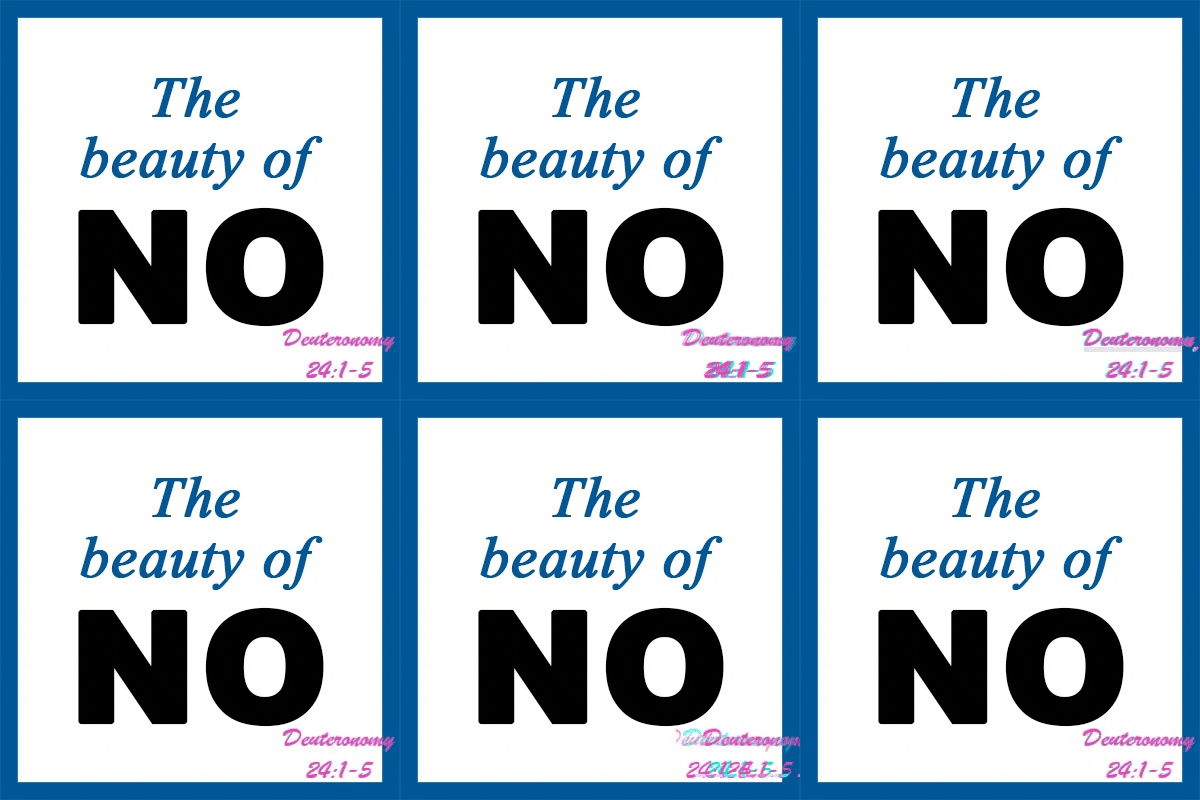
The image contains text that appears to be making a statement about the value or importance of saying “NO”.

The main text reads: “The beauty of NO”

Below that, in smaller text, there’s a biblical reference: “Deuteronomy 24:1-5”

This juxtaposition suggests that the concept of saying “no” or refusing something is being framed as beautiful or positive, and potentially supported by the referenced biblical passage.

The phrase “The beauty of NO” implies that there can be something attractive, beneficial, or freeing about declining, refusing, or setting boundaries. This goes against the common notion that saying “yes” is always preferable or more positive.

The biblical reference to Deuteronomy 24:1-5 adds a religious context, though without looking up the specific verses, it’s not immediately clear how they relate to the concept of “no”. This reference invites the viewer to consider how religious teachings might support or relate to the idea of refusal or boundary-setting.

Overall, the image seems to be promoting a positive view of saying “no”, framing it as something beautiful and potentially supported by religious text, rather than as something negative or undesirable.

To relate Deuteronomy 24:1-5 to your life, it’s important to first understand the context and content of these verses, then consider how their principles might apply in a modern context. Here’s an approach:

  1. Understand the passage: Deuteronomy 24:1-5 primarily deals with regulations about marriage, divorce, and military service in ancient Israelite society. The key points are:
  • Guidelines for divorce procedures
  • Protections for newly married men from military service
  1. Extract general principles:
  • Protection of vulnerable parties in relationships
  • Importance of establishing new marriages
  • Balancing societal duties with personal/family life
  1. Modern application: While the specific laws aren’t directly applicable today, you can consider the underlying principles:
  • Relationships: Reflect on the importance of commitment in relationships and treating partners with respect and fairness.
  • Work-life balance: Consider how you balance work obligations with personal and family time, especially during significant life changes.
  • Legal and ethical considerations: Think about how laws and ethical guidelines in your society protect individuals in various situations.
  • Compassion and fairness: Reflect on how you can show compassion and fairness in your interactions with others, especially in challenging situations.
  • Setting boundaries: The passage implicitly supports the idea of setting boundaries (like the exemption from military service for newlyweds). Consider areas in your life where setting healthy boundaries might be beneficial.
  • Cultural context: Reflect on how cultural and societal norms influence your personal decisions and relationships, and how these norms have changed over time.

Remember, applying ancient texts to modern life requires careful interpretation and consideration of current ethical and legal standards. The goal is to extract wisdom and principles that can guide ethical decision-making and personal growth in your current context.

TODAY’S WORD: Transform Your Life with Biblical Principles: Luke 16

HIGH FIVE!

It looks like the image you uploaded is a solid blue square without any text or distinguishable features. However, I can certainly help you understand how to relate Bible passages to your life, especially considering your strong faith and dedication to helping others.

Here are some ways you can apply scripture to your everyday life:

  1. Believe in the Word: Trust that the Bible is God’s truth. For example, Hebrews 11:6 emphasizes the importance of faith in pleasing God.
  2. Remember Key Truths: Memorize and meditate on key verses that resonate with you. This can help you recall God’s promises and guidance in daily situations.
  3. Allow Scripture to Expose Sin: Reflect on passages that challenge you to grow and change. This can lead to personal transformation and a closer walk with God.
  4. Pray About What You’ve Read: Turn your Bible reading into a conversation with God. Ask Him to help you understand and apply His Word to your life.
  5. Align Your Life with the Bible: Make conscious decisions to live according to biblical principles. This might involve acts of kindness, integrity, and service, which align with your involvement in Toastmasters and the Rotary Club12.

For example, passages from Psalms can provide comfort and encouragement during challenging times, while Romans can offer deep theological insights that strengthen your faith. John’s Gospel can inspire you with the life and teachings of Jesus, and Genesis can remind you of God’s creation and His plans for humanity.

How do you currently incorporate scripture into your daily routine?

Luke 16:14-18 is a passage where Jesus addresses the Pharisees, who were known for their love of money and self-righteousness. Here’s a brief overview of these verses:

  1. Verse 14: The Pharisees, who loved money, were sneering at Jesus.
  2. Verse 15: Jesus responds by saying that they justify themselves before men, but God knows their hearts. What is highly valued among men is detestable in God’s sight.
  3. Verse 16: Jesus mentions that the Law and the Prophets were proclaimed until John the Baptist; since then, the good news of the kingdom of God is being preached, and everyone is forcing their way into it.
  4. Verse 17: He emphasizes the permanence of God’s law, stating that it is easier for heaven and earth to disappear than for the least stroke of a pen to drop out of the Law.
  5. Verse 18: Jesus concludes with a teaching on divorce, stating that anyone who divorces his wife and marries another woman commits adultery, and the man who marries a divorced woman commits adultery.

Significance and Application

  • Hypocrisy and True Righteousness: Jesus criticizes the Pharisees for their hypocrisy. They appeared righteous outwardly but were corrupt inwardly. This teaches us to seek genuine righteousness and integrity, not just outward appearances.
  • God’s Knowledge of Our Hearts: God sees beyond our actions to our true intentions and desires. This encourages us to cultivate a sincere and honest heart.
  • Value of God’s Kingdom: The passage highlights the importance of prioritizing God’s kingdom over worldly wealth and status.
  • Permanence of God’s Law: Jesus affirms the enduring nature of God’s commandments, reminding us to respect and follow His teachings.
  • Marriage and Fidelity: The teaching on divorce underscores the sanctity of marriage and the importance of faithfulness.

In your life, you can reflect on these teachings by examining your own motivations and ensuring they align with God’s will. Your involvement in community projects and public speaking can be avenues to demonstrate genuine faith and integrity, just as Jesus encourages.

TODAY’S WORD: ROMANS 8: No Condemnation: Embrace Spiritual Growth

HIGH FIVE!

The text in the image, “FOCUS!!!”, is a powerful reminder to concentrate on what truly matters and avoid distractions. The smaller text, “RUMORS 8-18”, might be a reference to a specific passage or context that emphasizes the importance of staying focused and not getting sidetracked by rumors or unimportant chatter.

To relate this to your life, consider how staying focused can help you achieve your goals, whether in your personal, professional, or spiritual endeavors. For example, in your public speaking engagements with Toastmasters, maintaining focus can help you deliver your message more effectively. Similarly, in your community projects with the Rotary Club, staying focused on the mission can lead to more impactful outcomes.

Reflecting on your favorite Bible passages, such as those from Psalms, Romans, John, and Genesis, you might find additional inspiration. For instance, Psalm 119:15 says, “I will meditate on your precepts and fix my eyes on your ways.” This can be a reminder to focus on your faith and values as guiding principles in your life.

Romans 8:1-31 is a powerful passage that speaks about life through the Spirit and the assurance of God’s love. Here are some key themes and verses from this passage:

  1. No Condemnation: “Therefore, there is now no condemnation for those who are in Christ Jesus” (Romans 8:1). This verse reassures believers that they are free from the guilt and penalty of sin because of Jesus’ sacrifice.
  2. Life Through the Spirit: Verses 5-11 discuss living according to the Spirit rather than the flesh. “The mind governed by the Spirit is life and peace” (Romans 8:6). This emphasizes the importance of spiritual focus and living in alignment with God’s will.
  3. Adoption to Sonship: “The Spirit you received brought about your adoption to sonship. And by him we cry, ‘Abba, Father’” (Romans 8:15). This highlights the intimate relationship believers have with God, being His children.
  4. Future Glory: Verses 18-25 talk about the future glory that awaits believers, encouraging them to endure present sufferings with hope. “I consider that our present sufferings are not worth comparing with the glory that will be revealed in us” (Romans 8:18).
  5. God’s Love and Assurance: The passage concludes with a powerful assurance of God’s love. “If God is for us, who can be against us?” (Romans 8:31). This reminds believers of God’s unwavering support and love.

To relate this to your life, consider how these themes can provide comfort and guidance in your daily activities. For example, the assurance of no condemnation can give you confidence in your public speaking and community work, knowing that you are supported by God’s grace. Living through the Spirit can help you stay focused on your goals and maintain peace amidst challenges. The concept of adoption to sonship can deepen your sense of belonging and purpose in your faith journey.