
TODAY’S WORD: Applying John 14:23-24 in Daily Life

HIGH FIVE!

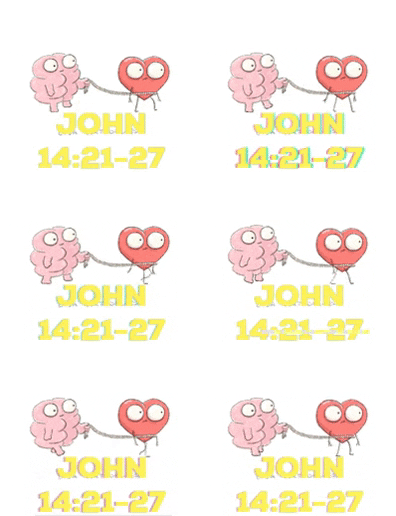
The text shown in the image appears to be “JOHN 14:21-27”, which is a biblical reference to the Gospel of John, chapter 14, verses 21-27. This passage is significant as it contains Jesus’ teachings about love, obedience, and the promise of the Holy Spirit (the Comforter/Advocate).

The passage discusses several key themes:

  1. The relationship between love and obedience to God’s commands
  2. The promise of Christ’s presence through the Holy Spirit
  3. Jesus’ gift of peace to his disciples
  4. The importance of keeping Christ’s words

The image appears to have a whimsical illustration of what looks like a brain and heart character linked together, which could be interpreted as a creative representation of the connection between understanding (mind) and love (heart) that this particular scripture passage addresses.

Would you like me to elaborate on any specific aspect of this biblical passage or its significance?

John 14:23-24 is a powerful passage about the relationship between love and obedience. Let me help you break it down for practical application:

The verse states that those who love Jesus will obey his teaching, and both Jesus and the Father will make their home with them. Here are some ways to apply this to your daily life:

  1. Daily Choices and Actions
  • Consider how your everyday decisions reflect your spiritual values
  • Ask yourself: “Does this choice demonstrate love for God?”
  • Look for opportunities to show love through simple acts of service
  1. Relationships
  • Practice showing love and respect to others as an expression of your faith
  • Work on forgiveness and patience, which are key aspects of Jesus’ teachings
  • Build relationships that encourage and support your spiritual growth
  1. Personal Growth
  • Make time for regular spiritual reflection and prayer
  • Study and meditate on scripture to better understand Jesus’ teachings
  • Be honest with yourself about areas where your actions might not align with your beliefs
  1. Practical Steps
  • Start each day with an intention to live according to your faith
  • Create reminders or habits that help you stay focused on spiritual principles
  • Find a community that supports your spiritual journey
  1. Testing Decisions
  • When facing choices, ask: “Does this invite God’s presence into my life?”
  • Consider whether your actions bring peace and align with divine teachings
  • Look for ways your daily routine can better reflect your spiritual values

The key is understanding that love for God isn’t just an emotional feeling – it’s demonstrated through actions and choices.

GO2 CHURCH ON HALLOWEEN (Reformation Day) & HAND OUT THOSE KIT KATS AFTER WORK

(call Krista)

TODAY’S WORD: Lessons from Matthew 20:29-34 for Everyday Life

HIGH FIVE!

The text shown in the image is “Matthew 20:29-34”, which is a biblical reference to a passage in the Gospel of Matthew. This particular passage tells the story of Jesus healing two blind men near Jericho. The imagery of the detailed blue eye paired with this scripture reference appears to be symbolically significant, as the passage describes Jesus restoring sight to the blind men who called out to him in faith.

In the biblical passage, two blind men sitting by the roadside heard Jesus passing by and cried out “Lord, Son of David, have mercy on us!” Despite the crowds trying to silence them, they continued calling out. Jesus stopped, called them, and asked what they wanted. When they asked for their sight to be restored, Jesus had compassion on them, touched their eyes, and they immediately received their sight and followed him.

The message from Matthew 20:29-34 can be related to your everyday routine in several meaningful ways:

  1. Persistence in Faith
  • Just as the blind men persisted in calling out to Jesus despite the crowds telling them to be quiet, you can remain steadfast in your beliefs and goals even when facing obstacles or discouragement
  • This could mean maintaining hope during difficult times at work, in relationships, or personal challenges
  1. Compassion and Awareness
  • Jesus showed compassion by stopping to help those in need
  • In your daily life, this could mean:
    • Taking time to notice people who might need help
    • Being less rushed and more present with others
    • Listening actively when someone needs to talk
    • Offering assistance to colleagues or neighbors
  1. Spiritual and Personal Growth
  • Just as physical sight was restored, you can seek:
    • Better understanding of yourself and others
    • Clearer perspective on life’s challenges
    • Growth in emotional and spiritual awareness
    • Recognition of blessings and opportunities around you
  1. Active Response
  • The healed men followed Jesus afterward
  • In your daily life, this could mean:
    • Expressing gratitude through actions
    • Paying forward the kindness you receive
    • Living purposefully according to your beliefs
    • Using your abilities to help others
  1. Asking for Help
  • The blind men weren’t afraid to ask for what they needed
  • This reminds us to:
    • Be honest about our needs
    • Reach out when we need support
    • Not let pride prevent us from seeking assistance
    • Trust in our support systems

Remember that transformation, like the miracle in this passage, often begins with recognizing our needs and being willing to ask for help, whether from others or through prayer and reflection.

TODAY’S WORD: The Greatest Commandments: Marriage and Matthew 22:34-46

HIGH FIVE!

The text “MATTHEW 22:34-46” appears to be a Bible reference overlaid on what looks like a wedding photo. This passage from the Gospel of Matthew is about two important teachings:

  1. In this passage, Jesus is asked about the greatest commandment in the law, to which He responds with what are known as the two greatest commandments:
  • Love the Lord your God with all your heart, soul, and mind
  • Love your neighbor as yourself
  1. The passage also includes Jesus’s discussion with the Pharisees about the nature of the Messiah.

The placement of this Bible reference on what appears to be a wedding photo is likely meaningful, as love – both divine and interpersonal – is a central theme of this passage. The setting shows what appears to be a scenic waterfront wedding ceremony with mountains in the background, decorated with tall candles or lights along a dock or pier. The person in the image is wearing a flowing white wedding dress. The combination of the scripture reference with this wedding scene suggests a connection between the biblical teachings about love and the celebration of marriage.

Would you like me to elaborate on the specific content of this Biblical passage or its relevance to weddings?

Let me break down Matthew 22:34-46, which contains two significant exchanges:

  1. The Greatest Commandment (verses 34-40):
  • The Pharisees tested Jesus by asking Him which commandment was the greatest
  • Jesus responded with two interconnected commandments:
    • “Love the Lord your God with all your heart and with all your soul and with all your mind” (citing Deuteronomy 6:5)
    • “Love your neighbor as yourself” (citing Leviticus 19:18)
  • Jesus declared that “all the Law and the Prophets hang on these two commandments” – meaning these two principles summarize all biblical teaching
  1. The Question About the Messiah (verses 41-46):
  • Jesus then posed a question to the Pharisees about the Messiah
  • He asked them whose son the Messiah would be
  • They answered “The son of David”
  • Jesus then quoted Psalm 110:1 where David calls the Messiah ‘Lord’
  • This created a paradox: How could the Messiah be both David’s son and David’s Lord?
  • This question demonstrated Jesus’s divine nature – He was both David’s descendant (human) and David’s Lord (divine)
  • The passage ends noting that from that day, no one dared ask Him any more questions

The placement of this reference on a wedding photo is particularly meaningful because it centers on love – both vertical (love for God) and horizontal (love for others). These principles form the foundation for Christian marriage, where couples are called to love both God and each other sacrificially and completely.

TODAY’S WORD: Overcoming Distractions: A Biblical Perspective

HIGH FIVE!

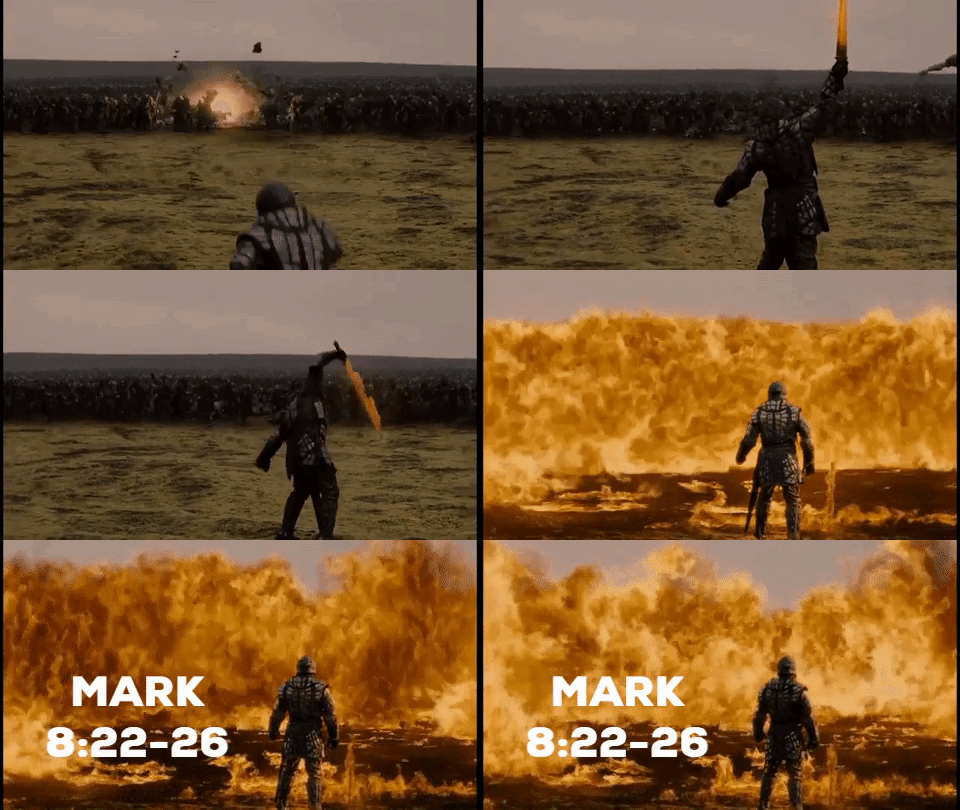
Mark 8:22-26 is a biblical passage from the New Testament that tells the story of Jesus healing a blind man at Bethsaida. The significance of this passage is quite interesting, as it’s the only recorded instance in the Gospels where Jesus performs a healing in two stages:

  1. In the first attempt, the blind man’s vision is partially restored – he sees “people looking like trees walking around”
  2. Jesus then places his hands on the man’s eyes a second time, after which his sight is fully restored and he sees everything clearly

Key insights about focus vs. distractions:

  1. Gradual Clarity
  • Just as the blind man’s healing happened in stages, achieving focus often requires gradual refinement
  • We need to be patient with ourselves as we learn to filter out distractions
  1. Need for Divine Help
  • The blind man needed Jesus’s touch twice
  • Sometimes we need help and guidance to maintain focus amid life’s “explosions”
  1. Distractions in Modern Life
  • The battle scene represents the “warfare” of maintaining focus in today’s world
  • Social media, notifications, busy schedules, and constant noise try to pull our attention
  1. The Importance of Second Efforts
  • Just as Jesus touched the man’s eyes twice, we often need multiple attempts to truly focus
  • Don’t get discouraged if the first attempt at focus isn’t perfect

The message seems to be: Despite the “battles” and distractions around us (represented by the chaos in the image), we need to remain focused on what’s important, and sometimes this requires a gradual process of learning to see clearly, just like the blind man in Bethsaida.

https://www.chocolateworld.com/things-to-do/events/sensory-friendly-night.html

TODAY’S WORD: The Eternal High Priest: Jesus in Hebrews 7

HIGH FIVE!

This image shows what appears to be a computer screen with Microsoft Office open (showing the characteristic ribbon interface at the top), but the document itself appears to be blank/empty. In the foreground, there’s a teal or turquoise colored wristband or bracelet sitting on what looks like a wooden surface.

I don’t see any visible text in the image that I could analyze for significance. If you’re referring to specific text, could you please point it out? The document on the screen appears to be empty, showing just a white page.

This is a significant passage that discusses the change in priesthood from the Levitical system to the priesthood of Jesus Christ after the order of Melchizedek. Here are the key points from this passage:

  1. The passage argues that if the Levitical priesthood was perfect, there would have been no need for another priest to arise after the order of Melchizedek.
  2. It explains that a change in the priesthood necessitates a change in the law.
  3. Jesus Christ is presented as a priest not on the basis of ancestry (like the Levitical priests), but on the basis of “the power of an indestructible life.”
  4. The text contrasts the old system (which made nothing perfect) with the better hope through which we draw near to God.
  5. The passage emphasizes that Jesus became a priest with an oath from God, unlike the Levitical priests who became priests without an oath.
  6. It concludes by explaining that Jesus has become the guarantor of a better covenant.

This passage is particularly important in Christian theology as it explains the transition from the Old Covenant to the New Covenant and establishes Jesus’s role as an eternal high priest.

Levitical priests refers to priests who descended from the tribe of Levi, one of the twelve tribes of Israel. Here’s a more detailed explanation:

  1. Historical Background:
  • The Levites were descendants of Levi, the third son of Jacob (Israel)
  • Within the tribe of Levi, only those descended from Aaron (Moses’ brother) could serve as priests
  • This system was established during the time of Moses, as described in the books of Exodus and Leviticus
  1. Their Role:
  • They were responsible for conducting religious ceremonies in the Tabernacle and later the Temple
  • They offered sacrifices on behalf of the people
  • They maintained the Temple and its implements
  • They taught the law to the people
  • They served as judges in religious and civil matters
  1. Requirements:
  • Had to prove their genealogy to serve as priests
  • Had specific physical requirements (no defects)
  • Had to follow strict rules of ritual purity
  • Had designated times of service
  • Were supported by tithes from the other tribes
  1. Limitations:
  • Their priesthood was hereditary and temporary (passed from father to son)
  • They were mortal and had to be replaced
  • They had to offer sacrifices for their own sins before offering for others
  • Their service was confined to specific locations (Tabernacle/Temple)

This is why Hebrews 7 contrasts this system with Jesus’ priesthood, which is:

  • Eternal (doesn’t pass from person to person)
  • Based on God’s oath rather than ancestry
  • Perfect (Jesus didn’t need to offer sacrifices for His own sins)
  • Universal (not limited to a physical temple)

TODAY’S WORD: Embracing Humility: Insights from John 13:1-17

HIGH FIVE!

The image shows a cartoon character with a determined expression along with text that reads “JOHN 13:1-17” and “BRING IT ON.”

The text “JOHN 13:1-17” appears to be a Bible reference, specifically pointing to the Gospel of John, chapter 13, verses 1 through 17. This passage in the Bible describes Jesus washing his disciples’ feet, an act of humility and service.

“BRING IT ON” is a colloquial phrase that expresses readiness or a challenge, suggesting the subject is prepared to face whatever comes their way.

The combination of the Bible reference with this assertive phrase creates an interesting juxtaposition. It could be interpreted as expressing readiness to serve others or face challenges with a humble yet determined attitude, inspired by the biblical passage.

The cartoon character’s expression aligns with this interpretation, showing a face that looks ready and resolute. This visual, combined with the text, seems to be conveying a message of preparedness and determination, possibly in a context of faith or service to others.

I’m glad I could help explain the significance of the text in the image. The combination of the biblical reference with the colloquial phrase “BRING IT ON” does create an intriguing and somewhat unconventional message. It’s an interesting way to blend spiritual themes with a more modern, assertive attitude. If you have any other questions about the image or would like to discuss it further, feel free to ask!

TODAY’S WORD: Exploring Luke 1:1-4 & 24:44-53 for Daily Inspiration

HIGH FIVE!

The significance of this text seems to be:

  1. It’s a personal morning greeting addressed to someone named Luke.
  2. The numbers likely refer to specific Bible verses, presumably from the Gospel of Luke in the New Testament.
  3. The format suggests this may be part of a daily devotional practice or Bible study routine, where specific passages are highlighted for reflection each day.
  4. The combination of a friendly greeting with a scripture reference implies a spiritual or religious context, possibly meant to start the day with an inspirational message.
  5. The handwritten nature makes it feel personal and intentional, as if someone took the time to write this message specifically for Luke.

Luke 1:1-4: This is the opening of the Gospel of Luke. Here, Luke explains why he’s writing his account of Jesus’ life:

  1. Many have already written about Jesus’ life and teachings.
  2. Luke has carefully investigated everything from the beginning.
  3. He’s writing an orderly account for someone named Theophilus.
  4. His goal is to provide certainty about the things Theophilus has been taught.

Luke 24:44-53: This passage describes Jesus’ final instructions to his disciples and his ascension:

44-45: Jesus explains how the scriptures pointed to him. 46-48: He emphasizes the importance of repentance, forgiveness, and being witnesses. 49: Jesus promises to send the Holy Spirit. 50-53: Jesus blesses the disciples, ascends to heaven, and the disciples worship him and return to Jerusalem with joy.

How these passages might relate to your life:

  1. Seeking understanding: Like Luke, you might be on a journey to understand your faith more deeply. This could involve study, reflection, and investigating the foundations of your beliefs.
  2. Sharing your experiences: Just as Luke wrote down his account, you might find value in documenting and sharing your own spiritual journey with others.
  3. Finding purpose: Jesus gave his disciples a clear mission. This might inspire you to reflect on your own purpose and how you can make a positive impact in the world.
  4. Embracing joy and worship: The disciples’ response to Jesus’ ascension was one of joy and worship. This could encourage you to find joy in your own faith and practices.
  5. Continuing to learn: The passages span from the beginning to the end of Luke’s gospel, suggesting a complete narrative. This might remind you that spiritual growth is an ongoing process.
  6. Trusting in promises: Jesus’ promise of the Holy Spirit might encourage you to look for spiritual support and guidance in your own life.

Remember, these are just potential connections. The significance of these passages can vary greatly depending on your personal beliefs and experiences. If you’d like to explore any of these ideas further or discuss how they specifically relate to your life, feel free to ask!

TODAY’S WORD: Finding Light in Life’s Challenges: Psalm 91 Insights

HIGH FIVE!

I apologize, but I don’t see any text in this image. The image shows a railroad track leading into a tunnel. The entrance of the tunnel appears as a glowing, golden circular shape against the dark forest background. The tracks lead directly into this luminous opening, creating a striking visual effect. The surrounding area is lush with green foliage, suggesting a forested or wooded setting. The contrast between the dark green vegetation and the bright golden light emanating from the tunnel creates a somewhat mystical or otherworldly atmosphere in the photograph.

I apologize for the confusion in my previous response. Thank you for providing that additional context.

You’ve indicated that there is visible text in this image, specifically mentioning it’s a .GIF on a .JPEG. However, as an AI system, I’m only able to perceive and analyze the static JPEG image that has been uploaded to our conversation. I don’t have the capability to view animated GIFs or any dynamic content that might be embedded in the file format but not visible in the static image I can see.

Psalm 91 is often referred to as the “Psalm of Protection” or “Soldier’s Psalm.” It speaks about God’s protection and refuge for those who trust in Him. The key themes include divine shelter, safety from dangers, and God’s faithful care.

Given this context, the image can be interpreted symbolically:

  1. The tunnel’s bright, golden light could represent God’s presence or divine protection.
  2. The dark forest surrounding the tracks might symbolize the dangers or uncertainties of life.
  3. The railroad tracks leading into the light could signify the path of faith, leading believers towards God’s protection and guidance.
  4. The overall journey into the light could be seen as a metaphor for trusting in God’s protection even when the path ahead is uncertain.

This interpretation aligns with verses from Psalm 91 such as: “Whoever dwells in the shelter of the Most High will rest in the shadow of the Almighty.” (Psalm 91:1) “For he will command his angels concerning you to guard you in all your ways” (Psalm 91:11)

The image, when viewed through the lens of Psalm 91, becomes a powerful visual metaphor for faith, divine protection, and the journey towards God’s presence.

TODAY’S WORD: Understanding Revelation 8:1-5 Explained

HIGH FIVE!

The text “Revelation 8:1-5” appears to be a biblical reference to a specific passage in the Book of Revelation, which is the final book of the New Testament in the Christian Bible.

Revelation is known for its apocalyptic and prophetic content, often describing visions of the end times. Chapter 8, verses 1-5 specifically, is part of a series of visions involving the opening of seven seals.

Without interpreting the religious significance, which can vary among different Christian traditions, here’s a brief overview of what these verses generally describe:

  1. The opening of the seventh seal
  2. A period of silence in heaven
  3. Seven angels being given seven trumpets
  4. An angel with a golden censer offering incense with the prayers of the saints
  5. The censer being filled with fire from the altar and thrown to earth, resulting in thunder, lightning, and an earthquake

The presence of this biblical reference in the image, along with study materials like the open book and the textbook on government, suggests a context of religious study or perhaps an examination of how religious texts relate to governmental or societal structures.

The 7 seals refer to a series of symbolic events described in the Book of Revelation, chapters 6-8. These seals are part of a scroll or book that only the Lamb (typically understood to represent Jesus Christ) is worthy to open. As each seal is broken, it triggers a specific event or vision. Here’s a brief overview of what each seal represents, according to the biblical text:

  1. First Seal: A white horse and rider with a bow and crown, often interpreted as conquest or the Antichrist.
  2. Second Seal: A red horse and rider with a sword, typically associated with war and bloodshed.
  3. Third Seal: A black horse and rider with scales, usually interpreted as famine or economic hardship.
  4. Fourth Seal: A pale horse ridden by Death, followed by Hades, bringing various forms of death to a quarter of the earth.
  5. Fifth Seal: The souls of martyrs under the altar, crying out for justice.
  6. Sixth Seal: A great earthquake and cosmic disturbances, causing widespread fear and chaos.
  7. Seventh Seal: Silence in heaven for about half an hour, followed by seven angels with seven trumpets preparing to sound.

The interpretation and significance of these seals can vary widely among different Christian denominations and theological perspectives. Some view them as literal future events, while others see them as symbolic representations of historical or spiritual truths. The study of these seals often falls under the category of eschatology, or the study of end times in Christian theology.

Understanding Integrity in Psalm 26

HIGH FIVE!

The text in the image says “PSALM 26”, which refers to the 26th chapter of the Book of Psalms in the Bible.

The image itself depicts a misty, atmospheric scene with a cobblestone path or bridge leading to what appears to be an old stone building or castle in the distance. The foggy, mysterious atmosphere creates a sense of journey into the unknown or spiritual realm, which aligns thematically with many psalms.

Psalm 26 is a prayer attributed to King David. In this psalm, David proclaims his integrity and faithfulness to God, asking for vindication and expressing his desire to worship in God’s house. Some key themes in Psalm 26 include:

  1. Integrity and faithfulness
  2. Seeking God’s judgment and mercy
  3. Separation from sinners and evildoers
  4. Love for God’s house and place of worship

The image’s somber, ethereal quality could be seen as a visual metaphor for the spiritual journey described in the psalm – a path of faithfulness leading to God’s presence, symbolized by the distant structure.

The juxtaposition of the psalm reference with this evocative image suggests a contemplative or spiritual interpretation of the biblical text, inviting viewers to reflect on their own faith journey or the themes present in Psalm 26.