
TODAY’S WORD: Applying John 14:23-24 in Daily Life

HIGH FIVE!

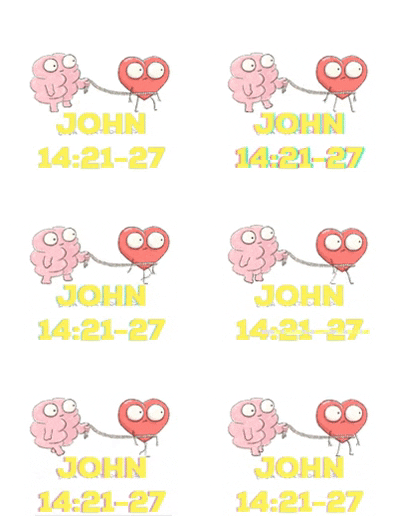
The text shown in the image appears to be “JOHN 14:21-27”, which is a biblical reference to the Gospel of John, chapter 14, verses 21-27. This passage is significant as it contains Jesus’ teachings about love, obedience, and the promise of the Holy Spirit (the Comforter/Advocate).

The passage discusses several key themes:

  1. The relationship between love and obedience to God’s commands
  2. The promise of Christ’s presence through the Holy Spirit
  3. Jesus’ gift of peace to his disciples
  4. The importance of keeping Christ’s words

The image appears to have a whimsical illustration of what looks like a brain and heart character linked together, which could be interpreted as a creative representation of the connection between understanding (mind) and love (heart) that this particular scripture passage addresses.

Would you like me to elaborate on any specific aspect of this biblical passage or its significance?

John 14:23-24 is a powerful passage about the relationship between love and obedience. Let me help you break it down for practical application:

The verse states that those who love Jesus will obey his teaching, and both Jesus and the Father will make their home with them. Here are some ways to apply this to your daily life:

  1. Daily Choices and Actions
  • Consider how your everyday decisions reflect your spiritual values
  • Ask yourself: “Does this choice demonstrate love for God?”
  • Look for opportunities to show love through simple acts of service
  1. Relationships
  • Practice showing love and respect to others as an expression of your faith
  • Work on forgiveness and patience, which are key aspects of Jesus’ teachings
  • Build relationships that encourage and support your spiritual growth
  1. Personal Growth
  • Make time for regular spiritual reflection and prayer
  • Study and meditate on scripture to better understand Jesus’ teachings
  • Be honest with yourself about areas where your actions might not align with your beliefs
  1. Practical Steps
  • Start each day with an intention to live according to your faith
  • Create reminders or habits that help you stay focused on spiritual principles
  • Find a community that supports your spiritual journey
  1. Testing Decisions
  • When facing choices, ask: “Does this invite God’s presence into my life?”
  • Consider whether your actions bring peace and align with divine teachings
  • Look for ways your daily routine can better reflect your spiritual values

The key is understanding that love for God isn’t just an emotional feeling – it’s demonstrated through actions and choices.

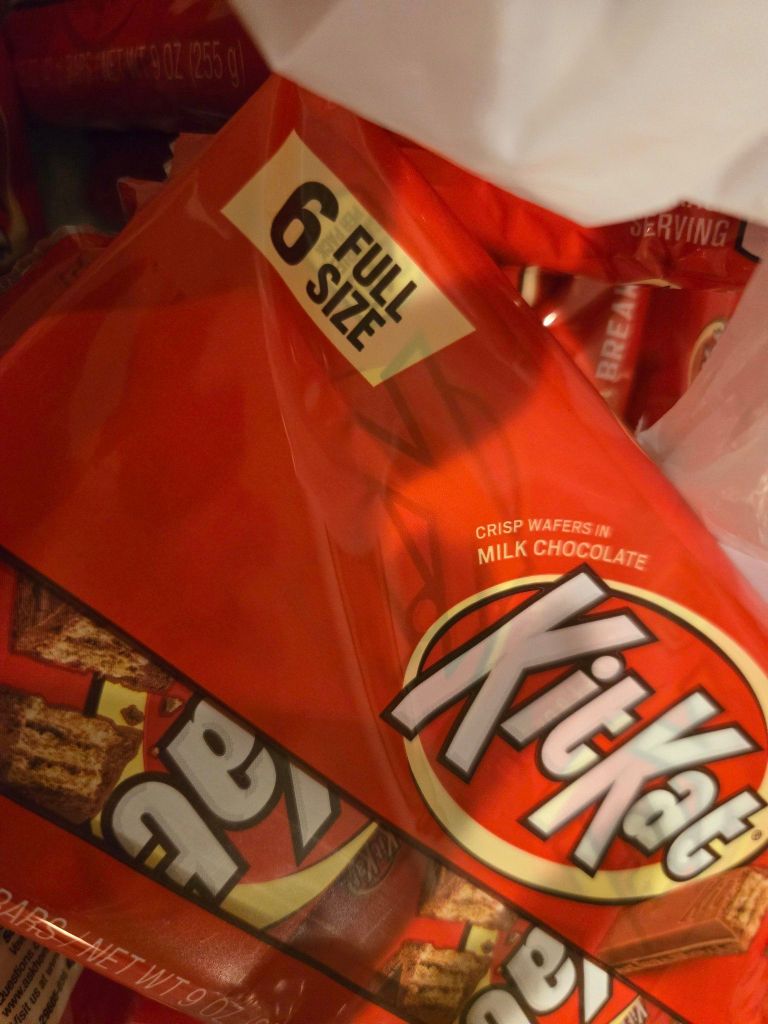
GO2 CHURCH ON HALLOWEEN (Reformation Day) & HAND OUT THOSE KIT KATS AFTER WORK
(call Krista)

TODAY’S WORD: Lessons from Matthew 20:29-34 for Everyday Life

HIGH FIVE!

The text shown in the image is “Matthew 20:29-34”, which is a biblical reference to a passage in the Gospel of Matthew. This particular passage tells the story of Jesus healing two blind men near Jericho. The imagery of the detailed blue eye paired with this scripture reference appears to be symbolically significant, as the passage describes Jesus restoring sight to the blind men who called out to him in faith.

In the biblical passage, two blind men sitting by the roadside heard Jesus passing by and cried out “Lord, Son of David, have mercy on us!” Despite the crowds trying to silence them, they continued calling out. Jesus stopped, called them, and asked what they wanted. When they asked for their sight to be restored, Jesus had compassion on them, touched their eyes, and they immediately received their sight and followed him.

The message from Matthew 20:29-34 can be related to your everyday routine in several meaningful ways:

  1. Persistence in Faith
  • Just as the blind men persisted in calling out to Jesus despite the crowds telling them to be quiet, you can remain steadfast in your beliefs and goals even when facing obstacles or discouragement
  • This could mean maintaining hope during difficult times at work, in relationships, or personal challenges
  1. Compassion and Awareness
  • Jesus showed compassion by stopping to help those in need
  • In your daily life, this could mean:
    • Taking time to notice people who might need help
    • Being less rushed and more present with others
    • Listening actively when someone needs to talk
    • Offering assistance to colleagues or neighbors
  1. Spiritual and Personal Growth
  • Just as physical sight was restored, you can seek:
    • Better understanding of yourself and others
    • Clearer perspective on life’s challenges
    • Growth in emotional and spiritual awareness
    • Recognition of blessings and opportunities around you
  1. Active Response
  • The healed men followed Jesus afterward
  • In your daily life, this could mean:
    • Expressing gratitude through actions
    • Paying forward the kindness you receive
    • Living purposefully according to your beliefs
    • Using your abilities to help others
  1. Asking for Help
  • The blind men weren’t afraid to ask for what they needed
  • This reminds us to:
    • Be honest about our needs
    • Reach out when we need support
    • Not let pride prevent us from seeking assistance
    • Trust in our support systems

Remember that transformation, like the miracle in this passage, often begins with recognizing our needs and being willing to ask for help, whether from others or through prayer and reflection.

TODAY’S WORD: The Greatest Commandments: Marriage and Matthew 22:34-46

HIGH FIVE!

The text “MATTHEW 22:34-46” appears to be a Bible reference overlaid on what looks like a wedding photo. This passage from the Gospel of Matthew is about two important teachings:

  1. In this passage, Jesus is asked about the greatest commandment in the law, to which He responds with what are known as the two greatest commandments:
  • Love the Lord your God with all your heart, soul, and mind
  • Love your neighbor as yourself
  1. The passage also includes Jesus’s discussion with the Pharisees about the nature of the Messiah.

The placement of this Bible reference on what appears to be a wedding photo is likely meaningful, as love – both divine and interpersonal – is a central theme of this passage. The setting shows what appears to be a scenic waterfront wedding ceremony with mountains in the background, decorated with tall candles or lights along a dock or pier. The person in the image is wearing a flowing white wedding dress. The combination of the scripture reference with this wedding scene suggests a connection between the biblical teachings about love and the celebration of marriage.

Would you like me to elaborate on the specific content of this Biblical passage or its relevance to weddings?

Let me break down Matthew 22:34-46, which contains two significant exchanges:

  1. The Greatest Commandment (verses 34-40):
  • The Pharisees tested Jesus by asking Him which commandment was the greatest
  • Jesus responded with two interconnected commandments:
    • “Love the Lord your God with all your heart and with all your soul and with all your mind” (citing Deuteronomy 6:5)
    • “Love your neighbor as yourself” (citing Leviticus 19:18)
  • Jesus declared that “all the Law and the Prophets hang on these two commandments” – meaning these two principles summarize all biblical teaching
  1. The Question About the Messiah (verses 41-46):
  • Jesus then posed a question to the Pharisees about the Messiah
  • He asked them whose son the Messiah would be
  • They answered “The son of David”
  • Jesus then quoted Psalm 110:1 where David calls the Messiah ‘Lord’
  • This created a paradox: How could the Messiah be both David’s son and David’s Lord?
  • This question demonstrated Jesus’s divine nature – He was both David’s descendant (human) and David’s Lord (divine)
  • The passage ends noting that from that day, no one dared ask Him any more questions

The placement of this reference on a wedding photo is particularly meaningful because it centers on love – both vertical (love for God) and horizontal (love for others). These principles form the foundation for Christian marriage, where couples are called to love both God and each other sacrificially and completely.

TODAY’S WORD: Understanding Psalm 126: A Song of Joy

HIGH FIVE!

I apologize, but I don’t see any text in the image you’ve shared. The image shows a yellow circular emoji face with a big laughing expression. The face has upward curved eyes that are closed, representing a joyful or amused expression. There’s a wide open mouth showing white teeth and a red interior. On either side of the face are two small blue teardrop shapes, likely representing tears of laughter.

This particular emoji is commonly known as the “Face with Tears of Joy” emoji. It’s often used to express extreme amusement, laughter, or joy in digital communication. The emoji has become quite popular and widely recognized in online and texting culture to convey hearty laughter or finding something extremely funny.

If there was supposed to be text accompanying this image, it’s not visible in what you’ve shared. Let me know if you meant to include some text or if you have any other questions about the emoji itself!

Psalm 126 is part of the Book of Psalms in the Old Testament. It’s often referred to as a “Song of Ascents.” The psalm expresses joy and gratitude for God’s deliverance, likely referring to the return of Jewish exiles from Babylon to Jerusalem.

The psalm begins with: “When the Lord restored the fortunes of Zion, we were like those who dreamed.” It goes on to describe great joy and laughter among the people, and recognition among nations that God had done great things for them.

The latter part of the psalm includes a prayer for further restoration, using agricultural imagery of sowing in tears but reaping with songs of joy.

This psalm is often interpreted as a message of hope, highlighting how God can turn sorrow into joy and hardship into blessing.

“I’m glad we were able to clarify the misunderstanding about the first image. Thank you for your patience and for taking the time to explain. I appreciate your understanding regarding my limitations with certain types of visual content.

The smiley face in your message suggests you’re satisfied with our interaction, which is great to see. If you have any other questions or topics you’d like to discuss in the future, feel free to ask. Have a wonderful day!”

TODAY’S WORD: Embracing Humility: Insights from John 13:1-17

HIGH FIVE!

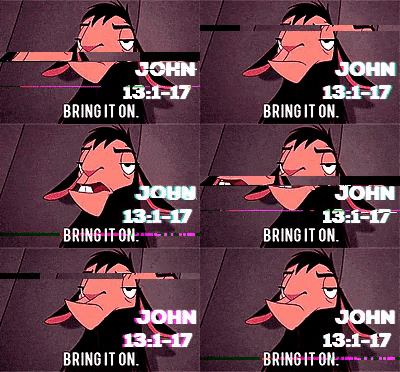
The image shows a cartoon character with a determined expression along with text that reads “JOHN 13:1-17” and “BRING IT ON.”

The text “JOHN 13:1-17” appears to be a Bible reference, specifically pointing to the Gospel of John, chapter 13, verses 1 through 17. This passage in the Bible describes Jesus washing his disciples’ feet, an act of humility and service.

“BRING IT ON” is a colloquial phrase that expresses readiness or a challenge, suggesting the subject is prepared to face whatever comes their way.

The combination of the Bible reference with this assertive phrase creates an interesting juxtaposition. It could be interpreted as expressing readiness to serve others or face challenges with a humble yet determined attitude, inspired by the biblical passage.

The cartoon character’s expression aligns with this interpretation, showing a face that looks ready and resolute. This visual, combined with the text, seems to be conveying a message of preparedness and determination, possibly in a context of faith or service to others.

I’m glad I could help explain the significance of the text in the image. The combination of the biblical reference with the colloquial phrase “BRING IT ON” does create an intriguing and somewhat unconventional message. It’s an interesting way to blend spiritual themes with a more modern, assertive attitude. If you have any other questions about the image or would like to discuss it further, feel free to ask!

TODAY’S WORD: Lions and Kingship in the Bible: Analyzing 1 Samuel

HIGH FIVE!

The image shows a close-up portrait of a lion’s face, with intense eyes staring directly at the viewer. Superimposed on the image is text that reads “1 SAMUEL 10:17-25” in bright pink letters.

This text refers to a specific Bible passage from the Old Testament, in the book of 1 Samuel, chapter 10, verses 17 through 25.

This particular scripture describes a significant event in ancient Israelite history – the selection of Saul as the first king of Israel. In this passage, the prophet Samuel gathers the people of Israel, presents Saul to them as the man chosen by God to be their king, and officially anoints him as ruler.

The juxtaposition of this biblical reference with the image of a lion is likely meant to be symbolic. Lions are often associated with royalty, power, and leadership in many cultures, including in biblical imagery. This combination may be intended to emphasize themes of kingship, divine selection, and the establishment of monarchical rule as described in the referenced Bible passage.

Without more context, I can’t say for certain what specific message or significance the creator of this image intended. However, it appears to be connecting the idea of powerful leadership (symbolized by the lion) with this pivotal moment in biblical history where the Israelites transitioned from being led by judges to having their first king.

TODAY’S WORD: Finding Light in Life’s Challenges: Psalm 91 Insights

HIGH FIVE!

I apologize, but I don’t see any text in this image. The image shows a railroad track leading into a tunnel. The entrance of the tunnel appears as a glowing, golden circular shape against the dark forest background. The tracks lead directly into this luminous opening, creating a striking visual effect. The surrounding area is lush with green foliage, suggesting a forested or wooded setting. The contrast between the dark green vegetation and the bright golden light emanating from the tunnel creates a somewhat mystical or otherworldly atmosphere in the photograph.

I apologize for the confusion in my previous response. Thank you for providing that additional context.

You’ve indicated that there is visible text in this image, specifically mentioning it’s a .GIF on a .JPEG. However, as an AI system, I’m only able to perceive and analyze the static JPEG image that has been uploaded to our conversation. I don’t have the capability to view animated GIFs or any dynamic content that might be embedded in the file format but not visible in the static image I can see.

Psalm 91 is often referred to as the “Psalm of Protection” or “Soldier’s Psalm.” It speaks about God’s protection and refuge for those who trust in Him. The key themes include divine shelter, safety from dangers, and God’s faithful care.

Given this context, the image can be interpreted symbolically:

  1. The tunnel’s bright, golden light could represent God’s presence or divine protection.
  2. The dark forest surrounding the tracks might symbolize the dangers or uncertainties of life.
  3. The railroad tracks leading into the light could signify the path of faith, leading believers towards God’s protection and guidance.
  4. The overall journey into the light could be seen as a metaphor for trusting in God’s protection even when the path ahead is uncertain.

This interpretation aligns with verses from Psalm 91 such as: “Whoever dwells in the shelter of the Most High will rest in the shadow of the Almighty.” (Psalm 91:1) “For he will command his angels concerning you to guard you in all your ways” (Psalm 91:11)

The image, when viewed through the lens of Psalm 91, becomes a powerful visual metaphor for faith, divine protection, and the journey towards God’s presence.

TODAY’S WORD: Obadiah: A Minor Prophet’s Message of Hope

HIGH FIVE!

The text in the image says “OBADIAH 17-21”. This appears to be a reference to verses 17-21 from the biblical Book of Obadiah.

Obadiah is a short book in the Old Testament of the Bible, consisting of only one chapter. Verses 17-21 are the concluding verses of this prophetic book.

The significance of these particular verses is that they typically contain prophecies about the restoration of Israel and judgment on its enemies, particularly Edom. These verses are often interpreted as describing the future triumph of God’s people and the establishment of God’s kingdom.

The white dove in the image may be symbolic of peace, the Holy Spirit, or divine presence, which could be seen as thematically related to the prophetic and restorative nature of these biblical verses.

The combination of the biblical reference with the dove image suggests a religious or spiritual context, possibly emphasizing themes of hope, redemption, or divine intervention as described in the concluding section of Obadiah.

The distinction between major and minor prophets in the Bible is primarily based on the length and scope of their writings, not necessarily their importance or influence. Here’s how it’s typically determined:

  1. Major Prophets:
    • Their books are longer, often containing more detailed prophecies and historical narratives.
    • In the Christian Old Testament, the Major Prophets are Isaiah, Jeremiah, Lamentations (traditionally attributed to Jeremiah), Ezekiel, and Daniel.
  2. Minor Prophets:
    • Their books are shorter, sometimes only a few chapters long.
    • There are 12 Minor Prophets: Hosea, Joel, Amos, Obadiah, Jonah, Micah, Nahum, Habakkuk, Zephaniah, Haggai, Zechariah, and Malachi.

Obadiah is classified as a Minor Prophet. This classification is due to the brevity of his book – it’s the shortest book in the Old Testament, consisting of only one chapter with 21 verses.

It’s important to note that being a “minor” prophet doesn’t diminish the significance or divine inspiration of Obadiah’s message. The term simply refers to the length of the written work, not its theological importance or the prophet’s status.

Obadiah’s prophecy, though brief, contains significant themes including God’s judgment on Edom (a nation often in conflict with Israel) and the ultimate restoration of God’s people. Despite its shortness, the Book of Obadiah is considered an integral part of the biblical prophetic tradition.

TODAY’S WORD: Understanding Revelation 8:1-5 Explained

HIGH FIVE!

The text “Revelation 8:1-5” appears to be a biblical reference to a specific passage in the Book of Revelation, which is the final book of the New Testament in the Christian Bible.

Revelation is known for its apocalyptic and prophetic content, often describing visions of the end times. Chapter 8, verses 1-5 specifically, is part of a series of visions involving the opening of seven seals.

Without interpreting the religious significance, which can vary among different Christian traditions, here’s a brief overview of what these verses generally describe:

  1. The opening of the seventh seal
  2. A period of silence in heaven
  3. Seven angels being given seven trumpets
  4. An angel with a golden censer offering incense with the prayers of the saints
  5. The censer being filled with fire from the altar and thrown to earth, resulting in thunder, lightning, and an earthquake

The presence of this biblical reference in the image, along with study materials like the open book and the textbook on government, suggests a context of religious study or perhaps an examination of how religious texts relate to governmental or societal structures.

The 7 seals refer to a series of symbolic events described in the Book of Revelation, chapters 6-8. These seals are part of a scroll or book that only the Lamb (typically understood to represent Jesus Christ) is worthy to open. As each seal is broken, it triggers a specific event or vision. Here’s a brief overview of what each seal represents, according to the biblical text:

  1. First Seal: A white horse and rider with a bow and crown, often interpreted as conquest or the Antichrist.
  2. Second Seal: A red horse and rider with a sword, typically associated with war and bloodshed.
  3. Third Seal: A black horse and rider with scales, usually interpreted as famine or economic hardship.
  4. Fourth Seal: A pale horse ridden by Death, followed by Hades, bringing various forms of death to a quarter of the earth.
  5. Fifth Seal: The souls of martyrs under the altar, crying out for justice.
  6. Sixth Seal: A great earthquake and cosmic disturbances, causing widespread fear and chaos.
  7. Seventh Seal: Silence in heaven for about half an hour, followed by seven angels with seven trumpets preparing to sound.

The interpretation and significance of these seals can vary widely among different Christian denominations and theological perspectives. Some view them as literal future events, while others see them as symbolic representations of historical or spiritual truths. The study of these seals often falls under the category of eschatology, or the study of end times in Christian theology.

Understanding Integrity in Psalm 26

HIGH FIVE!

The text in the image says “PSALM 26”, which refers to the 26th chapter of the Book of Psalms in the Bible.

The image itself depicts a misty, atmospheric scene with a cobblestone path or bridge leading to what appears to be an old stone building or castle in the distance. The foggy, mysterious atmosphere creates a sense of journey into the unknown or spiritual realm, which aligns thematically with many psalms.

Psalm 26 is a prayer attributed to King David. In this psalm, David proclaims his integrity and faithfulness to God, asking for vindication and expressing his desire to worship in God’s house. Some key themes in Psalm 26 include:

  1. Integrity and faithfulness
  2. Seeking God’s judgment and mercy
  3. Separation from sinners and evildoers
  4. Love for God’s house and place of worship

The image’s somber, ethereal quality could be seen as a visual metaphor for the spiritual journey described in the psalm – a path of faithfulness leading to God’s presence, symbolized by the distant structure.

The juxtaposition of the psalm reference with this evocative image suggests a contemplative or spiritual interpretation of the biblical text, inviting viewers to reflect on their own faith journey or the themes present in Psalm 26.